How to Master 5 No Cook Camping Meals for Easy Outdoor Feasts
Table of Contents
Why Your Camp Stove Deserves a Day Off
Here’s a truth most campers eventually discover the hard way: hauling a heavy camp stove, juggling fuel canisters, and spending forty minutes over a flame after a long day on the trail is nobody’s idea of a good time. What if you could eat just as well — maybe even better — without cooking a single thing? That’s exactly what no cook camping meals are all about.
No cook camping meals aren’t just for minimalists or ultralight backpackers. They’re for anyone who wants more time watching sunsets and less time scrubbing pots in the dark. Whether you’re a weekend warrior heading to a state park or a seasoned thru-hiker logging miles on a long-distance trail, a well-planned no cook meal strategy can completely transform your outdoor experience.
In this guide, you’ll discover five incredibly satisfying no cook camping meals, learn exactly how to prepare and pack them, and walk away with practical tips that make mealtime in the wild both effortless and genuinely delicious. Let’s dig in.
What Are No Cook Camping Meals?
No cook camping meals are food preparations that require zero heat, no stove, and no fire to be safe and enjoyable to eat. They rely on shelf-stable ingredients, pre-made components, fresh foods with a reasonable shelf life, or items that are simply ready to eat straight from the package or a short cold soak.
The concept spans a wide range — from a simple peanut butter tortilla wrap to a thoughtfully assembled grain bowl with pre-marinated vegetables. The common thread is simplicity, portability, and the elimination of any cooking gear from your kit.
Who Benefits Most from No Cook Camping Meals?
- Ultralight backpackers who want to shed every unnecessary ounce from their pack
- Family campers looking to simplify mealtimes so kids can stay energized and adults stay sane
- Hot-weather hikers who have no desire to stand over a flame in summer heat
- Beginner campers who feel intimidated by camp cooking logistics
- Multi-day adventurers who want backup meals when fuel runs low
The Real Benefits of Going Stove-Free in the Wild
Before diving into the recipes, it’s worth understanding why so many experienced outdoor enthusiasts swear by no cook camping meals. The advantages go well beyond convenience.
Weight and Pack Space Savings
A standard backpacking stove, fuel canister, pot, and lid can easily add one to two pounds to your load. Eliminate those, and you’ve just made room for more food, better gear, or simply a lighter pack that doesn’t wreck your shoulders.
Leave No Trace Compliance
No fire means no ash, no scorch marks on the landscape, and no risk of accidentally starting a wildfire. In fire-restricted zones or drought-prone wilderness areas, no cook meals aren’t just convenient — they’re responsible.
Speed and Simplicity
When you’re hungry after eight miles of trail, assembling a no cook meal takes three to five minutes. There’s no waiting for water to boil, no flame management, and no worry about running out of fuel on day four of a five-day trip.
Cleanup Is Almost Nonexistent
No pots. No greasy pans. No stuck-on food. You eat, you pack the trash, you move on. That’s a beautiful thing when you’re camping near a water source you’d rather not contaminate.
The 5 Best No Cook Camping Meals You Need to Try
These five meals are chosen for their balance of nutrition, flavor, portability, and real-world practicality on the trail. Each one can be adapted for different dietary preferences and trip lengths.
Meal 1: Nut Butter and Honey Tortilla Wraps
Don’t underestimate this one. When you’re on the trail, a well-loaded tortilla wrap is a complete meal. Spread a generous layer of almond or peanut butter on a whole wheat tortilla, drizzle with raw honey, add sliced dried banana chips, a handful of granola for crunch, and a sprinkle of chia seeds for extra nutrition. Roll it up and eat.
Why It Works
- High in healthy fats, carbohydrates, and protein — exactly what your body needs after sustained physical effort
- Nut butters come in single-serve squeeze packs that are lightweight and mess-free
- Tortillas stay fresh for days without refrigeration
- Endlessly customizable — swap in sunflower seed butter for nut allergies, or add dark chocolate chips for a treat
Packing Tip
Store tortillas flat in a hard-sided container or a gallon zip-lock bag to prevent crumbling. Pre-portioned nut butter packets save both weight and the hassle of a sticky jar.
Meal 2: Mediterranean Tuna or Salmon Wrap
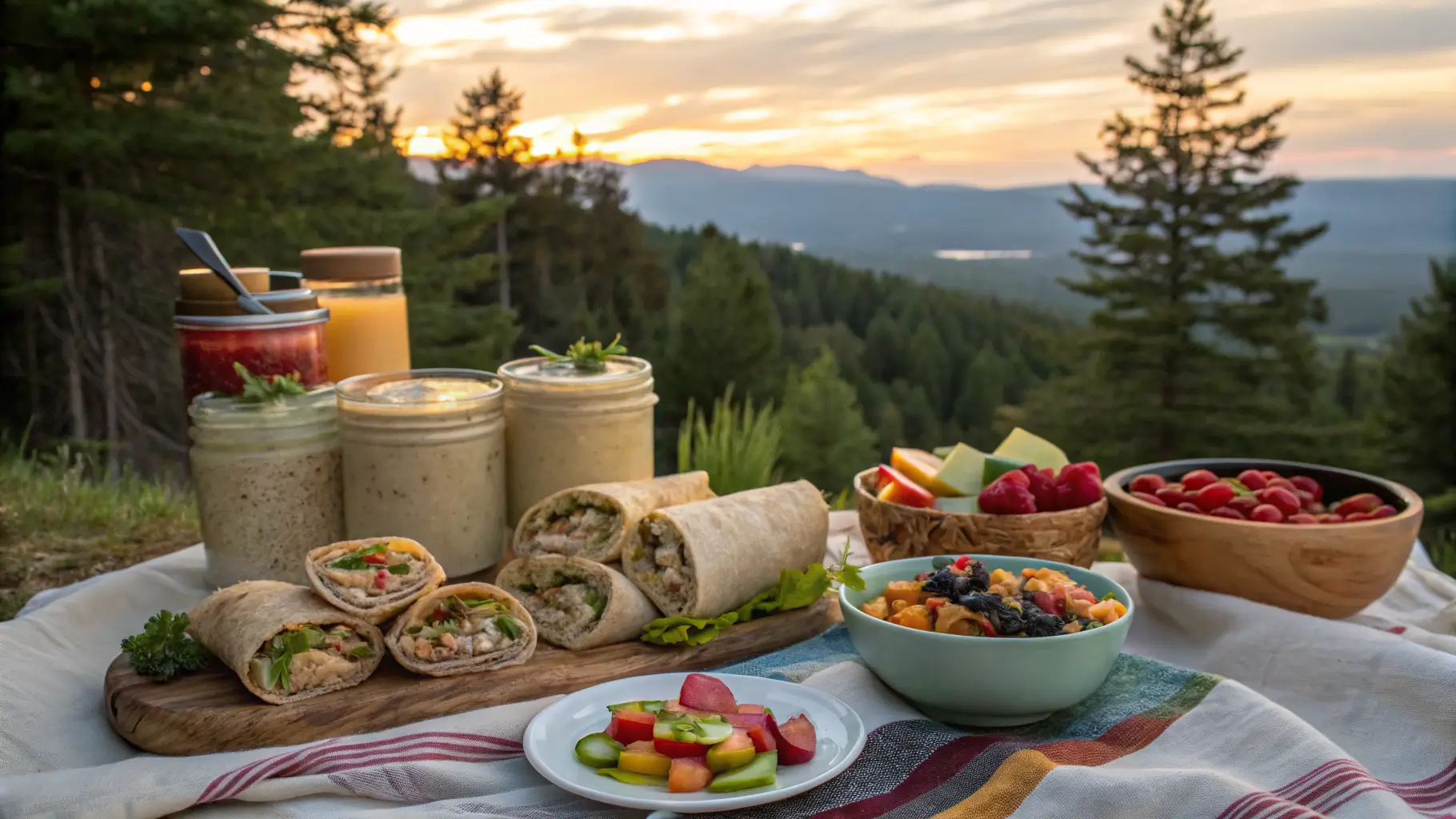
Foil-packed tuna and salmon are some of the most underrated trail foods in existence. They’re pre-cooked, shelf-stable, rich in protein and omega-3 fatty acids, and surprisingly versatile. Combine a foil pack of lemon-herb tuna with a few sundried tomatoes, sliced olives, cucumber slices (carried fresh for day one or two), crumbled feta from a sealed pouch, and a drizzle of olive oil. Wrap it in a large spinach tortilla or spoon it into pita halves.
Why It Works
- Foil-packed fish requires no refrigeration and delivers serious protein on demand
- Mediterranean flavors are bright and satisfying, which matters when you’re eating the same terrain for days
- Pre-portioned olive oil packets add healthy fats and calories without bulk
- This meal scales beautifully for group camping — just multiply the quantities
Packing Tip
Pack sundried tomatoes, olives, and feta in small reusable silicone pouches. They take up minimal space and eliminate excess packaging waste.
Meal 3: Overnight Oats in a Jar
Technically prepared the night before (with cold water or shelf-stable milk), overnight oats represent the gold standard of no cook camping breakfasts. Combine rolled oats with chia seeds, a scoop of protein powder, dried cranberries, crushed walnuts, and a packet of almond milk. Shake or stir in your camp cup, seal it up, and by morning you have a thick, creamy, nutrient-dense breakfast waiting for you.
Why It Works
- All ingredients are dry, lightweight, and shelf-stable
- Preparation takes under two minutes the night before
- Oats provide slow-release energy — ideal before a big mileage day
- The flavor combinations are nearly infinite: chocolate peanut butter, apple cinnamon, tropical coconut mango
Packing Tip
Pre-mix your dry oat blend at home in zip-lock bags, one bag per serving. Label them by day if you’re on a multi-day trip. All you need at camp is water or shelf-stable milk and a container with a lid.
Meal 4: Hummus and Veggie Grazing Plate
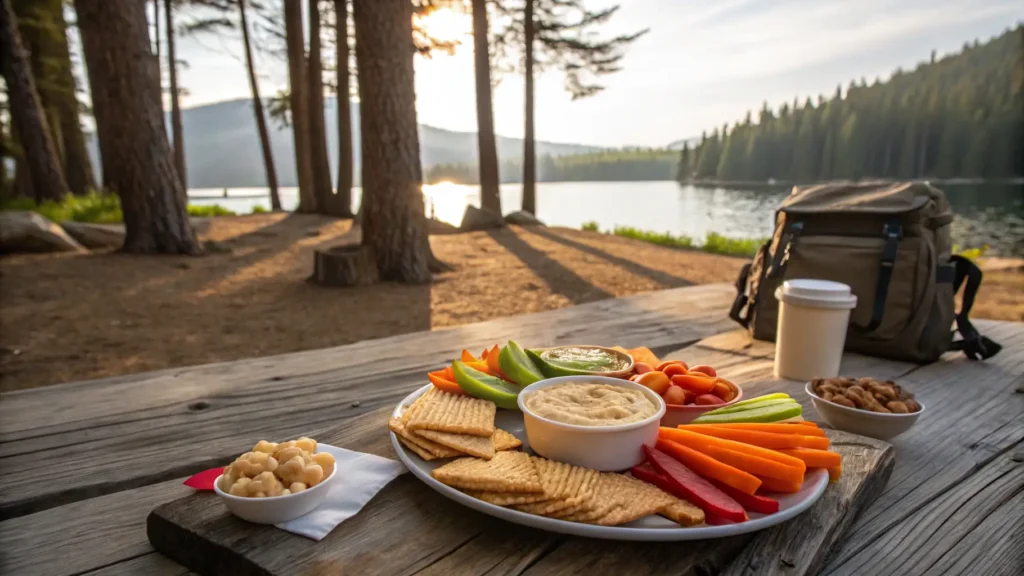
This one is less of a structured recipe and more of a well-curated no cook camping spread. Single-serve hummus cups, whole grain crackers, sliced bell peppers and carrots (great for the first one to two days), string cheese, sliced hard salami, and a small pack of mixed nuts create a satisfying, protein-rich meal that feels indulgent compared to typical trail fare.
Why It Works
- Single-serve hummus cups need no refrigeration for short trips
- This type of meal is incredibly popular with kids on family camping trips
- The variety of textures and flavors keeps mealtime interesting
- Hard cheeses and cured meats like salami last several days without refrigeration in cool weather
Packing Tip
Use a small, flat container to organize your components. Pre-slice vegetables at home and store them in sealed bags. For longer trips beyond two days, replace fresh vegetables with shelf-stable alternatives like roasted red peppers from a sealed pouch.
Meal 5: Instant Couscous or Ramen Cold Soak Bowl
Cold soaking is a technique beloved by ultralight backpackers and anyone who wants the satisfaction of a warm-style meal without any heat. Add couscous, instant ramen noodles, or ramen without the flavoring packet to a sealed container with cold water. Let it soak for fifteen to thirty minutes while you set up camp or take in the view. The result is a tender, ready-to-eat base that you then top with sun-dried tomatoes, nutritional yeast, sesame oil from a small bottle, crushed peanuts, and any dried vegetables you’ve packed.
Why It Works
- Couscous cold-soaks faster than almost any other grain — often in under fifteen minutes
- The meal mimics the comfort of hot food without any flame or fuel
- Highly customizable with different toppings each night to prevent flavor fatigue
- The soak container doubles as your eating bowl, eliminating extra gear
Packing Tip
A wide-mouth Nalgene or dedicated cold-soak jar works perfectly here. Pre-mix your seasonings and toppings at home in a small bag for fast assembly at camp.
No Cook Camping Meals at a Glance
| Meal | Prep Time | Key Nutrients | Best For | Shelf Life (No Refrigeration) |
|---|---|---|---|---|
| Nut Butter Honey Tortilla Wrap | 2 minutes | Healthy fats, carbs, protein | Lunch, snack, or quick breakfast | 5–7 days |
| Mediterranean Tuna Wrap | 5 minutes | Protein, omega-3s, healthy fats | Lunch or light dinner | 3–5 days (foil pack) |
| Overnight Oats | 2 minutes (night before) | Fiber, slow-release carbs, protein | Breakfast before big mileage days | Dry mix lasts weeks |
| Hummus and Veggie Grazing Plate | 5 minutes | Protein, fiber, healthy fats | Family camping, social meals | 1–2 days with fresh veg |
| Cold Soak Couscous Bowl | 15–30 minutes soak | Carbs, protein (with toppings) | Dinner after long hiking days | Dry ingredients last weeks |
Essential Tips for Planning No Cook Camping Meals
Plan Around Calorie Density
When you’re burning calories on the trail, volume matters less than caloric value. Focus on foods like nuts, nut butters, seeds, dried fruits, whole grain crackers, and cured meats that pack serious energy into a small, lightweight package. Aim for roughly 100 calories per ounce for backpacking-style no cook meals.
Know Your Trip Length Before You Shop
For day trips or overnight camping, almost any fresh food works. For three-to-five-day trips, prioritize shelf-stable options. For anything longer, stick almost exclusively to dry goods, foil packs, and hard cheeses.
Organize Meals Before You Leave Home
Pre-portion every meal into individual labeled bags or containers before your trip. This eliminates decision fatigue at camp, reduces excess packaging weight, and makes it easy to track your food supply day by day.
Don’t Forget Electrolytes and Hydration
No cook camping meals tend to be lower in sodium than hot-cooked meals. On high-output days, supplement with electrolyte packets or salty snacks to maintain proper hydration balance.
Balance Macronutrients Across Each Day
It’s easy to default to all carbs and fat when going stove-free. Make a conscious effort to include protein at every meal — foil-packed fish, nut butters, hard-boiled eggs (for the first day), cheese, legume-based crackers, or protein powder all do the job without any cooking required.
Key Takeaways
- No cook camping meals eliminate the need for a stove, fuel, and cooking gear, saving significant weight and pack space
- Five standout meals — nut butter wraps, tuna wraps, overnight oats, hummus grazing plates, and cold soak couscous — cover breakfast, lunch, and dinner with minimal effort
- Shelf-stable ingredients like foil-packed fish, nut butters, dried fruits, and whole grain crackers are the foundation of effective no cook meal planning
- Cold soaking is a practical technique that gives you a warm-style meal experience with zero heat
- Pre-portioning meals at home before your trip is the single best habit for stress-free outdoor eating
- Always balance macronutrients and pay attention to calorie density when planning stove-free camping food
Frequently Asked Questions About No Cook Camping Meals
What are the best no cook camping meals for beginners?
For beginners, the simplest and most satisfying no cook camping meals include nut butter tortilla wraps, pre-made trail mix bowls, hummus with crackers and vegetables, and overnight oats. These require minimal preparation, use widely available ingredients, and deliver solid nutrition without any cooking knowledge.
Can no cook camping meals provide enough calories for backpacking?
Absolutely. With smart ingredient selection — focusing on calorie-dense foods like nuts, nut butters, dried fruits, seeds, cured meats, and whole grain crackers — it’s entirely possible to consume 2,500 to 3,500 calories per day on no cook camping meals alone. The key is intentional planning rather than defaulting to low-calorie options.
How do you keep no cook camping food fresh without a cooler?
Choose shelf-stable ingredients from the start — foil-packed fish, shelf-stable nut butters, dried and dehydrated foods, hard cheeses, and cured meats. For fresh items like vegetables, use them within the first one to two days. A shaded stuff sack or an insulated food pouch can help extend freshness slightly in warm weather.
What is cold soaking and how does it work for camping meals?
Cold soaking is the process of rehydrating dry foods like couscous, instant oats, ramen noodles, or dehydrated vegetables using cold or room-temperature water instead of boiling water. You simply add water to the dry ingredients in a sealed container, wait fifteen to thirty minutes, and the food softens enough to eat. It’s a popular technique among ultralight hikers who want to skip stove weight entirely.
Are no cook camping meals safe from a food safety perspective?
Yes, when you choose shelf-stable, pre-cooked, or properly dried ingredients, no cook camping meals are completely safe. Avoid raw meats, uncooked eggs beyond the first day, and dairy products that require refrigeration on longer trips. Stick to foil-packed, dried, or fermented foods and follow general food safety principles about hand hygiene and cross-contamination.
What no cook camping meals work well for vegetarians and vegans?
Vegetarians and vegans have excellent no cook camping meal options including overnight oats, nut butter wraps, hummus and cracker plates, cold soak couscous with plant-based toppings, avocado and bean tortilla wraps, and energy ball clusters made from dates, oats, and nut butter. Plant-based protein sources like nuts, seeds, legume crackers, and protein powder integrate easily into a no cook strategy.
How do I prevent flavor fatigue on multi-day trips with no cook meals?
Variety in your seasoning kit is the answer. Carry small packets of hot sauce, sesame oil, nutritional yeast, everything bagel seasoning, and honey to rotate flavors across similar base ingredients. Changing your toppings, condiments, and mix-ins each day keeps your palate engaged even when the core ingredients stay the same.
Can children enjoy no cook camping meals on family trips?
Kids often love no cook camping meals more than traditional camp cooking because the food is familiar, interactive, and fun to assemble. Nut butter wraps, hummus with crackers and veggies, trail mix, string cheese, and overnight oats are all child-friendly and require no heat, making mealtimes safer and faster for families with young children.
Conclusion
Mastering no cook camping meals is one of the most practical skills you can develop as an outdoor enthusiast. It simplifies your gear list, speeds up your mealtime routine, reduces your environmental impact, and — perhaps most importantly — frees up more of your precious time in nature to actually enjoy being there.
The five meals covered here — nut butter tortilla wraps, Mediterranean tuna wraps, overnight oats, hummus grazing plates, and cold soak couscous bowls — give you a genuinely satisfying rotation that covers breakfast, lunch, and dinner across any trip length. With smart ingredient choices, a bit of pre-trip organization, and an open mind about what outdoor eating can look like, you’ll likely wonder why you ever dragged that stove along in the first place.
The wilderness doesn’t require a kitchen. It just requires a little creativity, the right ingredients, and the willingness to keep things beautifully simple.
Ready to Upgrade Your Outdoor Eating Game?
Start small — pick just one of these no cook camping meals and try it on your next outing. Notice how much lighter your pack feels, how much faster your setup goes, and how much more time you have to enjoy the view. Once you experience the difference, you’ll be planning your entire trip menu around these stove-free strategies.
Share this article with your hiking group, camping community, or trail-obsessed friends who could use a few less dishes to wash under the stars.