Don’t Be a Statistic: Your Essential Guide to Choosing a Bear Proof Cooler or Bear Canister
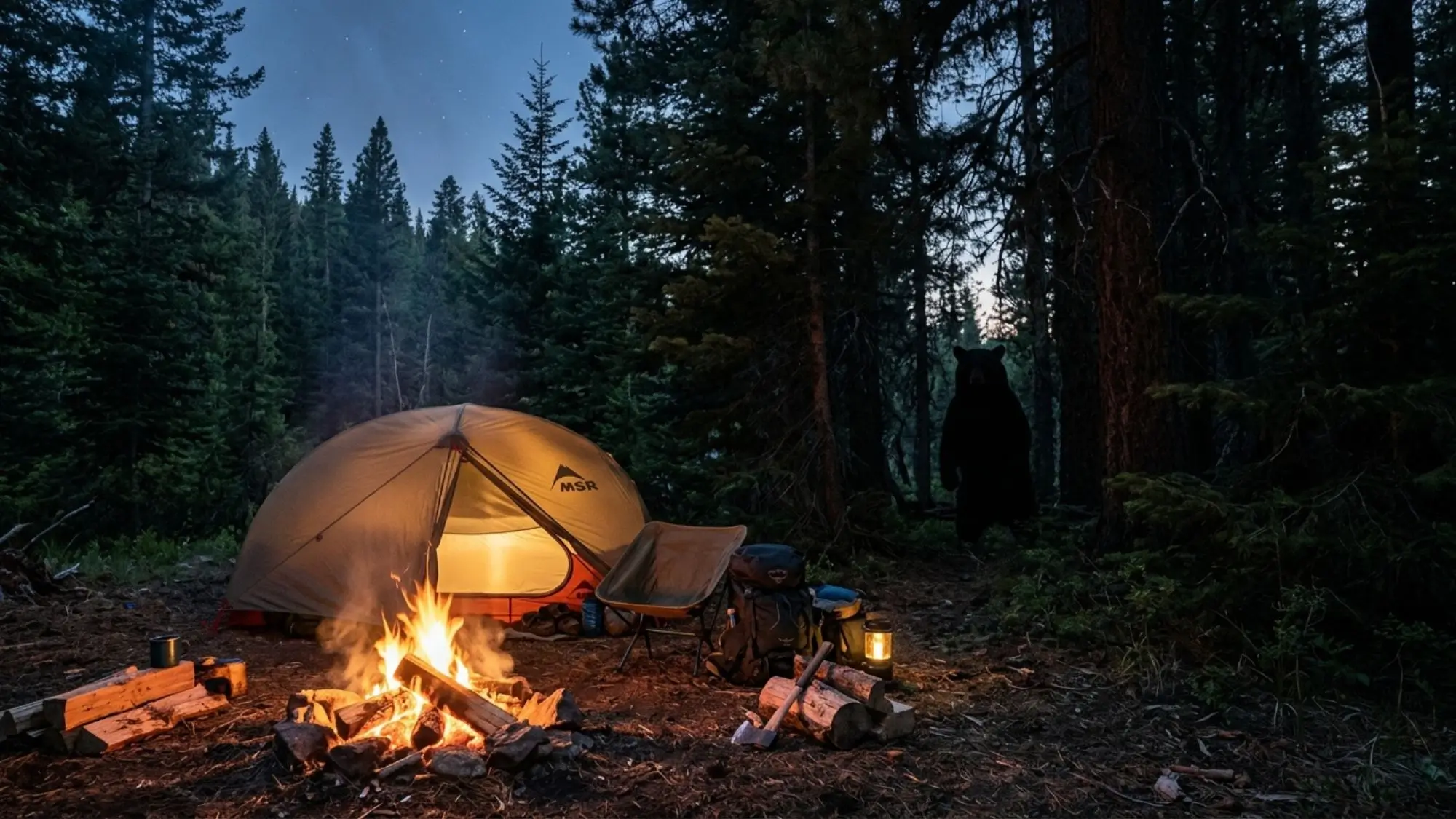
The campfire crackles, casting dancing shadows against the towering pines. Above, a billion stars glitter in a sky untainted by city lights. This is why you come out here—for the silence, the beauty, the raw connection to the wild. But as you settle into your sleeping bag, a twig snaps in the darkness. Then another. Your heart starts to pound. Is it just the wind? Or is something big moving just beyond the light of the dying embers? In that moment, one question eclipses all others: Is my camp secure?
This isn’t about fear-mongering; it’s about respect. Respect for the powerful creatures whose home you are visiting, and respect for your own safety. The single most important decision you can make to ensure a peaceful night in bear country is how you store your food and other scented items. This guide is your map to making that decision correctly, giving you the confidence to soak in the wilderness without a lingering sense of dread.
Table of Contents
Why ‘Bear-Resistant’ Isn’t Just a Suggestion—It’s a Lifeline
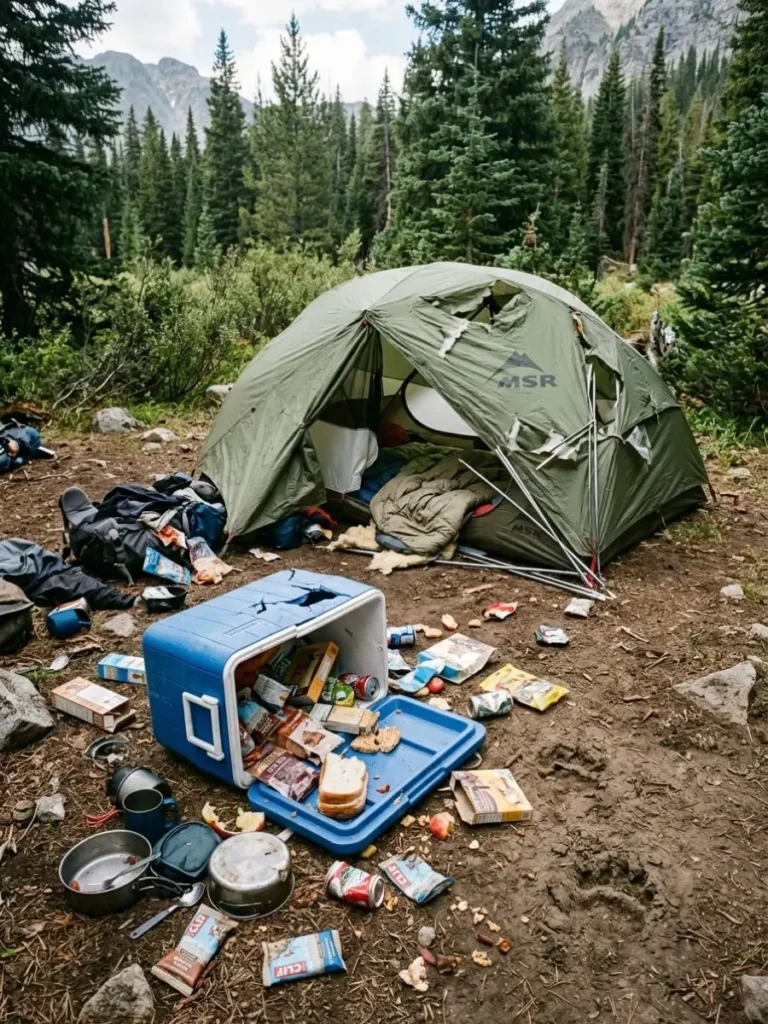
Let’s get one thing straight: proper food storage in bear country is non-negotiable. It’s a fundamental part of responsible outdoor recreation that protects you, the wildlife, and the campers who will follow in your footsteps. Failing to secure your camp properly can have consequences that ripple far beyond a stolen bag of trail mix.
- Protecting Yourself and Your Gear: A bear that successfully gets a meal from your campsite—what wildlife experts call a “food reward”—is a bear that has learned a dangerous lesson: humans equal an easy meal. This bear will return, and its behavior can escalate from a curious visitor to a persistent, and potentially destructive, pest. It might shred your tent, destroy your expensive gear, and create a genuinely dangerous situation for you and your family.
- Protecting the Bears: You’ve probably heard the grim but truthful saying: “A fed bear is a dead bear.” This is the most critical concept to understand. When a bear becomes habituated to human food, it loses its natural fear of people. It may start approaching campsites or trails during the day, becoming a “problem bear.” Tragically, the story almost always ends the same way. Wildlife managers are forced to intervene, and their options are limited. Relocating the bear is often unsuccessful, as it may travel hundreds of miles to return to the known food source or simply become a problem in a new area. The final, heartbreaking solution is often euthanasia. Your diligence protects their lives.
- Protecting the Experience for Others: When you leave a clean, secure camp, you preserve the wild nature of the place. An unsecured camp can create a problem bear that goes on to harass other campers, leading to park-wide restrictions and ruining the sense of pristine wilderness for everyone.
According to data from agencies like the National Park Service, the vast majority of negative human-bear encounters are linked to improper food storage. This isn’t a random chance; it’s a direct cause and effect.
Understanding IGBC Certification: What Makes a Container Truly Bear-Proof?
You’ll see a lot of coolers and containers on the market with pictures of bears on them, claiming to be “bear-proof.” But how can you be sure? The answer lies with one organization: the IGBC.
The Gold Standard: The Interagency Grizzly Bear Committee (IGBC)
The IGBC is a cooperative group of federal and state agencies dedicated to grizzly bear conservation and management. Part of their mission involves reducing human-bear conflicts. To do this, they established a rigorous testing program to identify which products can genuinely withstand a bear’s assault. The official term isn’t “bear-proof”; it’s “IGBC Certified Bear-Resistant.” This certification is the only one that truly matters.
The Ultimate Product Test: How a Cooler or Canister Gets Certified
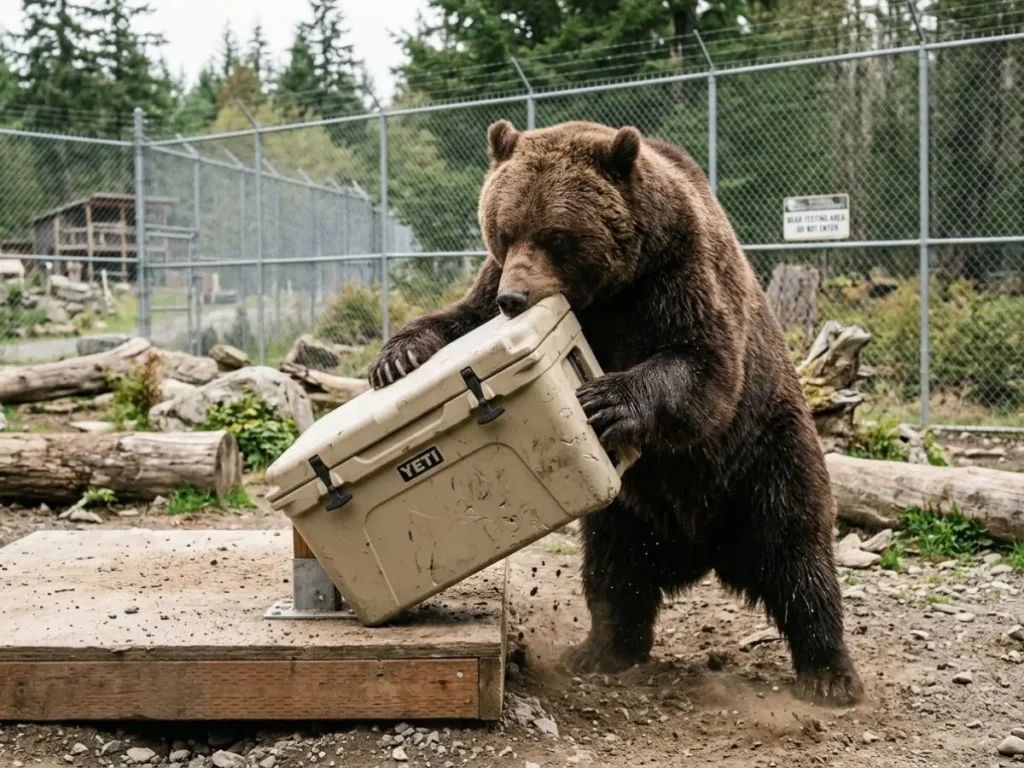
Getting an IGBC certification is no simple task. Manufacturers must submit their products to the Grizzly & Wolf Discovery Center in West Yellowstone, Montana. Here’s what happens:
- The Bait: The cooler or canister is filled with tantalizing, smelly food like fish and bacon.
- The Testers: The product is placed inside an enclosure with several adult grizzly bears.
- The Test: For 60 minutes, these incredibly powerful and intelligent animals are allowed to do their worst. They stand on the container, crush it, bite it, claw at it, and throw it around. Their jaws can exert over 1,200 PSI of pressure, and their strength is legendary.
To pass, the container must remain intact and prevent the bears from getting the food reward. If a bear can open it or break it open within that hour, it fails. When you buy a product with the IGBC Certified seal, you’re buying something that has gone head-to-head with a grizzly and won. For your peace of mind, you can always check the up-to-date list of certified products on the official IGBC website.
The Big Debate: Bear Proof Cooler or Bear Canister
Now for the core decision: which type of container is right for your adventure? Your choice will almost certainly come down to a bear proof cooler or bear canister. Each is designed for a specific type of user and environment.
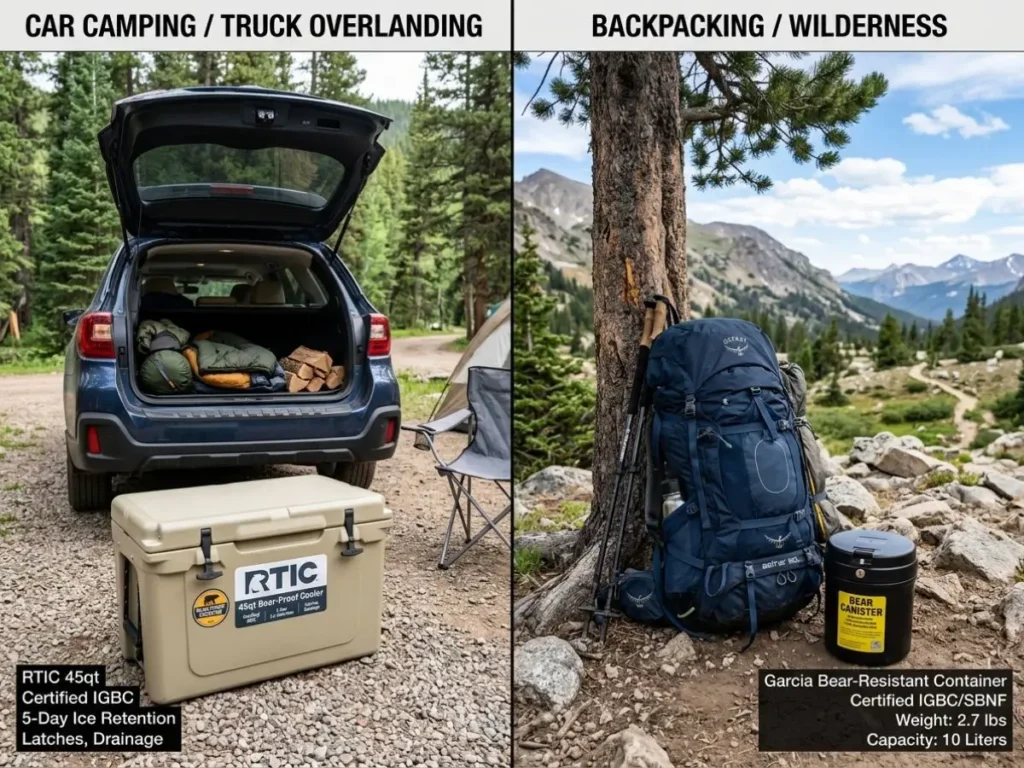
When to Choose a Bear Proof Cooler
A high-performance, IGBC-certified cooler is your best friend for any front-country or vehicle-supported trip.
- Best For: Car camping, RVing, fishing or hunting basecamps, rafting trips, and any situation where you don’t have to carry your gear very far.
- Pros:
- High Capacity: They can hold days’ worth of food and drinks for a whole family.
- Dual Function: They serve as exceptional coolers, keeping your perishables fresh and your drinks icy cold, in addition to being secure storage.
- Cons:
- Heavy and Bulky: These coolers are built tough, which means they are not designed for portability. You wouldn’t want to carry one for even half a mile.
- Requires Locks: A crucial point—most certified coolers are only bear-resistant when secured with two IGBC-approved padlocks.
When to Choose a Bear Canister
A bear canister is a non-negotiable piece of equipment for anyone venturing into the backcountry.
- Best For: Backpacking, thru-hiking, backcountry skiing, mountaineering, and even some kayak camping trips.
- Pros:
- Portable: They are specifically designed to be carried in or strapped to a backpack.
- Required by Law: Many popular national parks and wilderness areas (like Yosemite and Olympic National Park) legally require you to carry and use an approved canister.
- Cons:
- Limited Capacity: You have to pack smart, often removing food from its original bulky packaging to maximize space.
- No Insulation: It’s purely a security device; it will not keep your food cold.
Table: Cooler vs. Canister at a Glance
| Feature | Bear Proof Cooler | Bear Canister |
| Best For | Car Camping, RVs, Basecamps | Backpacking, Thru-hiking |
| Portability | Low (Heavy & Bulky) | High (Designed for packs) |
| Capacity | High (25-150+ quarts) | Low (5-15 liters) |
| Primary Function | Keeping food cold & secure | Keeping food secure |
| Regulations | Accepted where allowed | Often mandatory in backcountry |
| Cost | $$$ – $$$$ | $$ – $$$ |
Proper Use: Tips for Maximizing Safety and Effectiveness
Buying certified gear is only half the battle. Using it correctly is just as important. A simple mistake can render your expensive equipment useless.
Using Your Bear Proof Cooler Correctly
- Always Lock It: This cannot be stressed enough. An unlocked cooler is just a fancy feeding trough. Use two IGBC-recommended padlocks with a shank diameter of at least 1/4 inch and a length of at least 1.5 inches. Secure both front corners.
- Store It Away from Your Tent: Don’t use your cooler as a seat around the fire or a nightstand next to your tent. Store it at least 100 feet away from your sleeping area.
- Store ALL Scented Items: A bear’s sense of smell is seven times more powerful than a bloodhound’s. It’s not just for bacon and burgers. Your cooler must also hold your garbage, toothpaste, deodorant, soap, sunscreen, and even the clothes you wore while cooking. If it has a smell, it goes in the box.
Best Practices for Your Bear Canister
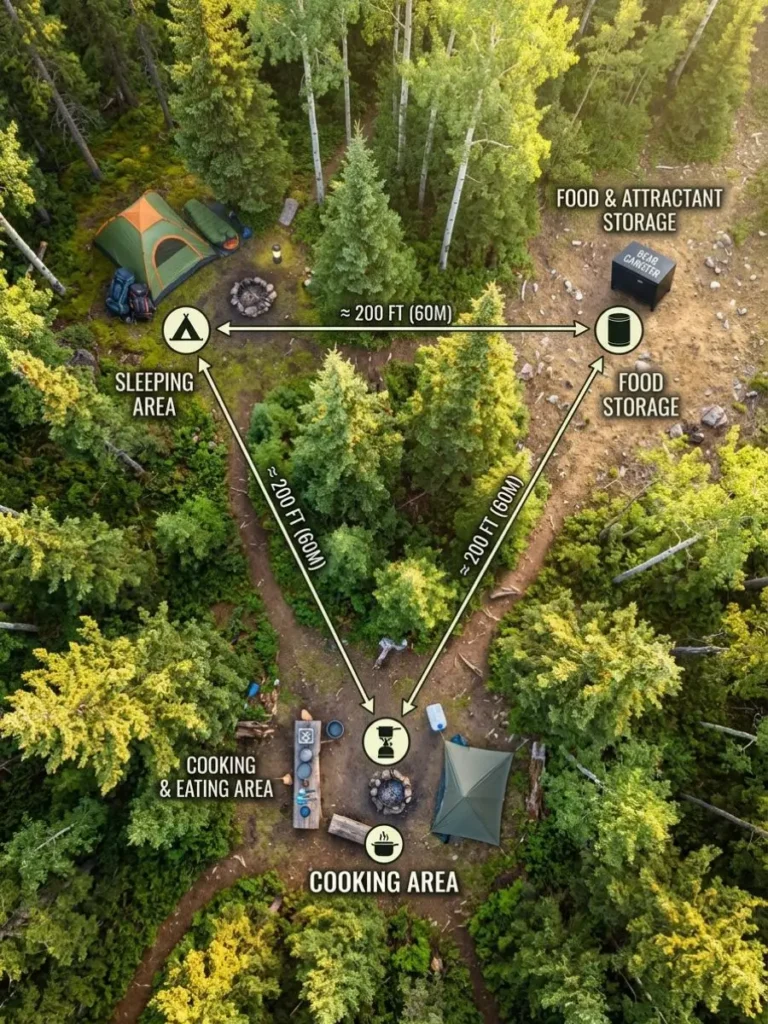
- Pack it Smart: To fit several days of food, you’ll need to be efficient. Repackage items from bulky boxes into smaller plastic bags. Plan your meals to maximize calories per ounce.
- Store it 100-200 Feet Away: Find a spot at least 200 feet (about 70 adult paces) away from your tent and your cooking area. Place it on flat, level ground. Avoid putting it near a cliff or a river, as a frustrated bear might roll it away.
- Master the “Triangle of Safety”: Visualize your campsite as a triangle. Your sleeping area is at one point. Your cooking area is at another (at least 200 feet away). Your food storage canister is at the third point (at least 200 feet from both other points). This prevents cooking odors from lingering near your tent and keeps any curious bear far from where you sleep.
- Secure the Lid Properly: Make sure the lid is fully screwed on or locked according to the manufacturer’s instructions. An improperly sealed canister can be pried open by a determined animal.
Know Before You Go: Navigating Bear Canister Regulations
Don’t get caught unprepared. Food storage rules are not universal; they are location-specific and strictly enforced with hefty fines.
Why Rules Vary
Regulations are based on several factors: the type and density of the local bear population (black vs. grizzly), the history of bear activity in the area, and the season. A park that allows hanging food in one area may require hard-sided canisters in another.
Examples of Strict Regulation Areas
While you must check the rules for any place you visit, some areas are famously strict and almost always require approved canisters for backcountry travel:
- Yosemite National Park
- Sequoia & Kings Canyon National Parks
- Grand Teton National Park
- Rocky Mountain National Park
- North Cascades National Park
- The Adirondack High Peaks Wilderness in New York
The most critical step in your trip planning process is to visit the official website of the park or forest you are visiting and find their “Food Storage” or “Bear Safety” page. This will give you the most current and accurate requirements.
Conclusion: Camp with Confidence and Conscience
Choosing the right bear proof cooler or bear canister is more than just buying another piece of gear—it’s an investment in your safety and a pledge to be a responsible steward of the wilderness. It’s the tool that allows you to replace the late-night anxiety of a snapping twig with the peaceful confidence of a secure camp. You can rest easy knowing you’ve done your part to protect yourself, your fellow campers, and the magnificent animals whose home you are privileged to share.
So, before your next adventure, make the right choice. Camp smart, stay safe, and help keep wild bears wild.
Frequently Asked Questions (FAQ)
Q1: Do I really need a bear proof cooler or bear canister if I’m just camping for one night?
A: Absolutely. It only takes one night for a bear to discover a food source and become dangerously habituated. The length of your stay has no bearing on your responsibility to store food safely. Every single trip into bear country requires proper precautions.
Q2: I’ve heard about hanging food in a bear bag. Is that still a good option?
A: While bear hangs were once a standard method, they are becoming less reliable. Bears have grown incredibly adept at defeating even well-executed hangs. Furthermore, finding a suitable tree and properly hanging a bag is very difficult. For these reasons, many parks no longer consider hanging an adequate method and explicitly require IGBC-certified containers.
Q3: What items besides food should go inside my bear-resistant container?
A: The golden rule is: If it has a scent, it must be secured. This includes all food (even canned goods), trash, cooking pots, utensils, pet food, and all toiletries. That means your toothpaste, soap, deodorant, chapstick, and sunscreen all need to go in the container. It’s also wise to store the clothes you cooked in, as they can retain strong food odors.
Q4: I bought a YETI cooler. Is it automatically bear-proof?
A: This is a common and critical misconception. No. While most YETI Tundra and Roadie hard coolers are IGBC-certified, they are only considered bear-resistant when secured on both front corners with appropriate padlocks. An unlocked YETI is not bear-resistant. Always use the locks to ensure your cooler meets the certification standards.