Affordable Camping Ideas: 7 Budget-Friendly Tips for Outdoor Fun!
Table of Contents
You Don’t Need Deep Pockets to Sleep Under the Stars
Here’s a surprising truth: the average American family spends over $1,000 on a single camping trip when you factor in gear, campsite fees, food, and travel. But what if you could cut that number in half — or even more — without sacrificing a single s’more or sunset view?
Affordable camping ideas aren’t just about pinching pennies. They’re about being smart, resourceful, and intentional so that you spend less time worrying about your wallet and more time breathing in fresh mountain air. Whether you’re a first-time camper or a seasoned outdoor enthusiast looking to trim your expenses, this guide has you covered.
In this article, you’ll discover seven practical, tried-and-true budget camping tips that actually work. From choosing the right campsite to meal planning like a pro, you’ll walk away with a clear action plan for your next affordable outdoor adventure.
Why Budget Camping Is More Popular Than Ever
With the rising cost of travel, hotels, and flights, more people are turning to camping as a wallet-friendly alternative for vacations and weekend getaways. The outdoor recreation industry has seen a massive surge in participation over the past few years, and for good reason: nature is free, and the memories you make outdoors are priceless.
But “budget camping” sometimes gets a bad reputation — as if spending less means roughing it in misery. That couldn’t be further from the truth. With the right approach, affordable camping can be even more enjoyable than an expensive resort stay because you’re fully present, disconnected from screens, and immersed in something real.
Let’s break down exactly how to make it happen.
Tip #1: Choose Free or Low-Cost Campsites
One of the biggest expenses on any camping trip is the campsite itself. Popular national park campgrounds can charge anywhere from $25 to $50 per night — and that adds up fast. The good news? There are thousands of free or nearly free camping options scattered across the country.
What Is Dispersed Camping?
Dispersed camping refers to camping outside of designated campgrounds on public lands, typically managed by the Bureau of Land Management (BLM) or the U.S. Forest Service. It’s completely legal in most areas, often free of charge, and gives you a genuinely wild experience away from crowded campgrounds.
- BLM Land: Millions of acres of public land across the western U.S. allow free dispersed camping, usually for up to 14 consecutive days.
- National Forests: Many national forests permit dispersed camping for free, as long as you follow Leave No Trace principles.
- State Parks: While not always free, state park campgrounds are almost always cheaper than national park sites — often between $10 and $20 per night.
- Apps to Find Free Sites: Try apps like iOverlander, Campendium, or The Dyrt to locate free and low-cost camping spots near you.
If you camp frequently, consider purchasing an America the Beautiful Annual Pass for $80. It covers entrance fees to all national parks and federal recreational lands for an entire year — a massive savings if you visit more than two or three parks annually.
Tip #2: Borrow, Rent, or Buy Gear Secondhand
Camping gear is where many beginners blow their budget before they even leave home. A brand-new tent, sleeping bag, camp stove, and cooler can easily cost $500 or more. Here’s a smarter approach.
Borrow Before You Buy
If you’re new to camping, resist the urge to immediately buy everything. Ask friends or family members if they have gear you can borrow. Most camping enthusiasts have extra equipment collecting dust in their garage, and they’re often happy to lend it out.
Rent Gear from Local Outfitters
Many outdoor retailers and local gear shops offer rental programs. REI, for example, rents tents, sleeping bags, and other essentials at reasonable daily rates. This is perfect for one-off trips where buying doesn’t make financial sense.
Shop Secondhand
Facebook Marketplace, Craigslist, OfferUp, and thrift stores are goldmines for used camping gear. You can often find quality tents, cookware, and sleeping pads at 50 to 70 percent off retail prices. Gear Up for Good, REI’s used gear program, is another excellent option for quality pre-owned outdoor equipment.
Gear Priority Checklist for Budget Campers
| Gear Item | Buy New? | Buy Used? | Rent? | Borrow? |
|---|---|---|---|---|
| Tent | Only if camping often | Yes — great value | Yes — ideal for beginners | Best first option |
| Sleeping Bag | Yes for hygiene reasons | Acceptable if cleaned | Yes | Yes |
| Camp Stove | Only if needed frequently | Yes — highly recommended | Sometimes available | Yes |
| Cooler | Not necessary — use a bag | Yes | Rarely available | Yes |
| Headlamp | Yes — very affordable | Yes | Not typically | Yes |
Tip #3: Plan Budget-Friendly Camp Meals
Food is one of the most controllable camping expenses, yet it’s also one of the areas where people tend to overspend. The key to affordable camping meals is preparation, not deprivation.
Meal Prep at Home
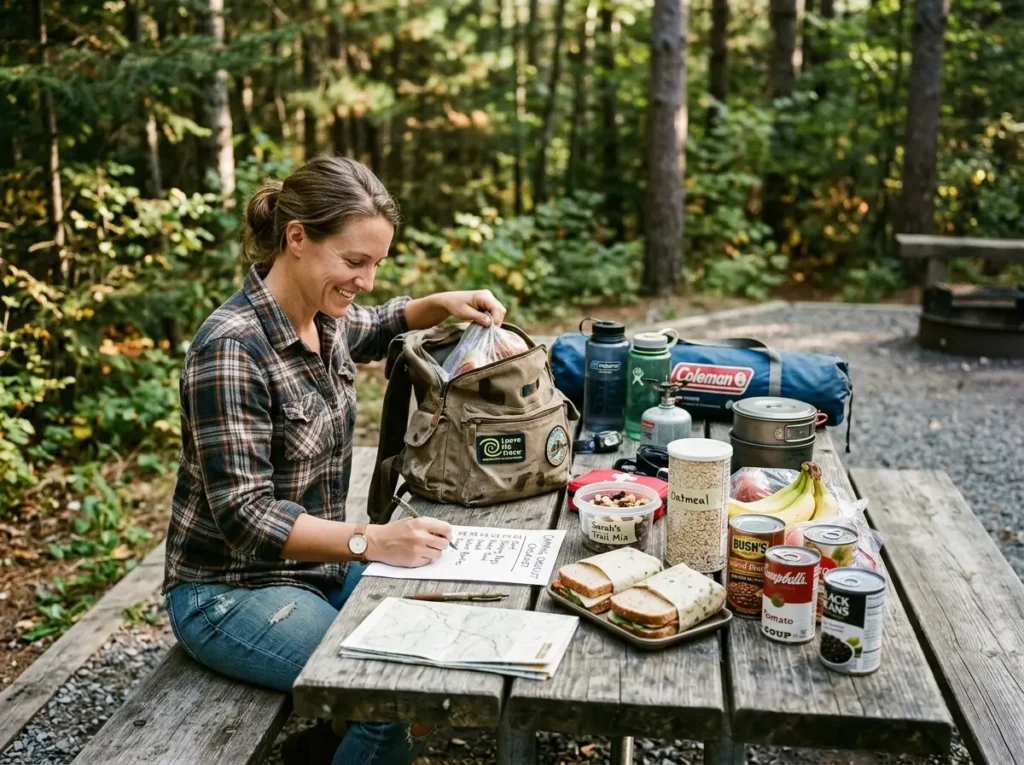
Before you leave for your trip, prepare as much food as possible at home. Chop vegetables, pre-mix dry ingredients for pancakes or chili, marinate proteins, and portion out snacks into zip-lock bags. This eliminates the temptation to stop at convenience stores or restaurants along the way — a budget killer that sneaks up fast.
Best Budget Camp Foods
- Oats and instant oatmeal — cheap, lightweight, and filling
- Canned beans and lentils — packed with protein at very low cost
- Eggs — versatile, affordable, and easy to cook over a camp stove
- Pasta and rice — ideal base for hearty, low-cost camp dinners
- Peanut butter — calorie-dense, no refrigeration needed, and kids love it
- Trail mix and granola — easy to make at home for a fraction of the store price
Skip the Freeze-Dried Meals
Those convenient backpacking meals look appealing, but they can cost $10 to $15 per serving. Unless you’re on a long backcountry trip where weight is critical, skip them and stick to whole foods you prepare yourself. You’ll eat better and spend far less.
Tip #4: Travel Smart to Cut Transportation Costs
Getting to your campsite can quietly become the most expensive part of your trip. A tank of gas, tolls, and a long drive can add up quickly. Here’s how to keep transportation costs low while still reaching beautiful outdoor destinations.
Camp Closer to Home
You don’t have to travel hundreds of miles to find a great camping experience. Do some research and you might be surprised how many accessible outdoor spaces exist within an hour or two of where you live. Local state parks, county forests, and reservoir areas are often overlooked gems that don’t require a long drive.
Carpool With Friends or Family
Camping is better with company anyway. Split gas costs among a group, share gear, and divide food responsibilities. Four people sharing one vehicle instead of driving separately can cut individual transportation costs by 75 percent.
Time Your Trips Strategically
Mid-week camping trips often come with lower campsite fees and thinner crowds. If your schedule allows, heading out on a Tuesday and returning on a Thursday can save you both money and frustration at popular spots.
Tip #5: Embrace Low-Cost or Free Outdoor Activities
Here’s where affordable camping ideas really shine: nature itself is free entertainment. You don’t need to pay for guided tours, gear rentals, or organized activities to have an unforgettable time outdoors.
Free Activities to Enjoy at Your Campsite
- Hiking: Almost every campsite is near trails. Pack water and snacks, lace up your shoes, and explore.
- Stargazing: Get away from city light pollution and look up. No equipment required.
- Swimming: Many campgrounds near rivers, lakes, or the ocean offer free access to water for swimming.
- Fishing: A basic fishing license and a $15 rod can provide hours of entertainment — and sometimes dinner.
- Wildlife watching: Binoculars are optional. Patience is free.
- Campfire storytelling and games: A deck of cards or a set of dominoes packs light and delivers big.
The less you spend on entertainment, the more you’re truly connecting with nature — which is the whole point of camping in the first place.
Tip #6: Use What You Already Own
Before you spend a single dollar on new camping supplies, take a thorough inventory of what’s already in your home. You’d be amazed how much of what you need is already sitting in your kitchen, garage, or storage closet.
Everyday Items That Double as Camping Gear
- Kitchen pot and pan — work perfectly on a camp stove or over a fire grate
- Reusable water bottles — already own them, bring them
- Old backpack — doesn’t need to be a fancy hiking pack for casual trails
- Thick blankets — can substitute for a sleeping bag in mild weather
- Phone flashlight or spare torch — works until you invest in a headlamp
- Tarp from the garage — can serve as ground cover, rain shelter, or sun shade
Improvisation is one of the most underrated camping skills. The more creative you are with what you already have, the less you’ll need to spend on specialized gear — especially on your first few trips.
Tip #7: Join Camping Communities and Loyalty Programs
There’s a whole community of budget-conscious campers out there sharing tips, deals, and discounts — and tapping into that network can save you a surprising amount of money.
Programs and Resources Worth Knowing
- REI Co-op Membership: A one-time $30 fee gets you annual dividends, member-only sales, and access to discounted gear rentals.
- KOA Value Kard Rewards: If you use KOA campgrounds, their loyalty card gives you 10 percent off nightly rates.
- Hipcamp and Harvest Hosts: Find unique, off-the-beaten-path camping on private land, farms, and vineyards — often at lower prices than traditional campgrounds.
- Reddit Communities: Subreddits like r/camping and r/ultralight are filled with frugal camping advice, gear recommendations, and campsite tips from real people.
- Facebook Groups: Search for local or national camping groups where members regularly post free campsite tips, gear giveaways, and carpooling opportunities.
Being part of a camping community doesn’t just save you money — it enriches your entire experience with shared knowledge, camaraderie, and inspiration for your next adventure.
Key Takeaways
- Free and low-cost campsites — including BLM land, national forests, and state parks — are widely available and easy to find with the right apps.
- Borrowing, renting, or buying used gear is almost always better than buying new for your first camping trips.
- Meal planning at home dramatically reduces food costs and keeps you out of expensive restaurants on the road.
- Camping closer to home and carpooling with others significantly cuts transportation costs.
- Nature provides endless free entertainment — hiking, stargazing, swimming, and wildlife watching cost nothing.
- Many items you already own at home can serve as effective camping gear with a little creativity.
- Joining camping communities and loyalty programs unlocks deals, discounts, and valuable advice from experienced campers.
Frequently Asked Questions About Affordable Camping Ideas
What are the most affordable camping ideas for beginners?
For beginners, the most affordable camping ideas include camping at nearby state parks to reduce travel costs, borrowing gear from friends or family, meal prepping at home, and focusing on free outdoor activities like hiking and stargazing. Starting simple keeps costs low while you discover what you truly need.
How can I camp for free in the United States?
You can camp for free in the U.S. by using dispersed camping on Bureau of Land Management (BLM) land or in national forests. Apps like iOverlander, Campendium, and The Dyrt make it easy to find legal free camping sites near you. Always follow Leave No Trace principles when camping on public land.
What is the cheapest way to eat while camping?
The cheapest way to eat while camping is to plan all your meals in advance, prep food at home, and bring budget-friendly staples like oats, eggs, canned beans, pasta, rice, and peanut butter. Avoid convenience stores, restaurants, and expensive freeze-dried backpacking meals whenever possible.
Do I need expensive gear for budget camping?
No, you don’t need expensive gear for budget camping. Many household items — pots, blankets, water bottles, tarps, and backpacks — can substitute for specialized camping gear. When you do need specific items, look for used gear on Facebook Marketplace, OfferUp, or REI’s used gear program before buying new.
Is camping actually cheaper than other vacations?
Yes, camping is generally much cheaper than hotel-based vacations when you plan strategically. While costs can escalate if you’re not careful, a budget camping trip can cost as little as $50 to $100 for a weekend for two people — far less than most hotel stays or resort vacations of the same length.
What is the America the Beautiful Pass and is it worth it?
The America the Beautiful Annual Pass is an $80 pass that covers entrance fees to all U.S. national parks and federal recreational lands for one full year. It’s absolutely worth it if you plan to visit two or more national parks annually, since most park entrance fees range from $20 to $35 per visit.
How do I find budget camping spots near me?
To find budget camping spots near you, use apps and websites like The Dyrt, Campendium, iOverlander, Hipcamp, and Recreation.gov. You can filter by price, including free options, and read reviews from other campers. Searching your local state parks department’s website is also a great starting point for affordable nearby options.
Can families with kids camp affordably?
Absolutely. Families can camp very affordably by choosing free or low-cost campsites, involving kids in meal planning and prep, focusing on free activities like hiking and swimming, and borrowing or repurposing gear they already own. Camping is actually one of the best budget-friendly family vacation options available, offering rich experiences at a fraction of the cost of theme parks or resorts.
Conclusion: Affordable Camping Is an Adventure, Not a Compromise
The outdoors doesn’t charge an admission fee. Sunrises over mountain ridges, the smell of pine trees after rain, the crackling warmth of a campfire — none of that costs a thing. What you pay for is access, convenience, and gear, and all three of those can be managed wisely with a little planning.
These affordable camping ideas prove that an incredible outdoor experience is within reach for nearly anyone, regardless of budget. From finding free campsites and borrowing gear to packing smart meals and tapping into outdoor communities, every tip in this guide is designed to help you spend less and experience more.
The best camping trips aren’t defined by how much you spend. They’re defined by the moments you create, the places you discover, and the connections you deepen — with nature, with the people you love, and with yourself.
So pack your bag, grab your gear (borrowed or otherwise), and head outside. Your next unforgettable adventure doesn’t have to cost a fortune. It just has to happen.
Ready to Plan Your Budget Camping Adventure?
Now that you’re armed with these affordable camping ideas, it’s time to put them into action. Start by picking a date, researching a free or low-cost campsite near you, and making a simple gear checklist using what you already own.
And if you found this guide helpful, share it with a friend who could use a little outdoor adventure on a budget!