Camping 101 Skills: A Complete Beginner’s Guide for New Campers
Your First Night Outdoors Doesn’t Have to Feel Intimidating
You probably love the idea of camping—the quiet mornings, fresh air, crackling campfires, and nights filled with stars. Yet, when it comes time to actually plan your first trip, excitement often mixes with doubt. What if you forget something important? What if you can’t set up your tent? What if things go wrong?
That feeling is completely normal.
Camping isn’t about being an expert. It’s about learning a few essential camping 101 skills that help you feel prepared, safe, and confident outdoors. Once you understand the basics, camping becomes less stressful and far more enjoyable. This guide walks you through every fundamental skill you need as a new camper, step by step, so your first trip feels rewarding instead of overwhelming.
Table of Contents
What Are Camping 101 Skills and Why You Need Them
Understanding Camping Basics for Beginners
Camping 101 skills are the foundational abilities that allow you to camp comfortably and responsibly. These skills aren’t advanced survival techniques. Instead, they focus on preparation, safety, organization, and basic outdoor awareness.
When you develop these skills, you gain:
- Confidence in unfamiliar environments
- Better safety for yourself and others
- Greater enjoyment of your camping experience
Camping gear helps, but skills are what truly make the difference. Knowing how to choose a campsite, set up shelter, cook safely, and respect nature ensures you’re not relying on luck.
Planning Skills Every New Camper Should Learn First
Choosing the Right Campsite
Your camping experience begins long before you arrive. Picking the right campsite sets the tone for your entire trip.
When choosing a beginner-friendly campsite, look for:
- Established campgrounds with marked sites
- Access to restrooms and water
- Clear rules and campground staff
Avoid remote or backcountry locations until you gain experience. A well-maintained campground offers a forgiving environment where you can focus on learning your camping 101 skills without unnecessary pressure.
Weather Awareness and Timing Your Trip
Weather can make or break your camping trip. As a new camper, checking forecasts is non-negotiable.
Before you go:
- Review the weather for your entire stay
- Prepare for temperature drops at night
- Avoid camping during severe weather alerts
Best conditions for beginners:
- Mild temperatures
- Low wind
- Minimal rain
Planning around the weather helps you stay comfortable and prevents avoidable mistakes.
Essential Camping 101 Skills for Setting Up Camp
How to Set Up a Tent the Right Way
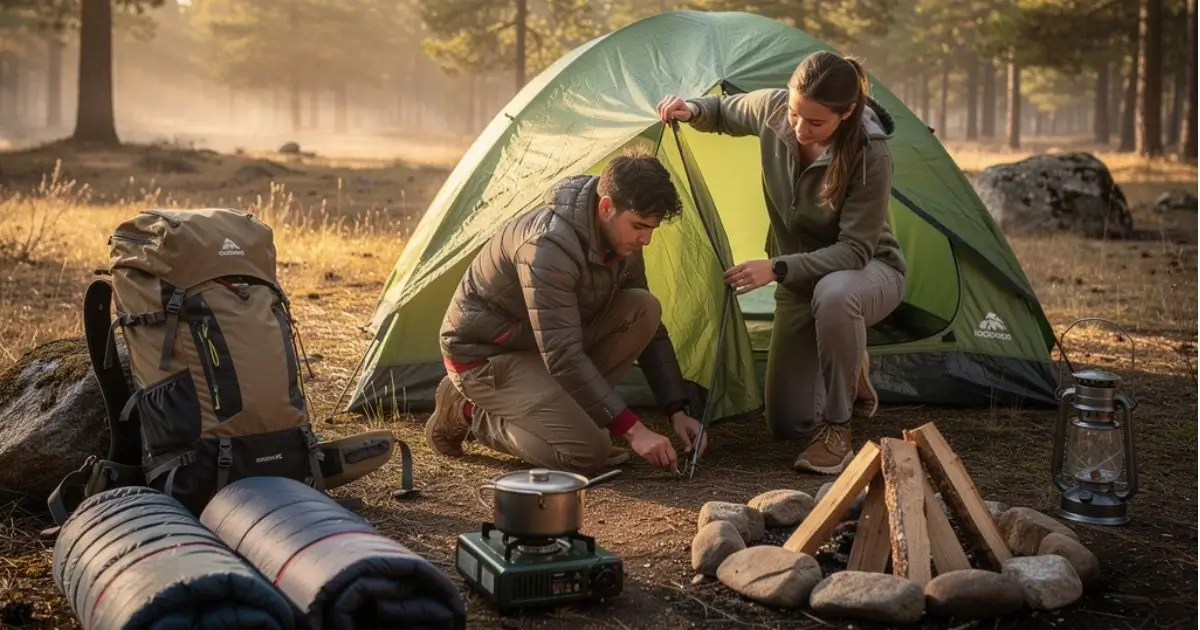
A tent is your home outdoors, and knowing how to set it up properly is one of the most important camping 101 skills you can learn.
Key steps include:
- Choosing flat, elevated ground
- Clearing rocks and debris
- Using a groundsheet for moisture protection
- Securing stakes and guylines tightly
Practicing tent setup at home before your trip saves time and frustration at the campsite.
Organizing Your Campsite
A well-organized campsite improves safety and comfort. Keep sleeping, cooking, and food storage areas separate to reduce mess and wildlife risks.
Basic campsite layout tips:
- Tent uphill from cooking area
- Food stored away from sleeping space
- Clear walkways to prevent tripping
Common Beginner Tent Mistakes
- Pitching on low ground where water collects
- Forgetting ventilation
- Leaving food inside the tent
Campfire and Cooking Skills for Beginners
Campfire Safety and Fire-Building Basics
A campfire is enjoyable, but it requires responsibility. Fire safety is a core part of camping 101 skills.
Before building a fire:
- Confirm fires are allowed
- Use designated fire rings
- Keep water nearby
Fire safety rules you should always follow:
- Never leave a fire unattended
- Keep flames manageable
- Fully extinguish the fire before sleeping
Simple Cooking Skills for New Campers
Cooking outdoors doesn’t need to be complicated. Start with simple meals and basic tools.
Beginner-friendly cooking tips:
- Use portable stoves when possible
- Prep meals at home
- Store food securely
Cooking skills improve quickly with practice, and simple meals often taste better outdoors than expected.
Outdoor Safety and Survival Camping 101 Skills
Basic First Aid Skills You Should Know
Accidents happen, even on short trips. Knowing basic first aid helps you stay calm and in control.
Your first aid kit should include:
- Bandages and antiseptic
- Blister treatment
- Pain relief medication
Understanding how to treat small cuts, burns, and insect bites prevents minor issues from becoming trip-ending problems.
Navigation and Awareness Skills
Even in established campgrounds, it’s important to stay aware of your surroundings.
Essential navigation habits:
- Carry a map, even if using GPS
- Stay on marked trails
- Tell someone your plans
Awareness is a simple yet powerful camping 101 skill that keeps you safe.
Wildlife Awareness for Beginners
Wildlife encounters are rare but possible. Learning proper food storage and campsite cleanliness reduces risk.
Key wildlife safety practices:
- Store food in sealed containers
- Never feed animals
- Observe from a distance
Leave No Trace Skills Every Beginner Camper Must Practice
Respecting Nature and Fellow Campers
Camping is about enjoying nature without harming it. Leave No Trace principles help preserve outdoor spaces for everyone.
Core Leave No Trace practices:
- Pack out all trash
- Stay on designated trails
- Respect wildlife
- Keep noise levels low
These habits are essential camping 101 skills that reflect respect and responsibility.
Camping 101 Skills Checklist for New Campers
Beginner Skills Overview Table
| Skill Category | Essential Skill | Why It Matters |
| Planning | Campsite selection | Comfort and safety |
| Setup | Tent pitching | Shelter and rest |
| Cooking | Fire and stove safety | Accident prevention |
| Safety | First aid basics | Emergency readiness |
| Ethics | Leave No Trace | Environmental protection |
This checklist gives you a clear snapshot of what to focus on before your first trip.
Common Camping Mistakes Beginners Make (And How You Avoid Them)
Every new camper makes mistakes, but awareness helps you avoid the most common ones.
Typical beginner errors include:
- Overpacking unnecessary gear
- Ignoring weather changes
- Skipping preparation
By focusing on camping 101 skills instead of perfection, you learn faster and enjoy the process.
Frequently Asked Questions About Camping 101 Skills
What are the most important camping 101 skills for beginners?
The most important skills include trip planning, tent setup, fire safety, basic cooking, and first aid knowledge. These form the foundation of a safe and enjoyable camping experience.
Can you go camping without experience if you learn camping 101 skills?
Yes. With preparation and basic skills, beginners can camp confidently without prior experience.
How long does it take to learn basic camping 101 skills?
Most skills can be learned within a few days of preparation and improved with each trip.
Are camping 101 skills different for family camping?
Family camping requires extra planning, organization, and safety awareness, but the core skills remain the same.
Conclusion: Build Confidence by Mastering Camping 101 Skills
Camping doesn’t demand expertise—it rewards preparation. When you take the time to learn essential camping 101 skills, you replace uncertainty with confidence and stress with enjoyment. Each trip builds experience, and every skill you practice makes the next adventure easier.
You don’t need to know everything. You just need to start.