Camping Weather by Month: What to Expect Year-Round (So You Don’t Get Surprised at 2 A.M.)
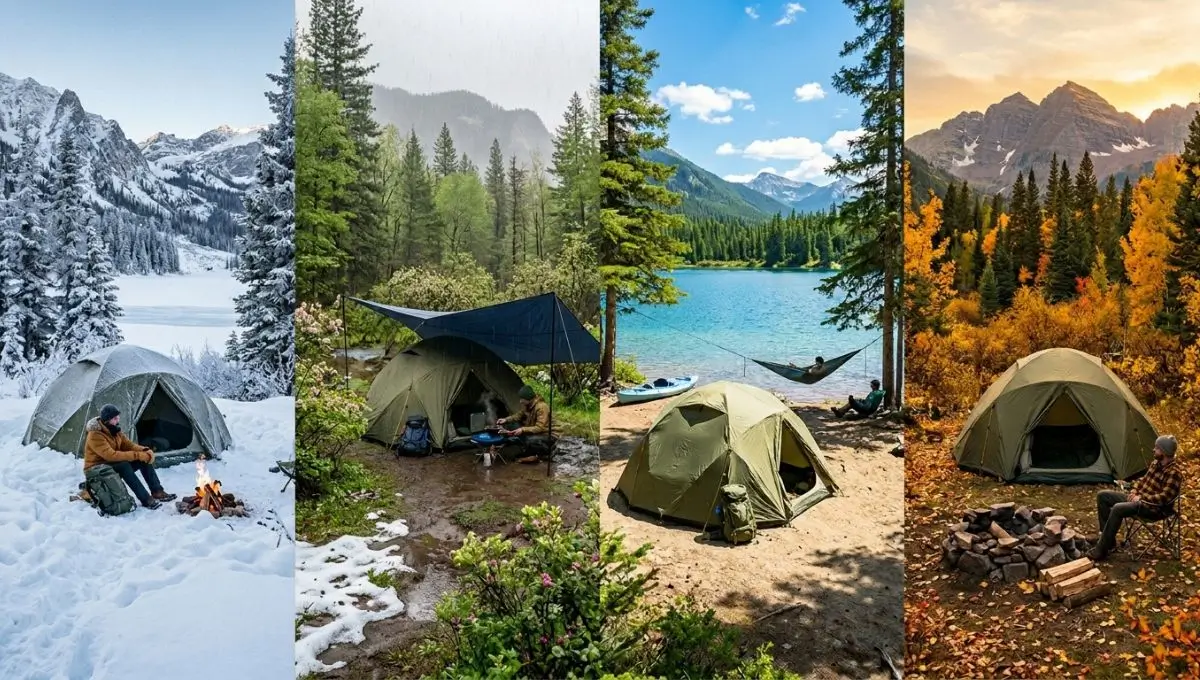
You probably know the feeling: you plan a trip for weeks, you picture quiet mornings and a crackling fire… and then the weather has other ideas. Maybe it’s the night you didn’t sleep because the wind wouldn’t let your tent rest. Or the “quick rain shower” that turned into an all-day soak. Camping can still be magic in every season—but it gets a lot easier when you understand camping weather by month and pack for what actually happens after sunset.
This guide walks you through the year, month by month, with realistic expectations, trip ideas, and what to prioritize in your gear.
Table of Contents
How to Use This Camping Weather by Month Guide (For Your Exact Trip)
Weather varies by region—here’s how to make it accurate for you
Monthly patterns are great for planning, but your comfort depends on three big local factors:
- Elevation: It cools fast as you climb. A common rule of thumb is roughly 3–4°F per 1,000 ft (about 6.5°C per 1,000 m). Mountains can feel like a different season.
- Water nearby: Coasts and big lakes often mean wind, fog, and damp chill, even when daytime temps look mild.
- Desert vs. forest: Deserts can swing wildly from hot afternoons to cold nights; forests hold moisture and can feel cooler.
Before you commit, check:
- A 10-day forecast (National Weather Service is solid in the U.S.)
- Historical averages (NOAA climate normals are useful)
- Park alerts for closures, fire restrictions, and road conditions
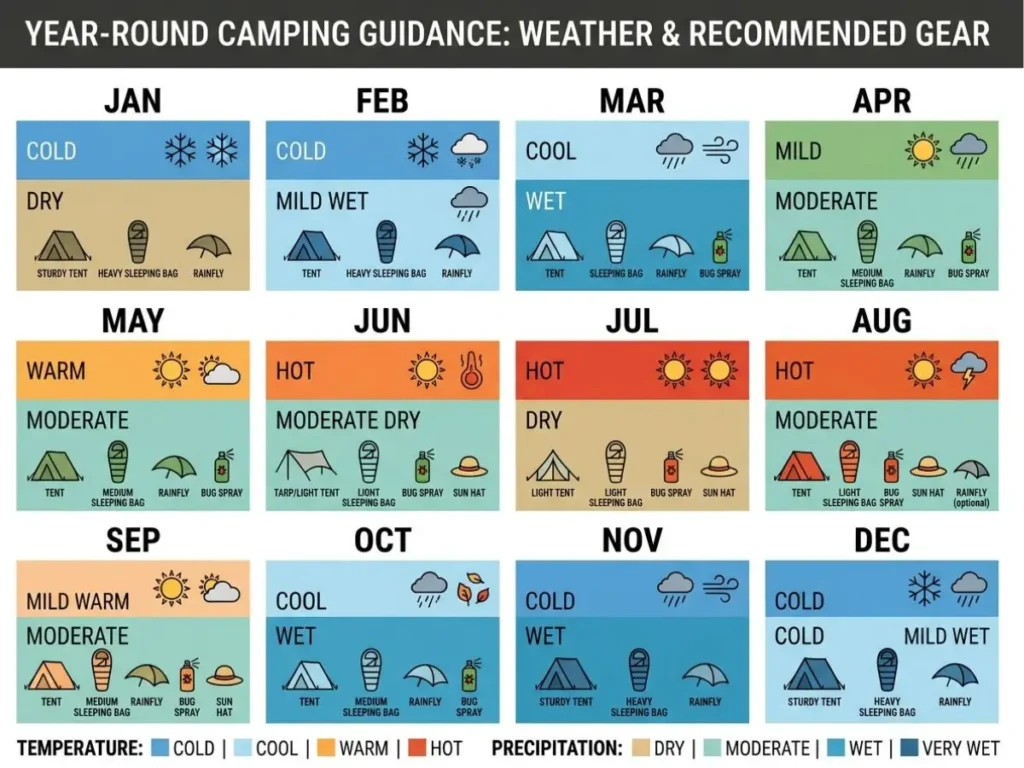
Camping Weather by Month at a Glance (Table)
Use this as a quick “what am I getting into?” guide.
| Month | Typical Feel (General) | Common Challenges | Best For | Gear Focus |
| Jan | Coldest, longest nights | Snow/ice, closures | Desert, low elevation | Warm sleep system, traction |
| Feb | Cold + windy | Storms, gusty nights | Southern routes | Wind protection, layers |
| Mar | Unstable shoulder season | Mud, rain/snow mix | Early spring exploring | Waterproofing, tarp |
| Apr | Warming, often wet | Rain, swollen creeks | Wildflowers | Rain gear, dry storage |
| May | Mild, pleasant | Bugs start | Most regions | Bug protection, ventilation |
| Jun | Warm, long days | Thunderstorms | Lakes, early mountains | Storm plan, sun care |
| Jul | Hottest, busiest | Heat, wildfire smoke | Alpine, water access | Heat management, hydration |
| Aug | Hot + humid (many areas) | Monsoon storms (some) | High elevation | Quick-dry layers, shelter |
| Sep | Cooler, calmer | Early frosts | Peak comfort month | Warm layer, headlamp time |
| Oct | Crisp days, cold nights | Wind, cold snaps | Fall color | Insulation, site choice |
| Nov | Cold returns | Short days, rain/snow | Desert + solitude | Warmth + waterproof |
| Dec | Winter settles in | Ice, closures | Cozy car camping | Winter-rated essentials |
Month-by-Month Camping Weather: What to Expect + What to Do About It
January camping weather
What to expect
Cold nights dominate, and many campgrounds reduce services or close. If snow is in play, access becomes the whole game.
Best trips
- Desert campgrounds with sunny days
- Forest campgrounds at low elevation
- Car camping where you can bail out if needed
Your priorities
- Sleep for the overnight low, not the afternoon high
- Traction (microspikes) if you expect icy trails or parking areas
February camping weather
What to expect
Similar cold, but often windier, which can make “okay temps” feel sharp.
Best trips
- Protected sites (trees, rock walls—without hazard limbs)
- Southern parks and lowlands
Your priorities
- Solid staking + guylines (wind exposes weak setups fast)
- A wind-blocking layer you’ll actually wear while cooking
March camping weather
What to expect
March can’t decide what it is. You might get sunny spring hikes—or a cold rain that lasts 12 hours.
Best trips
- Shoulder-season weekends near home
- Desert routes before serious heat returns
Your priorities
- Waterproofing: jacket, pack cover, and dry bags inside your pack
- Pick a tent site that won’t become a puddle (avoid low spots)
April camping weather
What to expect
Days get friendlier, but many regions see steady rain. Rivers and creeks can run high from snowmelt.
Best trips
- Wildflower camping
- Temperate forests and foothills
Your priorities
- Rain discipline: keep one “dry set” of sleep clothes sealed away
- Extra line for hanging wet gear under a tarp
May camping weather
What to expect
For many places, May is the start of the “easy season”: mild days, cooler nights, and more predictable patterns.
Best trips
- Family-friendly camping
- Longer hikes without extreme heat
Your priorities
- Bugs: expect mosquitoes in wetter areas and ticks in tall grass zones
- Ventilation: warm afternoons can turn your tent into a sauna
June camping weather
What to expect
Long days feel like a gift. But June often brings afternoon thunderstorms, especially in mountains and interior regions.
Best trips
- Lake camping
- Early-season mountain access (depending on snowpack)
Your priorities
- Lightning awareness: if thunder is close, you want to be off exposed ridges
- Sun protection (UV can surprise you at altitude)
July camping weather
What to expect
Heat and crowds. In some regions, wildfire smoke becomes part of the planning conversation.
Best trips
- High elevation/alpine basins
- Coastal breezes
- “Camp near water” trips where you can cool off safely
Your priorities
- Hydration capacity (carry more than you think)
- Heat management: shade, airflow, and an earlier bedtime
August camping weather
What to expect
Still hot, often humid. In the U.S. Southwest, August can mean monsoon-style storms—fast, loud, and sometimes dangerous in slot canyons and washes.
Best trips
- Northern latitudes
- High country where nights cool down
Your priorities
- Quick-drying clothing (cotton stays wet and miserable)
- A storm-ready plan: know where runoff would go before it starts
September camping weather
What to expect
This is a favorite for good reason: fewer bugs, fewer people, and nights that feel made for sleeping.
Best trips
- Just about anything—mountains, deserts, forests
- Longer road trips without peak-season crowds
Your priorities
- Prepare for early frosts, especially above treeline
- Shorter daylight: pack a headlamp you trust
October camping weather
What to expect
Crisp days, colder nights, and more wind events. Higher elevations can see early snow.
Best trips
- Fall color routes
- Desert shoulder season begins again
Your priorities
- Layering: you want flexible warmth, not one bulky solution
- Condensation control: cold nights + warm breath = damp tent walls
November camping weather
What to expect
Unpredictable and fast-changing. You can get mild afternoons and then a nighttime temp drop that feels unfair.
Best trips
- Desert camping with big skies
- Quiet forest campgrounds at lower elevation
Your priorities
- Bring a warmer sleep setup than you think you’ll need
- Make peace with longer nights: books, cards, warm drinks
December camping weather
What to expect
Winter settles in. Some places are peaceful and beautiful; others are inaccessible.
Best trips
- Mild coastal pockets
- Car camping with a “comfort first” setup
Your priorities
- Safety: cold weather mistakes stack up quickly
- Keep water from freezing overnight (store bottles in your tent vestibule or insulated container)
What Changes Camping Weather the Most (Even When the Forecast Looks Fine)
Elevation, wind, and humidity (the comfort triad)
- Wind chill: A breezy 35°F can feel far colder. The National Weather Service wind chill guidance is worth knowing if you camp in exposed areas.
- Heat index: In humidity, your sweat doesn’t cool you efficiently. That’s why a “not too hot” temp can still wipe you out.
- Humidity + cold: Damp air can make cool temps feel biting, especially near coasts.
Rain, storms, and lightning
If your month is storm-prone (often late spring through summer), build a simple habit:
- Set up camp early
- Eat earlier
- Know where you’ll shelter if thunder moves in
Wildfire smoke and fire restrictions
In peak summer and early fall, your biggest “weather” problem might be air quality.
- Check AQI (AirNow in the U.S.). If it’s high, consider moving camp or shifting to lower-activity days.
- Always follow current fire restrictions (USFS/NPS updates change fast).
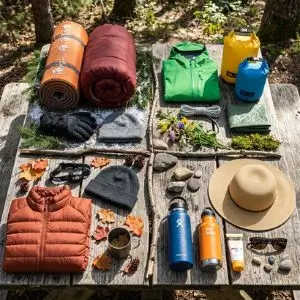
Packing by Season (Quick Checklists You’ll Actually Use)
Spring (March–May)
- Waterproof shell + rain pants
- Dry bags for sleep clothes and sleeping bag
- Tarp and extra cord
- Bug protection by late spring
Summer (June–August)
- More water capacity than you think you need
- Sun hat, sunscreen, sunglasses
- Ventilated sleep system (warm nights are real)
- Storm kit: extra stakes, guylines, patch kit
Fall (September–November)
- Warm midlayer + beanie
- Gloves for mornings
- Insulated sleeping pad (cold ground steals heat)
- Extra lighting (nights get long fast)
Winter (December–February)
- Winter-rated sleeping bag (or add quilt/liner carefully)
- Insulated pad + backup foam pad if you run cold
- Traction for icy mornings
- Emergency warmth (hand warmers, extra base layer)
Best Time to Camp Based on What You Want
If you want the warmest nights
Aim for July–August, but choose:
- Higher elevation or coastal areas if you hate sticky heat
- Water-access camps so you can cool down safely
If you want fewer crowds with great conditions
For many regions, September is the sweet spot, with May close behind.
If you want fewer bugs
Cooler shoulder months help:
- Early spring or late fall at lower elevations
- Higher elevations can reduce mosquitoes mid-summer (depending on snowmelt)
FAQ: Camping Weather by Month
What is the best camping weather by month for beginners?
In many regions, May, June, and September offer the easiest learning curve: milder temps, less extreme weather, and fewer “survival mode” nights. Still, check local averages and a 10-day forecast before you go.
How do you check camping weather by month for a specific park?
Use three layers:
- NOAA/NWS point forecast for the exact area
- NOAA climate normals (or your country’s equivalent) for typical monthly patterns
- The park’s alerts page for closures, seasonal hazards, and fire restrictions
Which camping weather by month has the least rain?
It depends on your region’s dry season. Instead of guessing, look up monthly precipitation averages for your destination. A “dry” month in one state or country can be a wet month somewhere else.
What camping weather by month is best for avoiding bugs?
Often cooler months (early spring and fall). But ticks can stay active in mild weather, so follow local health guidance and do checks even when mosquitoes aren’t obvious.
How accurate is camping weather by month compared to a 10-day forecast?
Month-by-month info helps you plan the type of trip and gear. The 10-day forecast helps you decide exactly what to pack and whether conditions are safe.
Wrap-Up: Make Weather Your Teammate, Not Your Enemy
When you understand camping weather by month, you stop gambling on comfort. You choose the right elevation, pack for the night (not the selfie-worthy afternoon), and head out with a plan for rain, heat, wind, or smoke.