
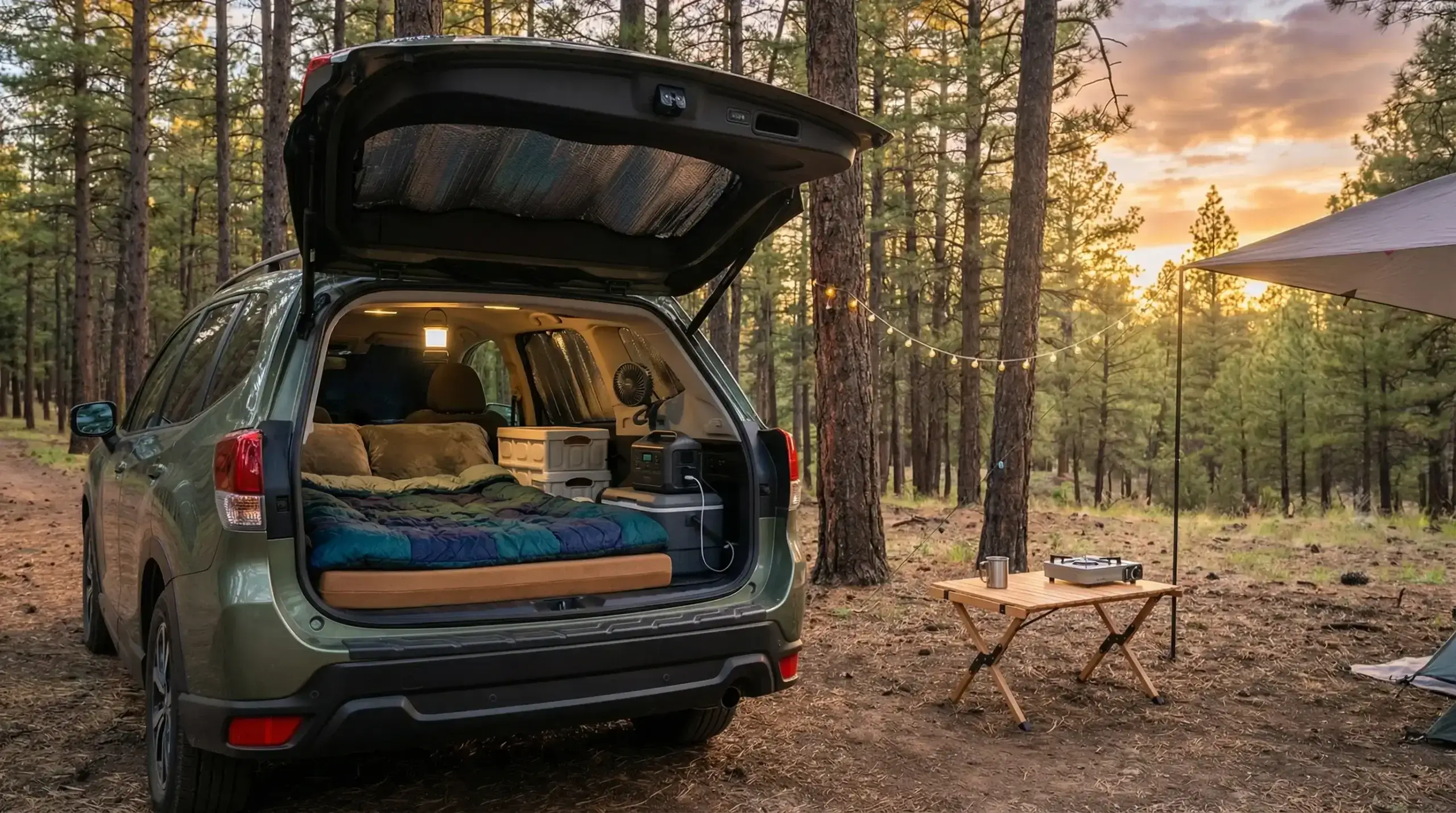
Car Camping Setup Essentials: A Complete, Comfortable Setup + Innovative Gadgets You’ll Actually Use
You can feel it the moment you pull off the road and shut the doors—silence, space, and that small thrill of knowing you’re sleeping “out there” tonight. Car camping is freedom with training wheels: you’re close to nature, but you still have a roof, a lock, and a quick exit if weather turns.
And yet, you’ve probably learned the hard way that a spontaneous night in the car can swing from magical to miserable fast. A fogged-up windshield. A dead phone. A lumpy backseat “bed.” That’s why dialing in your car camping setup essentials matters more than buying trendy gear. The goal is simple: you sleep well, eat safely, stay powered, and wake up ready to explore.
Below is a practical, repeatable setup—plus innovative gadgets that solve real problems without overcomplicating your trip.
Table of Contents
Quick-Start Checklist: Car Camping Setup Essentials (At a Glance)
Core essentials you’ll use every trip
- Sleep: mattress/pad, pillow, warm bedding
- Privacy + airflow: window covers, bug screens, ventilation plan
- Power: power bank or power station, charging cables
- Lighting: headlamp, lantern
- Food + water: cooler or fridge, water jug, basic kitchen kit
- Safety: first aid kit, roadside kit, fire extinguisher
- Organization: bins/bags, trash system
- Hygiene: wipes, hand sanitizer, bathroom plan
Tip: Run a “driveway test night.” If you can’t find your headlamp or you wake up damp from condensation, it’s better to learn that at home than at 1:00 a.m. in a cold parking lot.
Step 1 — Build a Sleep System That Doesn’t Punish Your Back
Mattress options (from easiest to most dialed-in)
Your sleep setup is the heart of your car camping setup essentials. Start by measuring your space: length from the hatch to the seats, and width at the narrowest point (often between wheel wells).
Common choices
- Fold-flat seats + foam topper: affordable, quick, surprisingly comfortable if your seats lay nearly flat.
- Inflatable SUV mattress: packs small, easy to store, but quality varies—bring a patch kit.
- Simple platform (DIY or modular): most comfortable long-term because it creates a flat surface and adds storage underneath.
Bedding that matches real temperatures
A sleeping bag rating isn’t a promise of comfort—it’s often a survival number. For comfort:
- Bring layers: base blanket + warmer top layer.
- In cold conditions, your insulation under you matters as much as what’s on top.
Sleep kit checklist (keep it simple)
- Sleeping pad/mattress (insulated if it’s chilly)
- Pillow (compressible or inflatable)
- Sleeping bag/quilt + extra blanket
- Eye mask + earplugs (tiny items, huge difference)
Source notes: If you want a deeper breakdown of insulation and sleep layering, outdoor education resources like REI’s guidance on sleep systems are a solid reference point.
Step 2 — Privacy + Ventilation: Sleep Better and Wake Up Dry
If you’ve ever woken up to soaked windows, you’ve met condensation. Your breath contains moisture, and inside a closed vehicle it has nowhere to go.
Window covers that work
You’ve got three practical routes:
- DIY Reflectix inserts: cheap, effective, and great for temperature control.
- Magnetic curtains/shades: fast setup, usually better-looking.
- Custom-fit shades: pricier, clean fit, less light leak.
Ventilation without bugs
Cracking windows helps, but you don’t want mosquitoes joining you at 2:00 a.m. Add:
- Window bug screens (slip-on or magnetic)
- A small cloth to wipe glass in the morning
Condensation control essentials
- Bug screens
- Microfiber towel (wipes windows fast)
- Optional: desiccant packs (nice for humid climates)
Step 3 — Power & Charging Essentials (Without Killing Your Car Battery)
Power is one of the most misunderstood car camping setup essentials. You don’t need a complicated electrical setup—but you do need a plan.
Power bank vs. portable power station
A power bank is enough when you:
- Only charge a phone, headlamp, and maybe earbuds
- Camp 1–2 nights and drive daily
A power station makes sense when you:
- Run a fan for hours
- Charge a laptop or camera batteries
- Use a 12V fridge
- Need medical devices (like CPAP)
Quick math that helps you buy wisely
- A device that uses 10 watts for 8 hours needs about 80Wh (10 × 8).
- Add inefficiency and a buffer—aim higher than the exact math.
Charging kit you should pack
- 12V car charger (reliable brand)
- USB-C/Lightning cables (bring one spare)
- Multi-port charger
- Cable organizer (keeps your setup from turning into a knot)
Safety note (don’t skip this)
Avoid running your vehicle overnight for heat. Carbon monoxide risk is real. The CDC has clear guidance on CO poisoning prevention—take it seriously, especially if you’re in enclosed areas or poor airflow situations.
Step 4 — Lighting Essentials: Small Gear, Big Comfort
Good lighting keeps you calm, efficient, and safer when you’re setting up in the dark.
The ideal lighting combo
- Headlamp: for hands-free packing, bathroom walks, quick fixes
- Lantern: for soft interior light (choose one with dimming)
- Red light mode: easier on your eyes and less harsh at night
Lighting checklist
- Headlamp (preferably rechargeable)
- Lantern (hangable or magnetic)
- Backup power (spare batteries or a small power bank)
Step 5 — Food, Water, and a Low-Stress Camp Kitchen
Cooler vs. 12V fridge: what fits your trips?
- Cooler: low cost, no power needed, but you manage ice and meltwater.
- 12V fridge: consistent temps, less food waste, but you need steady power.
Food safety matters. The USDA recommends keeping perishable foods at 40°F / 4°C or below. If your cooler can’t reliably do that, plan meals that don’t depend on fragile perishables.
Minimalist kitchen kit (no clutter)
- Water jug with spout (you’ll use it constantly)
- Mug + bowl + spoon/fork
- Knife + small cutting board
- Trash bags (bring extras)
- Hand soap + small wash bin + towel
In bear country (or anywhere with clever animals)
Follow local guidance (often from NPS and park agencies):
- Store food and scented items properly
- Don’t keep snacks loose in your sleeping area
- Clean up crumbs—yes, really
Step 6 — Organization: Make Your Setup Fast and Repeatable
Organization is the quiet hero of your car camping setup essentials. When everything has a home, you stop rummaging and start relaxing.
Storage that stays sane
- 2–4 labeled bins: sleep, kitchen, tools, hygiene
- Soft duffel for clothes (easier than a rigid bin)
- Seat-back organizer for daily-grab items
Keep these within arm’s reach at night
- Keys
- Headlamp
- Water
- Warm layer
- First aid basics
Step 7 — Safety & Roadside Essentials (Your “Bad Luck” Insurance)
You don’t pack safety gear because you expect trouble—you pack it so trouble stays small.
Vehicle + roadside essentials (AAA-style basics)
Groups like AAA commonly recommend carrying key roadside items. Your kit should include:
- Spare tire, jack, lug wrench (verify they’re actually in your vehicle)
- Tire inflator (12V) and gauge
- Jump starter or jumper cables
- Reflective triangle/road flares
- Basic tool kit
Personal safety essentials
- First aid kit (add meds you personally use)
- Fire extinguisher (small, vehicle-rated)
- Offline maps downloaded on your phone
- Weather alerts enabled
Source notes: For first aid guidance, the Red Cross is a reliable reference for what a basic kit should cover and how to use it.
Innovative Gadgets That Upgrade Your Car Camping Setup (Without Going Overboard)
These aren’t gimmicks—they’re problem-solvers.
Comfort gadgets you’ll feel immediately
- Quiet USB fan: airflow reduces condensation and helps you sleep
- Low-watt heated blanket: excellent for shoulder-season nights (use with a power station)
- Leveling wedges: makes uneven spots feel flat enough to sleep
- Compact white noise option: helpful in busy campgrounds
Smart utility gadgets (high value per dollar)
- Compact air pump: inflates mattresses and can top off tires
- Motion-sensor lights: great for hands-full moments
- Small temp/humidity sensor: helps you learn when condensation will hit
- Portable shower sprayer: pairs with a water jug for quick rinse-offs
For longer trips or remote routes
- Foldable solar panel: helps top up a power station
- 12V fridge/freezer: best when you camp multiple days between drives
- Satellite communicator: optional, but valuable beyond cell range
Table: Car Camping Setup Essentials vs. Nice-to-Have Gadgets (Buy in the Right Order)
| Category | Must-Have Car Camping Setup Essentials | Nice-to-Have Innovative Gadgets | What to prioritize |
| Sleep | Mattress/pad, warm bedding, pillow | Leveling wedges, heated blanket | Comfort first—fix sleep before anything else |
| Privacy/Air | Window covers, bug screens | Humidity sensor, desiccant packs | Ventilation prevents wet windows |
| Power | Power bank, car charger | Power station, solar panel | Upgrade when you add fridge/fan/laptop |
| Lighting | Headlamp, lantern | Motion-sensor lights | Good light reduces stress at night |
| Kitchen | Water jug, cooler, utensils | 12V fridge, shower sprayer | Choose based on trip length and diet |
| Safety | First aid, tire kit, jump starter | Satellite communicator | Don’t compromise here |
| Organization | Bins, trash system | Seat-back organizers | Faster setup, less mess |
A Simple Layout You Can Copy Tonight
“Zones” inside your vehicle
- Sleep zone: flattest area, bedding ready to deploy
- Access zone: headlamp, water, keys, warm layer within reach
- Kitchen zone: food bin and cooler near hatch for easy cooking
- Power zone: battery/power station secured so it doesn’t slide
- Hygiene/trash zone: wipes, sanitizer, trash bags in one place
Small habit that pays off
Pack in the same order every time. Your future self (tired, hungry, setting up in the dark) will thank you.
FAQ: Car Camping Setup Essentials
What are the most important car camping setup essentials for beginners?
Focus on your sleep system, ventilation/privacy, lighting, and a basic safety/roadside kit. If those are solid, everything else feels optional instead of urgent.
How do you sleep comfortably with basic car camping setup essentials?
You sleep better when you’re flat, warm, and not damp. Use a supportive pad or mattress, level your vehicle if needed, and crack windows with bug screens to reduce condensation.
Do you need a power station for car camping setup essentials?
Not always. A power bank works for short trips and phone charging. A power station becomes worthwhile when you run a fan, fridge, laptop, or anything that draws steady power.
How do you prevent condensation while using car camping setup essentials in cold weather?
Ventilation is your best tool. Crack windows (with bug screens), avoid bringing wet gear inside, and wipe moisture in the morning. A fan on low can also help move humid air.
Which innovative gadgets are actually worth it for car camping?
A quiet fan, compact air pump, and motion-sensor lights are “use every trip” upgrades. Add a power station or 12V fridge when your trip length and needs justify it.
Conclusion: Get the Essentials Right, Then Enjoy the Point of the Trip
Car camping gets easy when your setup stops being a nightly puzzle. Start with the true car camping setup essentials—sleep, airflow, power, food safety, and roadside readiness—then add innovative gadgets only where they remove friction.