Food Safety Camping: Essential Basics for Safe, Stress‑Free Outdoor Meals
You plan your camping trip for the quiet, the stars, and the taste of food cooked outside. The last thing you want is someone curled up in a sleeping bag all night with stomach cramps because the chicken wasn’t cooked through or the cooler warmed up.
Out in the woods, food poisoning isn’t just inconvenient. You’re far from pharmacies, clean bathrooms, and urgent care. Dehydration hits faster. Kids, older adults, and anyone with health issues feel it harder.
That’s why food safety camping isn’t a boring extra—it’s part of how you take care of yourself and the people you camp with. The good news: if you think ahead a little, you can eat well, stay safe, and relax around the fire without constantly worrying, “Is this still okay to eat?”
Table of Contents
Why Food Safety Camping Matters
At home, your fridge, sink, and stove quietly protect you. On a campsite, you’re battling:
- Warm temperatures
- Limited refrigeration
- Dusty hands and gear
- Improvised kitchens and dishwashing
Bacteria that cause foodborne illness grow fastest between 40°F and 140°F (4°C–60°C). Give them a few hours in that “danger zone” and your meal can become a problem, even if it smells fine.
When you focus on camping food safety—keeping cold food cold, cooking thoroughly, and handling leftovers wisely—you slash your risk and give yourself peace of mind.
Plan Before You Pack: The Foundation of Food Safety Camping
The safest camping meals start long before you light the stove.
Choose Safer Foods for Your Trip
You make food safety camping easier when you favor low‑risk, shelf‑stable foods and treat high‑risk foods carefully.
Great low‑risk options:
- Canned beans, chili, tuna, or chicken
- Dehydrated or freeze‑dried meals
- Instant rice, couscous, pasta
- Nut butters, nuts, trail mix, granola bars
- Tortillas, crackers, flatbreads
- Hard cheeses (for short trips)
Use high‑risk foods sparingly and early in the trip:
- Raw poultry and ground meat
- Fresh seafood
- Mayonnaise‑based salads
- Fresh milk and cream
- Raw or runny eggs
You don’t have to skip these completely, but you should plan how you’ll keep them cold and when you’ll use them.
Smart Menu Planning for Camping Food Safety
Plan your meals in order of perishability so food doesn’t sit too long in the cooler.
Simple structure:
- Day 1: Fresh meat, burgers, sausages, fresh refrigerated veggies
- Day 2: Pre‑cooked frozen meals, hard cheeses, sturdy vegetables
- Later days: Canned meals, dehydrated dinners, instant grains, nut butters
Do as much prep as possible in your clean home kitchen:
- Wash and chop vegetables
- Pre‑cook meats (chicken, ground beef, stews), cool, then freeze
- Portion sauces and seasonings into sealed containers
- Label containers with contents and “use by” day
One‑pot meals and foil packets are perfect for camping food safety—less handling, fewer dishes, and fewer chances to slip up.
Essential Gear for Food Safety Camping
A few inexpensive items make a huge difference:
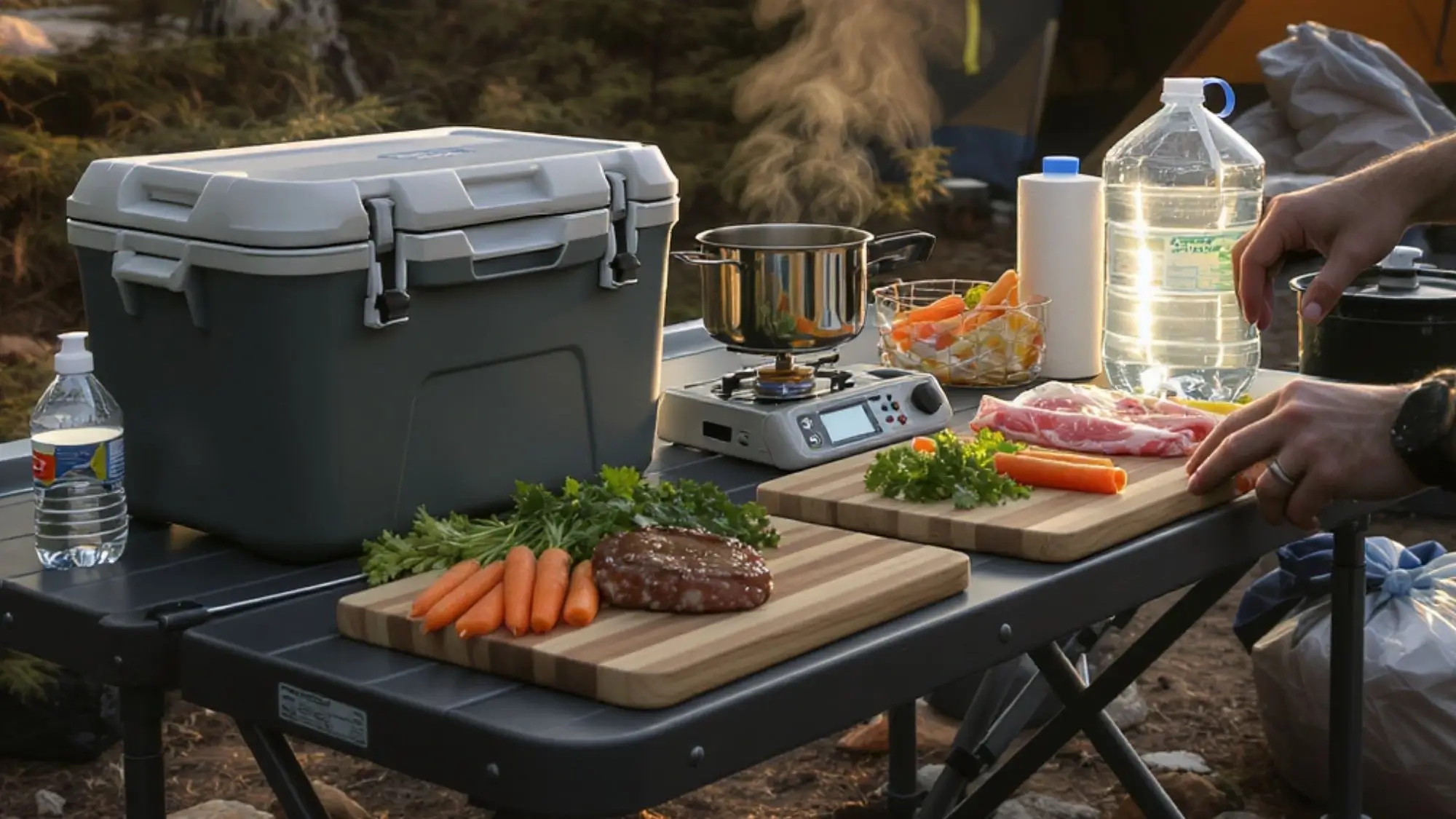
- Insulated cooler(s) with tight lids
- Plenty of ice or ice packs (block ice lasts longer)
- Instant‑read food thermometer
- Sealable bags and leak‑proof containers
- Cutting board(s) and a sharp knife
- Biodegradable dish soap, scrubber, and clean towels
- Hand soap and alcohol‑based sanitizer
- Heavy‑duty trash bags and aluminum foil
Pack these together in a dedicated “kitchen kit” so you never forget something critical for food safety camping.
Keeping Food Cold on the Road and at Camp
Your cooler is your portable fridge. How you pack and manage it decides whether perishable food stays safe.
Pack Your Cooler for Maximum Safety
Think in layers and minimize warm air.
- Pre‑chill the cooler
- Fill it with ice for an hour or two before packing.
- Chill or freeze food first
- Don’t load warm items into the cooler.
- Use two coolers if possible
- One for food, opened rarely.
- One for drinks and snacks, opened often.
- Layer smartly
- Bottom: ice or ice packs
- Then: raw meat double‑bagged
- Above: dairy, prepared meals, delicate items
- Top: more ice or frozen water bottles
- Keep it shaded and shut
- Store in the car’s cabin on the way, then in shade at camp. Open only when needed.
Aim to keep everything at or below 40°F (4°C). A simple fridge thermometer inside the cooler helps you check.
Storing Food Safely at Camp
Once you arrive, combine food safety with wildlife safety.
- Set up a clear kitchen area, separate from your tent.
- Keep food and coolers out of direct sun.
- Never store food or scented items (including toothpaste and trash) in your tent.
- In bear country, use:
- Bear lockers (at campgrounds)
- Bear canisters or proper food hangs (in backcountry)
Close cooler lids fully after each use and clean up spills quickly so smells don’t draw animals.
Safe Water for Drinking and Cooking
Water is part of food safety camping too. Never assume a stream or lake is safe to drink.
Use one of these methods:
- Boiling: Rolling boil for 1 minute (3 minutes above ~6,500 ft / 2,000 m)
- Filtration: Filter rated for bacteria and protozoa; add chemical treatment if viruses are a concern
- Chemical treatment: Iodine or chlorine dioxide tablets, following directions
Use treated water for:
- Drinking
- Cooking and mixing instant foods
- Washing dishes (ideally boiled for high‑risk campers)
Safe water keeps small issues from turning into big ones.
Cooking & Eating Safely Outdoors
Camp cooking feels relaxed, but you still need a few non‑negotiable habits.
Avoid Cross‑Contamination
To keep raw meat bacteria off everything else:
- Wash or sanitize hands before cooking and after handling raw meat
- Use separate cutting boards/knives for raw meat and ready‑to‑eat foods
- If you only have one board, wash it thoroughly with hot, soapy water between uses
- Never put cooked food back on a plate that held raw meat
- Keep raw meat packages from touching other foods in the cooler
These small steps are the backbone of camping food safety.
Cook to Safe Temperatures (Not Just “Looks Done”)
Color can lie; a thermometer doesn’t. Use it to check the thickest part of the food.
Quick Temperature Guide for Food Safety Camping
| Food Type | Minimum Internal Temp (°F) | Temp (°C) | Key Point |
| Poultry (whole or ground) | 165°F | 74°C | No pink; juices run clear |
| Ground beef, pork, lamb, veal | 160°F | 71°C | Essential for burgers and sausages |
| Steaks, chops, roasts | 145°F | 63°C | Rest 3 minutes before eating |
| Fish and shellfish | 145°F | 63°C | Flesh opaque and flakes easily |
| Egg dishes, casseroles | 160–165°F | 71–74°C | Center should be piping hot |
| Leftovers and reheated foods | 165°F | 74°C | Heat evenly all the way through |
Campfire tips:
- Cook over hot coals, not big flames, for even heat
- Turn food frequently
- Check temperature in the thickest part, avoiding bones
Once food hits the correct temperature, serve it soon or keep it hot (above 140°F / 60°C).
Leftovers, Time Limits, and the Danger Zone
Bacteria multiply quickly when food sits in the danger zone (40°F–140°F / 4°C–60°C).
Remember these simple rules:
- Don’t leave perishable food out for more than 2 hours
- If air temperature is above 90°F (32°C), the limit is 1 hour
- After that, throw it away, even if it looks okay
For leftovers:
- Cool quickly in shallow containers
- Get them back into the cooler within 1–2 hours
- Reheat to 165°F (74°C) before eating
- If you’re unsure how long something sat out or how cold the cooler stayed, err on the side of caution
“When in doubt, throw it out” is the single most important phrase in food safety camping.
Special Situations: Kids and High‑Risk Campers
Some people are more likely to get seriously ill from foodborne bacteria:
- Young children
- Pregnant people
- Older adults
- Anyone with a weakened immune system
Extra Care for Vulnerable Campers
If you’re camping with someone high‑risk:
- Be stricter about time limits and cooler temperature
- Avoid very high‑risk foods:
- Raw or undercooked meat
- Unpasteurized milk or cheeses
- Raw sprouts
- Runny eggs
- Wash hands more often and use safe water for brushing teeth and rinsing dishes
For kids specifically:
- Pre‑portion snacks so small hands aren’t constantly in shared bags
- Make “wash your hands before you eat” a simple rule
- Let them help with safe tasks (washing veggies, assembling wraps), not raw meat
Quick Food Safety Camping Checklist
Use this as a fast reference before and during your trip.
- Plan meals from most perishable to most shelf‑stable
- Pre‑cook and freeze meats when possible
- Pre‑chill cooler and all perishable foods
- Pack: thermometer, soap, sanitizer, dish soap, trash bags
- Keep raw meat double‑bagged at the bottom of the cooler
- Store all food and scented items away from your tent and wildlife
- Wash or sanitize hands often, especially before meals
- Cook to safe internal temperatures, not just by look
- Follow the 2‑hour/1‑hour rule for food left out
- Cool, store, and reheat leftovers safely—or throw them out
FAQ – Food Safety Camping Basics
What are the most important food safety camping rules?
If you remember nothing else, remember this:
- Keep cold food at or below 40°F (4°C)
- Keep hot food at or above 140°F (60°C)
- Don’t leave perishable food out more than 2 hours (1 hour in hot weather)
- Avoid cross‑contamination between raw and ready‑to‑eat foods
- When in doubt, throw it out
These rules handle most camping food safety risks you’ll face.
How can I keep food cold while camping with no electricity?
You can still keep food safe by:
- Using high‑quality coolers with thick insulation
- Pre‑chilling the cooler and the food
- Packing plenty of block ice or frozen water bottles
- Keeping the cooler in the shade and opening it as little as possible
- Using one cooler for food and a separate one for drinks
Is it safe to pre‑cook meat at home for camping?
Yes—if you handle it correctly:
- Cook meat to safe internal temperatures at home
- Cool quickly, then refrigerate and freeze
- Keep it very cold in the cooler
- Reheat to 165°F (74°C) at camp
Pre‑cooking actually improves food safety camping because you reduce raw meat handling outdoors.
How long can cooked food safely sit out while camping?
- Up to 2 hours at normal temperatures
- Up to 1 hour if it’s hotter than 90°F (32°C)
After that, bacteria may have multiplied enough to make the food unsafe, even if it looks fine.
Conclusion – Make Food Safety Camping Part of the Adventure
You go camping for fresh air, good company, and simple meals eaten under the sky—not for surprise illnesses and emergency drives back to town. When you build food safety camping into your planning, packing, cooking, and cleanup, you protect your trip as much as your health.
You don’t need complicated systems. You need a cooler that stays cold, clean hands and tools, safe cooking temperatures, and a willingness to toss food when you’re unsure.
If you’re getting ready for a trip:
- Save this guide and checklist
- Use it to plan your menu and packing list
- Share it with the people you’re camping with so everyone’s on the same page
Start applying these camping food safety basics on your very next outing. You’ll notice the difference in your confidence around meals—and in how fully you can relax and enjoy the fire, the views, and the stories that come with them.