
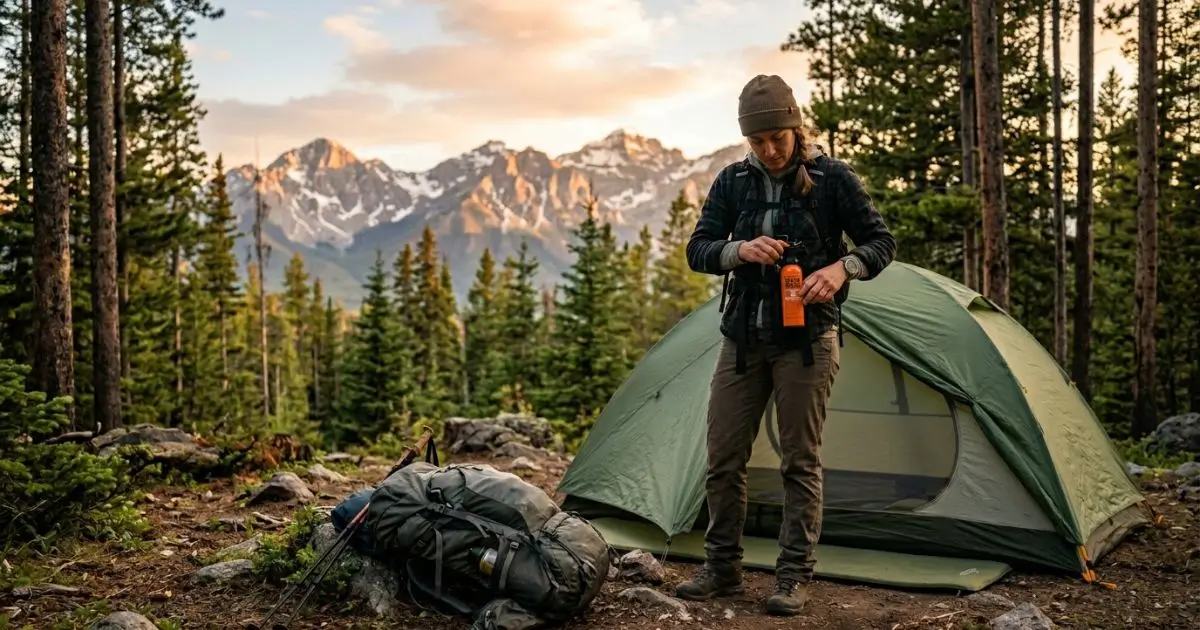
How to Use Bear Spray Effectively While Camping (So You’re Ready When It Counts)
The first time you hear heavy footsteps outside your tent, your brain doesn’t politely ask for context. It jumps straight to worst-case scenarios. Your hands go cold, your breathing changes, and suddenly every little sound feels louder than it should.
If you camp in bear country, that edge is understandable. But you don’t have to live in it. When you know how to use bear spray—and you carry it the right way—you replace helplessness with a plan. This guide walks you through choosing, carrying, and using bear spray effectively while camping, so you’re not trying to “figure it out” in the one moment you can’t afford to.
Table of Contents
Why Bear Spray Matters in Bear Country
Bear spray is one of the few tools recommended widely by land-management agencies because it’s designed to stop a close-range charge without permanent harm. It’s not magic, and it’s not a substitute for good camping habits—but it can buy you distance and time when a bear is too close and too committed.
What bear spray is (and what it isn’t)
Bear spray is:
- A high-volume capsaicin-based deterrent (the same “heat” in hot peppers)
- Designed to create a cloud barrier a bear runs into
- Regulated in the U.S. through EPA registration (check the label)
Bear spray is not:
- Bug spray
- “Bear repellent scent”
- A guarantee you can ignore food storage rules
- The same thing as small personal pepper spray (different range, output, and purpose)
Sources to cite/check for your area: U.S. EPA labeling guidance, National Park Service (NPS) bear safety resources, Parks Canada bear country guidance, and the Interagency Grizzly Bear Committee (IGBC).
Does bear spray work?
In real-world incident summaries and field research often referenced by parks and wildlife groups, bear spray is frequently shown to be highly effective when it’s:
- accessible,
- used at the right time and distance, and
- deployed correctly (accounting for wind).
You can do everything “right” and still have a tense moment—but correct use dramatically improves your odds of walking away without injury.
Choosing the Right Bear Spray for Camping (What to Look For)
The best bear spray is the one you can deploy confidently under stress. That comes down to a few specs and one practical thing: whether you’ll actually carry it where you can reach it.
Key label features to check before you buy
Look for:
- EPA registration number (U.S.): confirms it’s regulated for this purpose
- Range: commonly around 20–40 feet depending on brand/model
- Spray duration: often about 5–9 seconds total
- Expiration date: pressure and performance degrade over time
- Holster compatibility: belt, chest, or pack-strap options
If you camp in Canada or other regions, check local rules and approved products—requirements can vary.
Bear spray comparison table (quick decision helper)
| Feature | Why it matters to you | What to aim for (typical camping use) | Common mistake |
| Range | Determines how early you can create a barrier cloud | A practical, labeled effective range you can deploy confidently | Buying based only on “max distance” marketing |
| Spray duration | More time to adjust and reapply if needed | Enough continuous spray to build a cloud (often ~6–9 sec) | Choosing tiny cans that empty almost instantly |
| Expiration date | Old cans may lose pressure | In-date for your whole trip | Carrying an expired can because “it’s probably fine” |
| Can size/shape | Affects grip and control | Comfortable in your hand with gloves | Getting a can that’s awkward to hold under stress |
| Holster | Determines access time | A real holster you’ll wear, not stash | Keeping it in your pack “to keep it safe” |
Where to Carry Bear Spray While Camping (So You Can Actually Use It)
The #1 bear spray failure is simple: it’s not accessible.
The “1-second rule”
Carry bear spray so you can draw it in about one second—without removing your backpack and without digging through pockets.
Good options:
- Belt/hip holster (classic and reliable)
- Chest harness (great with a backpack waist belt)
- Backpack shoulder-strap holster (excellent for hikers)
Where not to keep it
Avoid these unless you have no other option:
- Inside your backpack
- In the top lid of your pack “just in case”
- Buried in a bear bin while you hike away from camp
Night setup (simple and effective)
When you’re in your tent:
- Put bear spray in the same reachable spot every night (near your dominant hand).
- Keep your headlamp equally consistent.
- Make a tiny plan you can follow half-asleep: sit up → light on → spray in hand → listen/assess.
How to Use Bear Spray Step-by-Step (Technique That Holds Up Under Stress)
This is the heart of the question: how to use bear spray in a way that works when your pulse spikes.
Before you need it: prep and practice
Do this at home, not on the trail:
- Read the canister label from top to bottom.
- Practice your draw with the can unarmed (safety on), then practice removing the safety clip smoothly.
- If possible, buy an inert practice can that matches your real one in size and feel.
Your goal is not to become a tactical expert—it’s to remove hesitation.
When to use bear spray
Use bear spray when a bear is:
- Closing distance and not responding to your voice
- Approaching with focus (not casually wandering)
- Bluff-charging or continuing forward despite you standing your ground
- Too close for you to safely retreat
If a bear is far away and unaware of you, you usually don’t need spray—you need space and a calm exit route. Many encounters can be resolved by backing away and giving the animal room.
How to deploy bear spray (the practical sequence)
- Stop. Don’t run.
Running can trigger a chase response, and you’ll lose footing fast on uneven ground. - Draw your bear spray.
Keep it in your dominant hand. Keep your other hand free for balance. - Remove the safety clip.
Do this early enough that you’re not fumbling at the last second. - Aim slightly downward.
You’re not trying to “hit” the bear like a dart. You’re building a cloud barrier in the bear’s path. - Spray in short bursts (about 1–2 seconds).
Short bursts help you adjust and conserve spray. - Adjust for movement and wind.
If the bear keeps coming, spray again—don’t freeze. Move only if you can do it safely. - Back away once the bear turns off.
Create distance without chasing. Keep your eyes on the bear as you retreat.
The wind problem (and how to handle it)
Wind is the detail most people ignore until it matters.
If wind is blowing toward you:
- Angle lower and slightly to the side to reduce blowback.
- If you can, step laterally to get a better angle.
- Avoid spraying from inside a tent or enclosed space unless it’s truly life-threatening—blowback can disable you.
What to Do After Using Bear Spray
Using bear spray is not the end of the incident—it’s the start of the “get out safely” phase.
Immediately after deployment
- Leave the area once the bear disengages. Don’t stick around to “see where it goes.”
- Check your group for exposure—eyes, skin, and breathing.
- If you or someone else gets spray in the eyes, rinse with cool water when safe, and avoid rubbing.
Report the incident
If you’re in a park or managed backcountry area:
- Report to rangers or the local land manager.
- Share location, time, bear behavior, and whether food or trash may have been involved.
Reporting helps land managers make decisions that protect both people and wildlife.
Common Mistakes When Learning How to Use Bear Spray (And How You Avoid Them)
You don’t need perfect execution—you need to avoid the predictable errors.
The most common mistakes
- Storing bear spray in your pack instead of on your body
- Never practicing the safety clip removal
- Spraying too early (out of range) or waiting too long (panic distance)
- Forgetting wind direction
- Treating bear spray like a substitute for clean camp habits
- Carrying an expired or damaged can
Quick pre-trip checklist (printable mindset)
- Bear spray is holstered on your body every hike
- You know the labeled range and spray duration
- You’ve practiced the draw at least a few times
- Food storage plan is locked in (canister, locker, hang—whatever your area requires)
- Trash and toiletries are managed like food (because they are, to a bear)
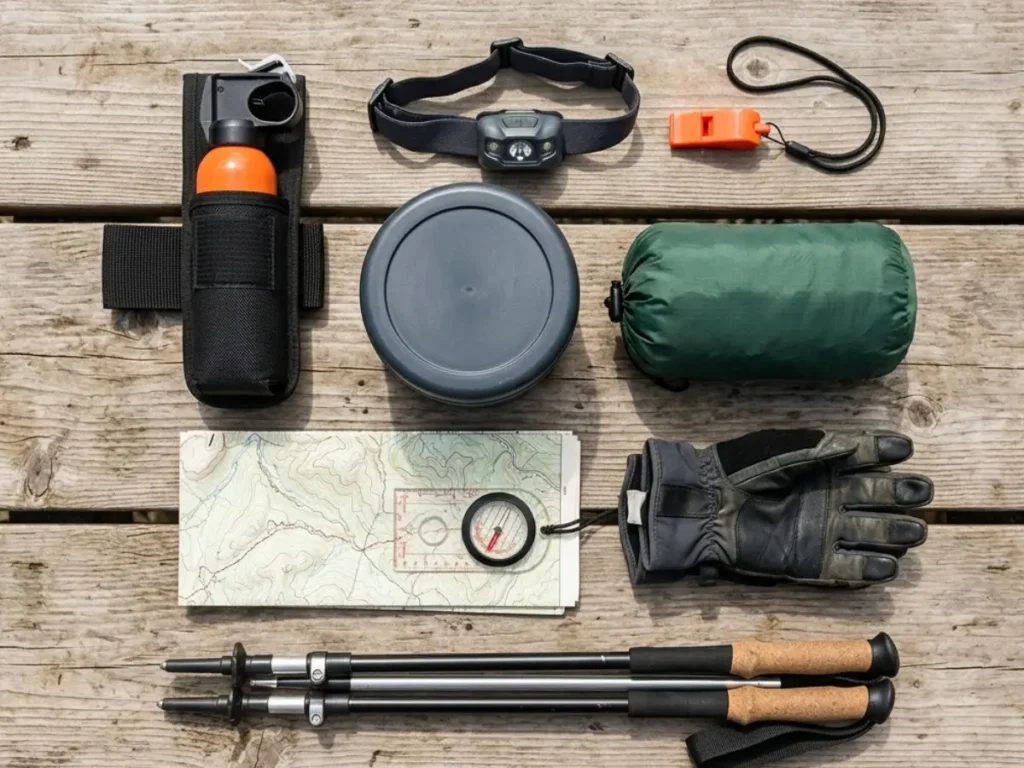
Bear Spray + Smart Camping Habits (So You Need It Less)
Bear spray is your emergency brake. Good camping habits are your steering wheel.
Keep a clean camp (reduces surprise encounters)
- Cook and eat away from where you sleep when possible.
- Store all scented items properly: food, trash, toothpaste, sunscreen, cookware.
- Don’t sleep in clothes you cooked in if you spilled grease or strong-smelling food.
Hike like you’re sharing the trail
- Make noise in thick brush and near running water.
- Scan ahead and look for sign: tracks, scat, fresh digging, carcasses.
- Keep dogs close—off-leash dogs can bring a bear back to you fast.
FAQ: How to Use Bear Spray (Camping Edition)
How to use bear spray if a bear charges?
When the bear is within the effective range listed on your can, remove the safety clip, aim slightly downward, and spray short bursts to build a cloud barrier in its path. Back away once the bear turns off.
How to use bear spray at night while camping?
Keep your bear spray in the same reachable place every night and your headlamp equally accessible. If you need to deploy, light the area, check wind if possible, and spray only when the bear is close enough for the spray cloud to be effective.
How to use bear spray in the wind without spraying yourself?
Angle the spray lower and slightly offset to compensate for wind, use short bursts, and shift your position laterally if it’s safe. Avoid spraying in enclosed spaces where blowback can disable you.
How to use bear spray versus pepper spray—are they the same?
Not really. Bear spray is designed for higher volume and longer range to create a deterrent cloud. Personal pepper spray is usually smaller, shorter range, and intended for different threats.
How to use bear spray safely around kids or other campers?
Keep it holstered and secured, treat it like a serious tool, and never let children handle it. If you practice, use an inert training can in an open area away from people and pets.
Conclusion: You Don’t Rise to the Moment—you Fall to Your Preparation
If you’re camping in bear country, fear isn’t the enemy—confusion is. When you know how to use bear spray, carry it where you can reach it, and practice the basics, you give yourself the calm that helps you make good decisions fast.