Kids Camping Checklist: 10 Easy Steps for Stress-Free Trips (Family Packing + Prep Guide)
Camping with kids is a little like hosting a birthday party in the woods. You want the magic—sticky s’mores fingers, sleepy giggles in a tent, that proud moment when your child spots a rabbit before you do. But your brain keeps running a quiet checklist in the background: Did I pack enough warm clothes? Where’s the flashlight? What if someone refuses dinner?
If you’ve ever pulled into a campsite and realized the pajamas are still on the bedroom floor, you already know the truth: a solid kids camping checklist isn’t about being “organized.” It’s about giving yourself breathing room so you can actually enjoy your family.
Below you’ll find a simple, realistic system—10 easy steps—plus a printable-style table and FAQs to make camping with kids calmer from the moment you leave your driveway.
Table of Contents
Why You Need a Dedicated Kids Camping Checklist (Not Just a Regular Packing List)
A standard camping list assumes everyone can tolerate the same discomfort. Kids can’t (and honestly, most adults can’t either). Your kids camping checklist needs to account for:
- Sleep comfort, because tired kids spiral fast
- Temperature swings, especially at night—even in summer
- Snack frequency, because “I’m hungry” arrives every 17 minutes outdoors
- Hygiene and safety, because dirt + minor scrapes are basically guaranteed
- Boredom buffers, because downtime is when whining blooms
Reliable sources like the National Park Service (NPS) and Leave No Trace emphasize preparation and low-impact habits, while agencies like NOAA (weather) and the CDC (insects and outdoor safety) provide practical guidance that directly impacts family trips. You don’t need to memorize all of it—you just need a checklist that bakes the basics into your routine.
10 Easy Steps for Stress-Free Camping With Kids
Step 1: Choose a Kid-Friendly Campsite (Your Future Self Will Thank You)
Before you pack a single item, set yourself up for success.
Look for campsites with:
- Bathrooms you can reach quickly (especially at night)
- Shade and some wind protection
- A flatter tent pad (saves you from the “rolling downhill all night” problem)
- A quieter loop (fewer midnight conversations from neighbors)
- Safe boundaries if there’s water nearby
If it’s your first trip: make it one night. You’ll learn more from one easy overnight than from a three-night struggle.
Where to confirm details: park websites and campground maps (NPS, state parks) usually list restroom distance, quiet hours, and basic site features.
Step 2: Check Weather + Bugs Like a Pro (48 Hours Before You Go)
Weather changes fast, and kids feel it faster.
Do this:
- Check the forecast 48 hours before and again the morning you leave
- Prepare for colder nights than you expect (common in many regions)
- Plan a bug strategy for dusk and dawn
Smart bug prep (CDC guidance + label instructions matter):
- Pack repellent and apply it as directed
- Use long sleeves/pants in peak mosquito hours
- Consider a head net if your campsite is notoriously buggy
Source to cite: NOAA for forecasts; CDC for insect-bite prevention and repellent guidance.
Step 3: Use the “Sleep First” Rule (Because Sleep Runs the Whole Trip)
If you do nothing else, get sleep right. Better sleep equals better moods, better breakfasts, and fewer “I hate camping” declarations.
Your kid-focused sleep system:
- Tent + ground tarp/footprint (if appropriate)
- Sleeping bag rated for the expected lows
- Sleeping pad (insulation matters more than you think)
- Pillow (real or camp pillow)
Stress-reducing extras:
- A familiar blanket or stuffed animal
- Warm socks and a beanie for cold nights
- A small night light or headlamp for bathroom runs
If your child is very young, align with American Academy of Pediatrics (AAP) guidance on safe sleep for age and stage, and keep sleep setups simple and stable.
Step 4: Pack Clothing as Mini Outfits (Not a Heap of Random Items)
When kids get dressed in a tent, you want speed—not rummaging.
A practical formula:
- 1 outfit per day + 1 backup
- Extra socks and underwear (always)
- One warm layer even in summer
- One rain layer no matter what the forecast says
Quick clothing checklist:
- Base layers (especially if nights are cool)
- Mid-layer (fleece or hoodie)
- Rain jacket or shell
- Sleepwear
- Sun hat + warm hat
- Closed-toe shoes + optional camp shoes
- Bag for muddy items
Step 5: Build a Kid-Friendly Food Plan (Simple, Familiar, Flexible)
Ambitious camp cooking looks fun online. In real life, it can turn into hungry kids circling your camp stove like tiny sharks.
Keep meals easy and recognizable:
- Breakfast: oatmeal packets, eggs, yogurt, fruit
- Lunch: sandwiches/wraps, trail mix, veggies + dip
- Dinner: tacos, pasta, hot dogs, foil packets
Don’t skip these:
- “Emergency snacks” (more than you think you need)
- Water bottles for each person
- One comfort drink option (tea/hot chocolate) for chilly evenings
Food safety note: follow basic cooler rules and safe temps (USDA food safety guidance is a good reference). If you’re unsure, pack more shelf-stable options.
Step 6: Safety + First Aid (Pack for the Most Likely, Not the Most Dramatic)
You’re not stocking a wilderness clinic. You’re preparing for scraped knees, splinters, headaches, and surprise allergies.
Kids camping first aid essentials:
- Adhesive bandages (a variety)
- Gauze + tape
- Antiseptic wipes
- Tweezers (splinters/ticks)
- Blister care
- Fever/pain reducer appropriate for your child (follow medical advice)
- Any prescribed meds (plus backups if your doctor recommends)
Also essential:
- Sunscreen
- Bug bite relief
- Lip balm (wind and sun)
Sources to reference: CDC outdoor safety basics; always follow your pediatrician’s guidance for medications.
Step 7: Build a Camp Hygiene Kit (So You’re Not Hunting for Wipes)
Camping is fun. Feeling grimy without a plan is not.
Your hygiene kit should include:
- Hand soap + a simple water jug or wash station
- Hand sanitizer (use when appropriate)
- Baby wipes or face wipes
- Toothbrushes + toothpaste
- Toilet paper (even if the campground provides it)
- Small quick-dry towels
- Trash bags and a “wet bag” for dirty clothes
Good practice: Follow Leave No Trace principles—pack out trash, keep toiletries contained, and don’t wash dishes or bodies directly in natural water sources.
Step 8: Pack Entertainment That Doesn’t Depend on Screens
Screens aren’t “bad,” but they’re fragile, easy to lose, and not always worth the power-bank anxiety. The outdoors is already the entertainment—you just want a few tools to steer it.
Easy, high-success options:
- Nature scavenger hunt list
- Cards or a small travel game
- Coloring book + pencils
- Binoculars or a magnifying glass
- Ball, frisbee, or jump rope
- Glow sticks for after-dark fun
A sneaky parent win: pack one “surprise item” (a new book, tiny toy, or craft). You’ll know exactly when to deploy it.
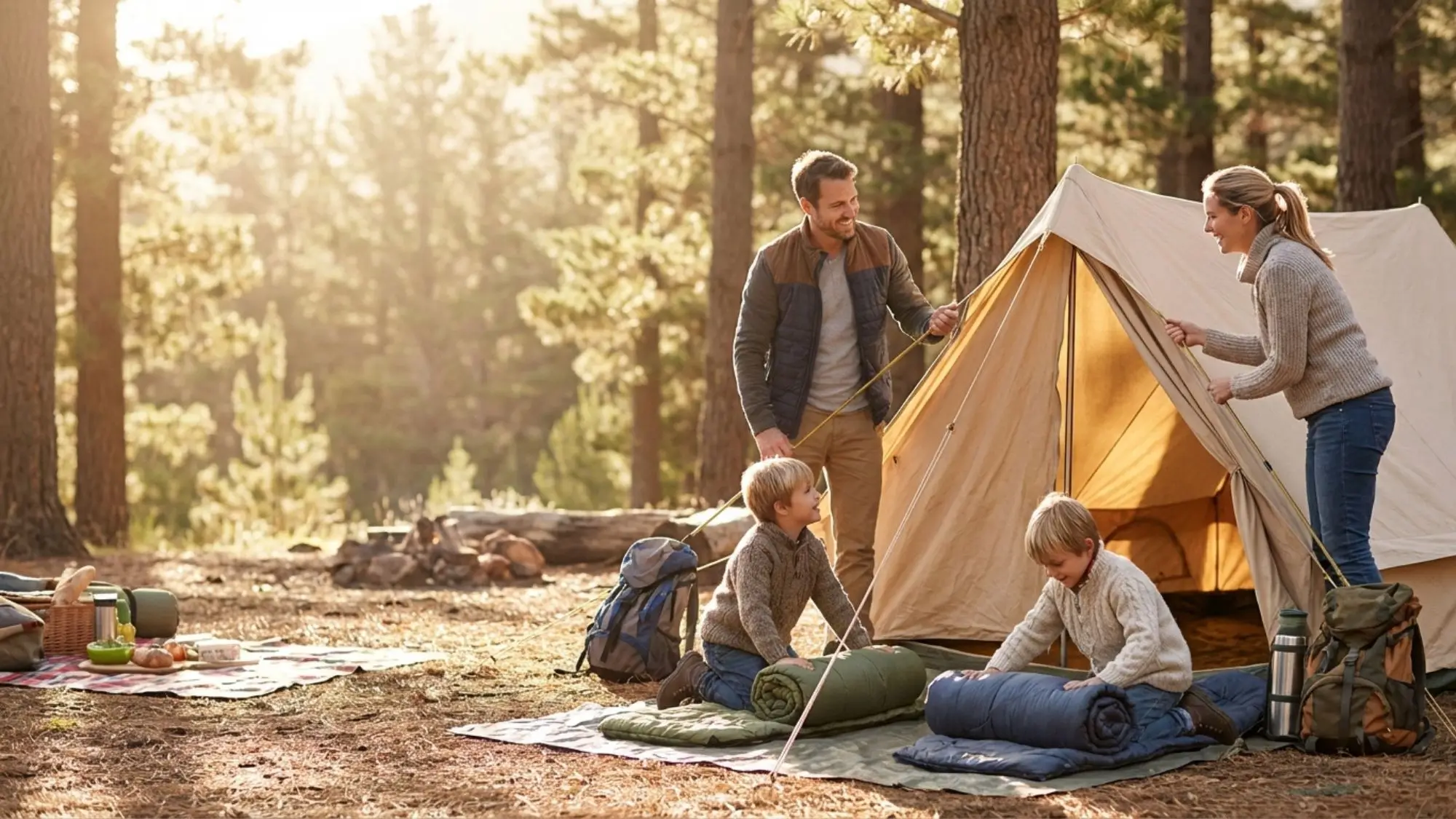
Step 9: Use a Simple Camp Setup Routine (Less Chaos, Faster Fun)
When you arrive, your kids want to explore immediately. You want to set up camp before something gets lost.
Use this setup order:
- Tent (and stake it well)
- Sleeping gear inside the tent
- Food/kitchen area
- Clothing + personal items in one consistent spot
Give kids small jobs:
- “Sleeping bag unroller”
- “Flashlight checker”
- “Snack bin helper”
They feel involved, and you get fewer interruptions.
Step 10: Do a 5-Minute Reset Before Bed (Tomorrow You Will Love You)
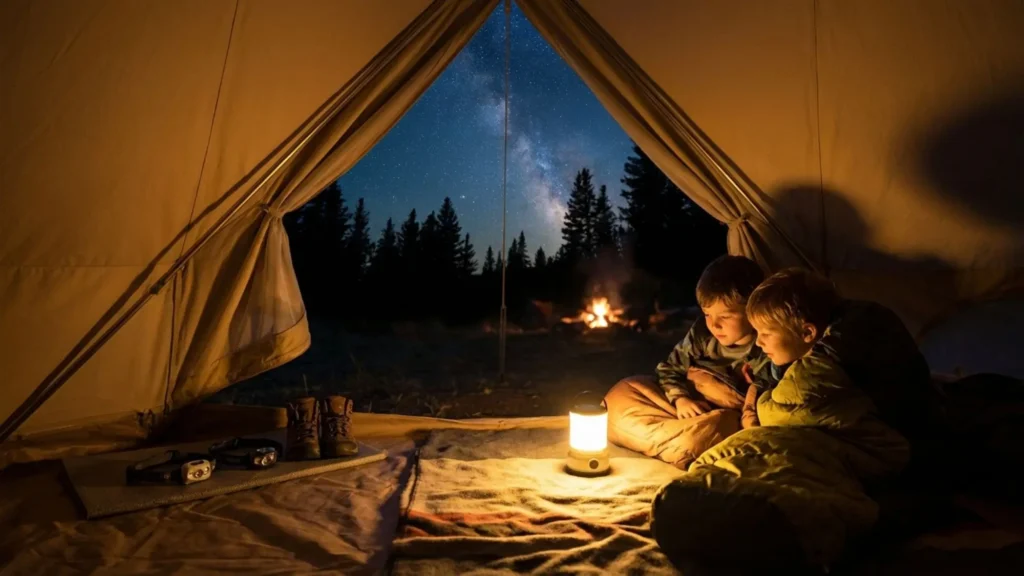
A quick reset turns mornings from frantic to smooth.
Your bedtime reset checklist:
- Fill water bottles
- Set out tomorrow’s clothes
- Put shoes/headlamps in the same location
- Tidy the tent floor (tiny rocks become bedtime villains)
- Prep quick breakfast items
- Confirm the fire is fully out (follow local rules and fire safety guidance)
Kids Camping Checklist Table (Quick Reference)
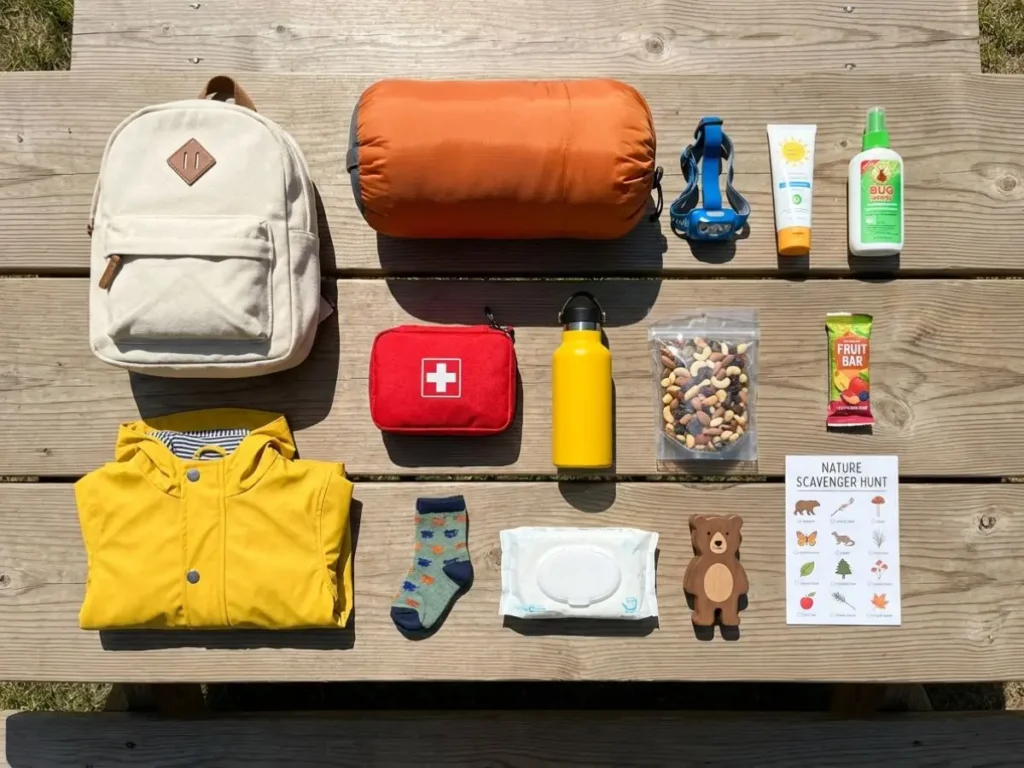
Use this table as your scan-and-pack guide.
| Category | Essentials (Don’t Skip) | Nice-to-Have (Stress Reducers) |
| Sleep | Tent, sleeping bags, sleeping pads, pillows | Extra blanket, favorite stuffed animal, white noise + power bank |
| Clothing | Layers, rain jacket, extra socks/underwear, sleepwear | Outfit-packed zip bags, camp shoes, warm beanie |
| Food | Cooler, simple meals, snacks, water bottles | Hot chocolate, pre-cut fruit, extra treat stash |
| Safety | First aid kit, sunscreen, bug repellent, required meds | Tick tool, kid whistle, after-bite relief |
| Hygiene | Soap, toothbrush kit, wipes, TP, trash bags | Wash basin, microfiber towels, wet bag |
| Fun | Scavenger hunt, ball/frisbee, books | Glow sticks, binoculars, nature journal |
Pro Tips: Adjust Your Kids Camping Checklist by Age
Toddler add-ons
Toddlers don’t compromise well—plan accordingly.
- Extra diapers/pull-ups + disposal bags
- Portable sleep option if needed
- Familiar snacks and a spill-proof cup
- Extra warm layers (they cool down fast)
Older kids add-ons
Older kids thrive with responsibility and freedom.
- Kid-sized headlamp
- A simple “camp job”
- One slightly bigger adventure (short hike, ranger program, geocaching)
Common Mistakes That Make Family Camping Harder (And How to Avoid Them)
Overpacking gear, underpacking comfort
You don’t need six cooking gadgets. You do need warm sleep layers and enough socks.
Planning complicated meals
If dinner requires three pans and perfect timing, it’s probably not a “kid trip” meal.
Skipping bedtime structure
Kids sleep better when the routine feels familiar: snack, teeth, story, lights.
Build a quick “rain plan”
Rain happens. Plan for it.
- Tarp + cord for a dry hangout zone
- A couple of table-friendly games
- A separate bag of dry clothes
FAQ: Kids Camping Checklist Questions Parents Ask
What should be on a kids camping checklist for a one-night trip?
Focus on the core categories: sleep system, weather-appropriate clothes, simple food, first aid/meds, and a few easy activities. One night is about learning what your family truly uses.
How do you simplify your kids camping checklist so you don’t overpack?
Use caps: two outfits per day (max), one warm layer each, and meals that repeat ingredients. Pack by category (sleep, clothes, food) and stop adding “just in case” items once the category is covered.
What’s the most important kids camping checklist item for better sleep?
An insulated sleeping pad plus warm sleep layers. Cold from the ground is a common reason kids wake up cranky, even when the sleeping bag seems thick.
Can the same kids camping checklist work for car camping and tent camping?
Mostly, yes. Car camping simply gives you more room for comfort extras (bigger pillows, thicker blankets). Tent camping demands a little more discipline with space and organization.
What should a kids camping checklist include for cold nights?
Add thermal base layers, beanies, warmer socks, an extra blanket, and a sleeping pad with better insulation. Check NOAA before you go so you’re packing for real lows, not daytime highs.
Conclusion: You Don’t Need a Perfect Trip—You Need a Reliable System
A good kids camping checklist doesn’t turn you into a different parent. It just removes the preventable stress—the missing pajamas, the cold night surprise, the “what are we eating?” meltdown—so you can pay attention to the good parts. Use these 10 steps, lean on the table, and adjust after each trip. Your checklist should evolve with your kids.