How to Discover 7 Cheap Ways to Go Camping on a Budget!
Table of Contents
You Don’t Need Deep Pockets to Sleep Under the Stars
Cheap ways to go camping
Here’s a number that might surprise you: the average American family spends over $1,000 on a single camping trip when you factor in gear, campsite fees, food, and fuel. That’s not exactly what most people picture when they imagine a peaceful escape into nature. But here’s the good news — it doesn’t have to cost anywhere near that much.
If you’ve been putting off that camping adventure because your wallet feels a little too light, you’re in the right place. There are genuinely practical, proven cheap ways to go camping that don’t mean suffering through a miserable weekend with no food, no shelter, and no fun. In fact, some of the most memorable outdoor trips happen on the tightest budgets.
In this guide, you’ll discover seven actionable strategies to slash your camping costs without sacrificing the experience. Whether you’re a total beginner pitching your first tent or a seasoned outdoor lover trying to cut back on spending, these tips will help you get outside more often — and spend far less doing it.
Why Camping on a Budget Is More Achievable Than You Think
The outdoor industry has done an incredible job convincing us we need the latest ultralight titanium cookware and a sleeping bag rated for Antarctic expeditions. But the truth is, most of that stuff is nice to have, not necessary to have.
Budget camping is about making smart choices: borrowing instead of buying, choosing free campsites over pricey ones, and planning your meals so you’re not overspending on convenience food. Once you shift your mindset from “What do I need to buy?” to “What do I already have or can access for free?”, the whole experience opens up in a beautiful way.
Let’s dive into cheap ways to go camping: the seven strategies that will genuinely change how you think about affordable outdoor adventures.
1. Choose Free or Low-Cost Campsites Over Crowded Paid Campgrounds
This is, without question, one of the most powerful cheap ways to go camping. Many people don’t realize that a huge portion of public land in the United States — and in many countries worldwide — is completely free to camp on.
Dispersed Camping on Public Lands
In the U.S., the Bureau of Land Management (BLM) and the U.S. Forest Service manage millions of acres of public land where dispersed camping is permitted at no charge. Dispersed camping simply means camping outside of designated campgrounds, typically in undeveloped areas. You set up wherever you like (within the rules), and you pay absolutely nothing.
Sites like Recreation.gov, the BLM’s official website, and the app Freecampsites.net are excellent tools for finding these hidden gems. Many are stunningly beautiful, far less crowded than commercial campgrounds, and completely free.
State and County Parks With Lower Fees
If you prefer a designated campsite with basic amenities, state and county parks are almost always cheaper than national park campgrounds or private RV resorts. Many offer sites for $10 to $20 per night compared to $30 to $50 or more elsewhere.
Off-Season Camping Savings
Even at paid campgrounds, visiting in the shoulder season — spring or fall — can cut your site fees nearly in half. You’ll also deal with fewer crowds, cooler temperatures (in summer-heavy areas), and a more peaceful atmosphere overall.
2. Borrow, Rent, or Buy Used Gear Instead of Purchasing New
Camping gear is expensive — there’s no sugarcoating it. A decent tent alone can run you $150 to $400 new. But if you approach gear acquisition strategically, you can get fully equipped for a fraction of that cost.
Borrow From Friends and Family First
Before you spend a single dollar, reach out to people you know. You’d be amazed how much camping gear is sitting in garages and basements collecting dust. Tents, sleeping bags, camp stoves, coolers — most of it gets used once or twice a year. People are often happy to lend it out.
Rent Gear From Outdoor Retailers
Many REI locations and local outdoor shops offer rental programs for tents, sleeping bags, pads, and more. Renting is ideal if you’re just trying camping for the first time or if you’re going on a one-off trip that doesn’t justify a full gear purchase.
Buy Used Through Online Marketplaces
Facebook Marketplace, Craigslist, eBay, and even dedicated platforms like GearTrade.com are loaded with high-quality used camping gear at deeply discounted prices. A $250 tent in near-perfect condition might sell for $60. A premium sleeping bag might go for $30. This is one of the smartest cheap ways to go camping without compromising on quality.
| Gear Item | Average New Price | Average Used/Rental Price | Potential Savings |
|---|---|---|---|
| 3-Season Tent (2-person) | $150 – $400 | $40 – $100 | Up to 75% |
| Sleeping Bag (3-season) | $80 – $250 | $20 – $60 | Up to 70% |
| Camp Stove | $40 – $120 | $10 – $35 | Up to 70% |
| Sleeping Pad | $30 – $150 | $10 – $40 | Up to 65% |
| Backpack (50L) | $100 – $300 | $30 – $80 | Up to 70% |
3. Plan and Prep All Your Meals at Home Before You Leave
Food is one of the sneakiest budget-busters on any camping trip. Stopping at gas stations for overpriced snacks, buying pre-packaged camp meals, or hitting a restaurant because you didn’t plan well — these small choices add up fast.
Meal Planning for Camp
Before you leave home, plan every single meal and snack for the duration of your trip. Write it down, shop specifically for those items, and prep what you can in advance. This eliminates impulse purchases and food waste.
Budget-Friendly Camp Food Ideas
- Oatmeal with dried fruit: Cheap, filling, easy to prepare, and requires minimal cleanup.
- Peanut butter and tortillas: No refrigeration needed and incredibly affordable per serving.
- Canned beans and rice: A complete protein source that costs pennies per meal.
- Pasta with olive oil and canned vegetables: Simple, satisfying, and budget-friendly.
- Trail mix made at home: Far cheaper than store-bought versions.
- Eggs: Versatile, affordable, and easy to cook over a camp stove or fire.
Use a Cooler Strategically
Pack your cooler with block ice (which lasts longer than cubed ice) and layer your most perishable items near the bottom. The longer your ice lasts, the less frequently you need to resupply, saving both time and money.
4. Take Advantage of Annual Passes and Membership Programs
If you camp more than two or three times a year, an annual pass almost always pays for itself quickly — sometimes after just a single trip.
The America the Beautiful Pass
For U.S. residents, the America the Beautiful – National Parks and Federal Recreational Lands Pass costs $80 per year and covers entrance fees to over 2,000 federal recreation sites, including all national parks. If you visit even two national parks in a year, you’ve likely broken even. Some parks charge $35 per vehicle just to enter.
State Park Annual Passes
Most states offer their own annual day-use or camping passes at significant discounts compared to paying per visit. If your state has a pass program, look into it — this is one of the easiest cheap ways to go camping repeatedly throughout the year.
REI Co-op Membership
The REI membership is a one-time $30 fee that gives you access to member-only sales, dividends on purchases, and heavily discounted used gear through their “REI Used” program. If you’re buying or renting gear, this can save you a meaningful amount over time.
5. Embrace Car Camping to Eliminate Extra Costs
Backpacking requires specialized lightweight gear that can be extremely expensive. Car camping, on the other hand, lets you bring heavier, cheaper gear right to your campsite without hauling it on your back for miles.
Why Car Camping Is the Budget Camper’s Best Friend
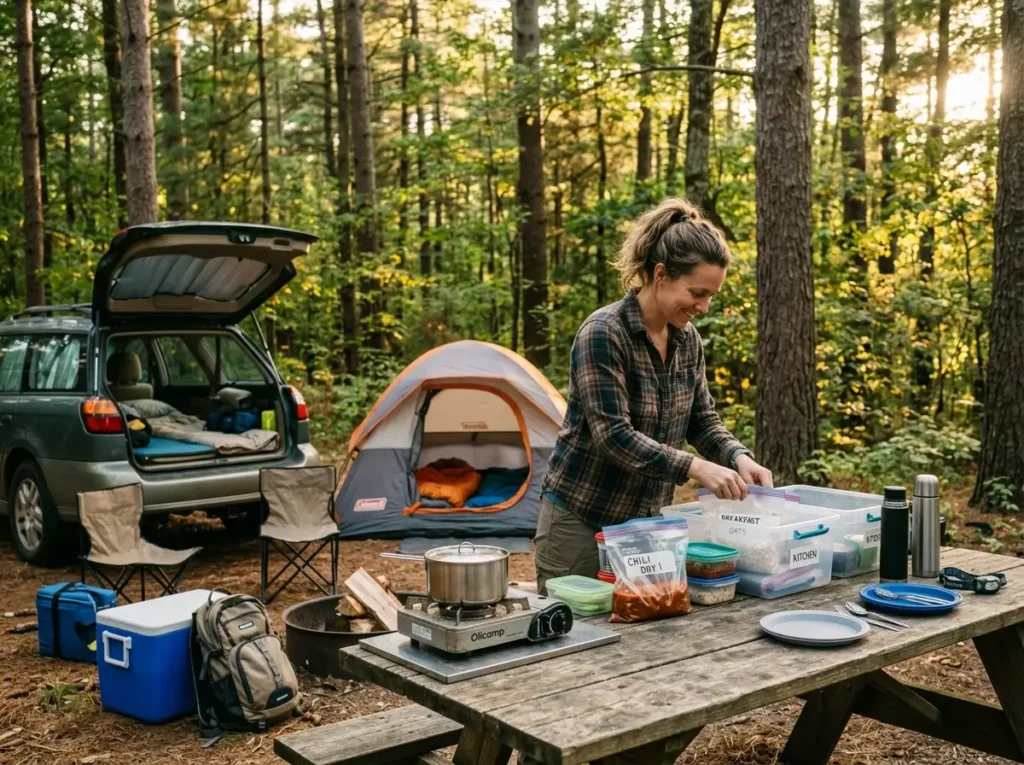
When you car camp, you can bring a larger, less expensive tent, a regular sleeping bag from home, a full-sized cooler, and even a propane camp stove — all of which cost significantly less than their ultralight backpacking equivalents. You’re not penalized for bringing heavier gear because your car carries the weight.
Cargo Organization Tips
Use plastic storage bins or large duffle bags to organize your gear. This makes packing and unpacking faster and helps you avoid buying duplicate items because you can’t find what you already own.
6. Travel With a Group and Split All Costs
One of the most underrated cheap ways to go camping is simply going with other people. The math is straightforward: split the campsite fee four ways and a $40 per night spot costs each person just $10.
Shared Gear Reduces Individual Costs
When you camp as a group, you only need one camp stove, one lantern, one first aid kit, and one set of cooking gear for the whole group. Instead of everyone buying their own, designate who brings what and divide the responsibility equally.
Group Meal Planning Amplifies Savings
Cooking meals together in larger quantities is dramatically cheaper per person than cooking individual meals. A big pot of chili or a communal breakfast scramble feeds everyone for just a few dollars per head.
Carpooling to the Campsite
Fuel costs are a real expense on camping trips, especially if your destination is a few hours away. Carpooling with two or three people cuts your individual fuel cost by 50% to 75%. It’s also better for the environment and more fun.
7. Keep It Local and Explore Nearby Destinations
Sometimes the best cheap ways to go camping involve simply reframing what a great camping trip looks like. You don’t need to drive six hours to an iconic national park to have an amazing outdoor experience.
Discover Hidden Local Gems
Most people are surprised to discover how many beautiful, quiet, and accessible camping spots exist within an hour or two of home. Local state forests, wildlife management areas, county parks, and reservoir lands often offer excellent camping experiences that most people drive right past on the way to somewhere “more famous.”
The Financial Impact of Staying Close
A long road trip to a distant camping destination might cost $80 to $150 in fuel alone, plus tolls, hotel stops if needed, and wear on your vehicle. Camping an hour from home might cost you $10 in gas. That difference funds your campsite fee, your food, and maybe a new piece of gear.
Urban and Suburban Camping Options
Many metro areas have surprisingly accessible camping options. State parks near major cities often have well-maintained campgrounds that are easy to reach after work on a Friday night, letting you enjoy a full weekend outdoors without a massive drive.
Key Takeaways
- Free and low-cost campsites on BLM and National Forest land are among the most effective cheap ways to go camping available to anyone.
- Borrowing, renting, or buying used gear can reduce your equipment costs by 65% to 75% compared to buying new.
- Meal planning and home prep before your trip eliminates the most common food cost mistakes.
- Annual passes like the America the Beautiful Pass pay for themselves after just one or two trips.
- Car camping makes budget-friendly gear practical because you don’t need expensive ultralight equipment.
- Group camping multiplies your savings exponentially through shared costs and shared gear.
- Staying local drastically reduces fuel and travel costs while still delivering a fantastic outdoor experience.
Frequently Asked Questions
What are the cheapest ways to go camping for beginners?
The cheapest ways to go camping as a beginner include borrowing gear from friends or family, choosing free dispersed campsites on BLM or National Forest land, and planning all your meals at home before you leave. Starting with a local car camping trip rather than a distant destination also keeps costs minimal while you learn the basics.
Can you go camping for free in the United States?
Yes, absolutely. The Bureau of Land Management and the U.S. Forest Service permit free dispersed camping on millions of acres of public land across the country. Websites like Freecampsites.net and the BLM’s official site help you find specific locations. Outside of designated fee areas, this camping is completely legal and free of charge.
How much should a budget camping trip realistically cost?
A well-planned budget camping weekend for one person can cost as little as $20 to $50 total when you use borrowed or used gear, choose a free or low-cost campsite, and prepare your own food. Group trips bring the per-person cost down even further. The biggest variable is usually the campsite fee and transportation costs.
Is used camping gear safe to buy?
Generally yes, as long as you inspect it carefully. Check tents for tears, broken poles, and damaged zippers. Test sleeping bags for loft and cleanliness. Inspect stoves for rust and proper function. Buying from reputable platforms like GearTrade or REI Used (which inspects and certifies items) adds an extra layer of confidence.
What food is best for cheap camping trips?
The best budget camping foods are shelf-stable, calorie-dense, and easy to prepare. Oatmeal, rice, pasta, canned beans, peanut butter, tortillas, eggs, and dried fruits are all excellent choices. Avoid pre-packaged freeze-dried camp meals, which are convenient but expensive. Home-prepped food almost always costs significantly less.
Is the America the Beautiful Pass worth it for campers?
For most campers who visit federal lands two or more times per year, yes — the America the Beautiful Pass is absolutely worth the $80 annual cost. A single visit to a national park often costs $35 per vehicle for entry alone, meaning the pass pays for itself within two to three visits. It covers entrance fees at over 2,000 sites nationwide.
How do I find camping spots near me for free?
The best tools for finding free nearby campsites include Freecampsites.net, the iOverlander app, the BLM’s official website, and the U.S. Forest Service’s interactive map. Searching for “dispersed camping near [your location]” on Google also surfaces useful results. Local hiking and outdoors Facebook groups are another surprisingly good resource for insider knowledge.
What’s the difference between dispersed camping and campground camping?
Dispersed camping means setting up camp on undeveloped public land outside of a designated campground — often with no facilities like toilets, running water, or fire rings. It’s typically free but requires more self-sufficiency. Campground camping takes place in a designated site with at least some amenities and usually involves a nightly fee ranging from $10 to $50 or more.
Conclusion: Getting Outside Doesn’t Have to Cost a Fortune
Camping is one of the most restorative, rewarding, and accessible activities available to anyone — and it genuinely doesn’t need to drain your bank account. By choosing free or low-cost campsites, being smart about gear, planning your food carefully, and going with a group when possible, you can create incredible outdoor memories for a fraction of what most people spend.
The seven cheap ways to go camping outlined in this guide aren’t workarounds or compromises. They’re simply smarter ways to approach the outdoors. A free dispersed campsite in a stunning forest is not a lesser experience than a pricey RV resort — in most cases, it’s actually a richer one.
The mountains, the forests, the rivers, and the stars don’t charge admission. With the right approach, neither does your camping trip.
Ready to Plan Your Budget Camping Adventure?
Now it’s your turn. Pick one of these strategies and take one small step this week — look up free campsites near you, reach out to a friend about borrowing their tent, or start mapping out your meal plan. The hardest part of any camping trip is just deciding to go.
If you found this guide helpful, share it with a friend who loves the outdoors but always says camping is “too expensive.” You just might inspire their best trip yet.