How Car camping vs Tent Camping: 7 Key Differences to Know
Table of Contents
Which Camping Style Is Actually Right for You?
Here’s a question worth asking before you pack a single thing: are you actually planning the right kind of camping trip? Every year, thousands of outdoor enthusiasts either overpack for a simple night under the stars or show up wildly underprepared for a remote wilderness adventure — all because they didn’t stop to think about the fundamental differences between their options.
When it comes to the car camping vs tent camping debate, most people assume they already know the answer. But the truth is, these two camping styles differ in far more ways than just where you park your vehicle. They shape your entire experience — from how you sleep and eat, to how much effort you put in and how connected to nature you actually feel.
In this guide, you’ll discover 7 key differences between car camping and tent camping, along with honest insights to help you decide which style suits your next adventure. Whether you’re a first-timer curious about getting outside or a seasoned camper looking to switch things up, this breakdown has everything you need.
First Things First: What Is Car Camping vs Tent Camping?
What Is Car Camping?
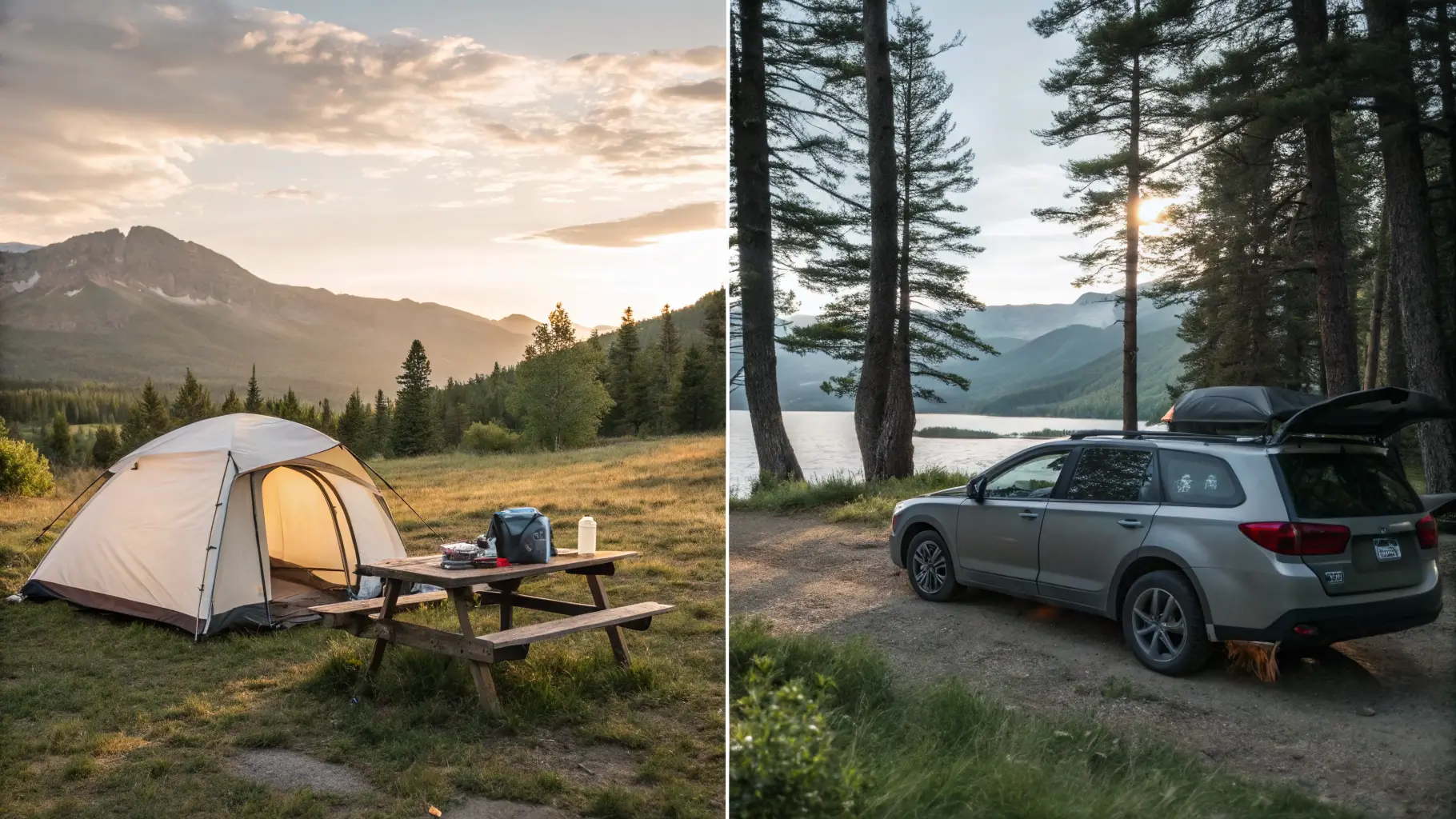
Car camping — sometimes called drive-up camping or campsite camping — means you drive your vehicle directly to a designated campsite and keep it parked right next to your sleeping and cooking area for the duration of your stay. You’re not backpacking. You’re not hiking miles into the backcountry. Your car is essentially your base camp supply depot.
This style is incredibly popular at state parks, national forest campgrounds, and private RV-friendly sites across the country. Because your car is right there, you can bring coolers, camp chairs, large tents, propane stoves, and anything else that fits in your trunk or truck bed.
What Is Tent Camping?
Tent camping is a broader term, but in the context of this comparison, it typically refers to backcountry or dispersed camping — where you carry everything you need in a backpack and hike to your campsite. Your home for the night is whatever you can fit in a pack, usually a lightweight tent, sleeping bag, and minimal gear.
Some people use “tent camping” loosely to mean any camping in a tent. For clarity in this article, we’re treating it as the more immersive, human-powered alternative to car camping — where your legs (not your engine) get you to your destination.
The 7 Key Differences Between Car Camping and Tent Camping
Difference #1: Gear Weight and What You Can Bring
This is probably the most obvious difference, but it goes deeper than you might think. With car camping, gear weight is essentially irrelevant. Your car handles the heavy lifting, so you can bring a full-sized cooler stocked with real food, a multi-room tent, a folding table, a cast iron skillet, extra blankets, and yes — even a portable espresso maker if that’s your thing.
With tent camping in the backcountry, every single ounce matters. Most experienced backpackers aim to keep their base pack weight (everything except food and water) under 15 to 20 pounds. That means ultralight shelters, compact sleeping systems, and freeze-dried meals instead of fresh ingredients.
The gear difference isn’t just about quantity — it’s about quality and cost. Ultralight backpacking gear is significantly more expensive than the kind of casual equipment you’d toss in a car. A quality backpacking tent can cost three times as much as a spacious car camping tent simply because of the weight savings engineered into it.
Difference #2: Comfort Level and Sleeping Quality
Let’s be honest: car camping wins the comfort battle — hands down. You can bring a thick air mattress, real pillows, and a cozy sleeping bag without any guilt about weight. Many car campers even bring portable cots or elevated sleeping pads that make the experience feel surprisingly close to sleeping at home.
Tent camping in the backcountry is a different story. You’re working with a lightweight sleeping pad (think: thin foam or inflatable), a compact sleeping bag, and whatever ground you find at your site. Comfort improves dramatically with skill and experience, but it takes time to dial in your system.
That said, there’s something uniquely satisfying about the backcountry sleep experience. When you’ve hiked 8 miles to a remote alpine lake and earned that night under the stars, even a firm sleeping pad feels like a reward.
Difference #3: Campsite Location and Accessibility
Car camping keeps you close to roads, amenities, and civilization. Most car campgrounds offer paved or gravel pull-through sites, fire rings, picnic tables, restrooms, and sometimes even electrical hookups and shower facilities nearby. This makes car camping highly accessible — it’s genuinely great for families with young children, people with mobility challenges, or anyone new to the outdoor lifestyle.
Tent camping in the backcountry takes you somewhere far fewer people ever get to go. The trade-off for that effort is access to landscapes that simply don’t exist near a parking lot. Think: hidden waterfalls, glacier-fed lakes, summit ridgelines, and old-growth forests that never see a crowd.
The accessibility difference is important to acknowledge. Car camping democratizes the outdoors. It gives people of all ages, fitness levels, and experience backgrounds a genuine way to connect with nature — and that’s genuinely valuable.
Difference #4: Food and Cooking Options
Your kitchen setup changes dramatically depending on which style you choose.
Car camping gives you real cooking options. Think: propane camp stoves with multiple burners, full-sized pots and pans, fresh vegetables, marinated proteins, cold drinks from the cooler, and maybe even a camp Dutch oven for slow-cooked meals. Car camping meals can be genuinely impressive, and cooking around a fire or camp stove is one of the most beloved parts of the whole experience.
Backcountry tent camping means you’re working with a compact backpacking stove (often just big enough to boil water), a single pot or titanium cup, and lightweight food options. Freeze-dried backpacking meals have improved enormously in recent years, but they’re still not the same as a camp breakfast of scrambled eggs and bacon.
That said, simplicity has its own appeal. There’s something meditative about making a hot cup of coffee on a tiny stove at sunrise, 10 miles from the nearest road.
Difference #5: Physical Effort and Fitness Required
Car camping requires minimal physical exertion to get set up. You drive to your site, unload your gear, set up your tent or camp kitchen, and you’re ready to relax. The effort goes into enjoying your surroundings, not just getting there.
Backcountry tent camping is a physical undertaking. You’re hiking with a loaded pack — often over uneven terrain, elevation changes, and varying weather conditions. This requires a baseline of physical fitness, some hiking experience, and a willingness to push yourself. The reward is enormous, but the barrier to entry is real.
If you’re new to the outdoors or getting back into it after a break, car camping is genuinely the smarter starting point. Build your skills, your fitness, and your gear kit over time before taking on multi-day backcountry trips.
Difference #6: Cost and Budget Considerations
This one surprises a lot of people. Car camping is generally the more budget-friendly option to get started. Car campsite fees at state parks often run between $20 and $45 per night, and you can use gear you already own — a basic tent, sleeping bags from the closet, and whatever cooking supplies you have at home.
Getting into backcountry tent camping involves a significant upfront gear investment. Ultralight backpacking gear — tents, sleeping bags, packs, water filtration systems, trekking poles — adds up fast. A solid starter backpacking kit can easily run $800 to $2,000 or more if you’re buying quality gear.
On the flip side, backcountry camping permits are often free or very low cost compared to developed campgrounds. Once you have the gear, the ongoing cost drops considerably. Many experienced backpackers consider it the more economical long-term option.
| Factor | Car Camping | Tent Camping (Backcountry) |
|---|---|---|
| Gear Weight | No restriction | Every ounce counts |
| Comfort Level | High | Moderate to Low |
| Campsite Access | Drive-up accessible | Hike-in required |
| Food Options | Full meals possible | Lightweight/freeze-dried |
| Physical Effort | Low | High |
| Upfront Cost | Low to Moderate | Moderate to High |
| Nature Immersion | Moderate | Very High |
| Best For | Families, beginners, comfort seekers | Adventurers, solo travelers, experienced campers |
Difference #7: Nature Immersion and Overall Experience
Here’s where things get philosophical. Car camping offers a wonderful entry point into nature, but you’re rarely far from the sounds of other campers, cars on nearby roads, or the glow of a campground bathroom light. It’s a curated outdoor experience — comfortable, social, and genuinely enjoyable.
Backcountry tent camping offers something harder to put into words. When you’re miles from the nearest road, surrounded by wilderness with no cell service and only what you carried in on your back, something shifts. The experience feels earned. Your senses sharpen. The silence is different. Many people describe their first backcountry trip as genuinely life-changing.
Neither experience is better. They’re different — and both are worth having.
Who Should Choose Car Camping?
Car camping is genuinely the right choice for a lot of people and situations. Consider going the car camping route if:
- You’re new to camping and want to ease into the experience
- You’re traveling with young children or elderly family members
- You have physical limitations that make hiking with a pack difficult
- You want to try camping without investing heavily in specialized gear
- You’re planning a social camping trip with a large group
- You want to camp near specific amenities like fishing spots or swimming areas
- You’re looking for a relaxing weekend escape rather than a challenging adventure
Who Should Choose Backcountry Tent Camping?
Backcountry tent camping is the right call when you’re ready to go deeper — literally and figuratively. It’s the better fit if:
- You want to access remote, uncrowded landscapes
- You enjoy physical challenges and trail hiking
- You’re looking for genuine solitude and wilderness immersion
- You’ve already done car camping and want to push your skills further
- You’re willing to invest in quality lightweight gear
- You’re comfortable with navigation, Leave No Trace principles, and backcountry safety basics
Tips for Making the Most of Either Style
Car Camping Tips
- Book your campsite well in advance, especially for popular parks on weekends
- Organize gear in labeled bins or bags so setup is quick and easy
- Bring a camp kitchen organizer to keep cooking supplies accessible
- Use a quality cooler with ice blocks (not cubes) to extend cold storage
- Pack a headlamp even if your campsite has lighting — you’ll thank yourself
Backcountry Tent Camping Tips
- Start with shorter overnight trips before committing to multi-day adventures
- Learn and practice Leave No Trace principles before your first trip
- Invest in a quality water filtration system — clean water is non-negotiable
- Always tell someone your route and expected return time
- Download offline maps before you leave — cell service will likely disappear
- Test your gear at a car campground before relying on it in the backcountry
Key Takeaways
- Car camping and tent camping (backcountry) offer fundamentally different outdoor experiences — not just different amounts of gear.
- Car camping is more accessible, comfortable, and budget-friendly to start, making it ideal for beginners, families, and casual outdoor lovers.
- Backcountry tent camping offers deeper nature immersion, solitude, and a sense of achievement that car camping simply can’t replicate.
- Gear weight, cooking options, campsite location, physical effort, and cost all differ significantly between the two styles.
- Neither style is objectively better — the right choice depends entirely on your goals, fitness level, experience, and what kind of experience you’re chasing.
- If you’re unsure where to start, car camping is always a smart first step on the path to deeper outdoor adventures.
Frequently Asked Questions
What is the main difference between car camping and tent camping?
The main difference between car camping and tent camping lies in how you access your campsite and how much gear you can bring. Car camping means driving directly to your site and camping beside your vehicle, allowing you to bring large, heavy gear. Tent camping (particularly backcountry) requires you to hike to your campsite carrying everything you need in a pack, which demands lightweight, specialized gear.
Is car camping easier than backcountry tent camping?
Yes, car camping is generally much easier and more beginner-friendly than backcountry tent camping. With car camping, you don’t need to hike, carry a heavy pack, or worry about ultralight gear. It’s widely considered the best entry point for people new to the outdoor lifestyle.
Which is cheaper: car camping or tent camping in the backcountry?
Car camping is cheaper to start because you can use basic gear you may already own and pay modest campsite fees. Backcountry tent camping requires a larger upfront investment in specialized lightweight gear, though permit costs are often lower or free once you have your kit together.
Can I do car camping vs tent camping in the same trip?
Absolutely. Many campers use a car campsite as a base camp and do day hikes into the backcountry without staying overnight. This is actually a great way to experience both styles and test your comfort with backcountry terrain before committing to an overnight stay away from your vehicle.
What gear do I need for car camping vs tent camping?
For car camping, you’ll want a spacious tent, sleeping bag, air mattress or sleeping pad, camp stove, cooler, and camp chairs. For backcountry tent camping, you need a lightweight backpacking tent, compact sleeping bag and pad, backpacking stove, water filtration system, and a well-fitted pack to carry it all comfortably.
Is car camping safe for beginners?
Yes, car camping is one of the safest and most accessible outdoor experiences available. Campgrounds typically have hosts, amenities, and other campers nearby. It’s an excellent starting point for building outdoor confidence and skills before exploring more remote environments.
How do I choose between car camping and tent camping for my next trip?
Think about your fitness level, your gear budget, who you’re camping with, and what kind of experience you’re after. If you want comfort, convenience, and ease — go car camping. If you want solitude, challenge, and deep nature immersion — work toward a backcountry tent camping trip. There’s no wrong answer in the car camping vs tent camping debate.
What are the Leave No Trace principles for tent camping?
Leave No Trace (LNT) is a set of seven outdoor ethics principles designed to minimize human impact on natural environments. They include: plan ahead and prepare, travel and camp on durable surfaces, dispose of waste properly, leave what you find, minimize campfire impacts, respect wildlife, and be considerate of other visitors. These principles are especially important for backcountry tent camping where ecosystems are more fragile.
Conclusion
At the end of the day, the car camping vs tent camping question doesn’t have one right answer — and that’s actually great news. It means you have options, and the outdoor world has room for both experiences.
Car camping is a genuinely wonderful way to disconnect from everyday life, reconnect with the people you love, and enjoy nature without the steep learning curve. It’s where most outdoor enthusiasts begin their journey, and there’s no shame in returning to it again and again.
Backcountry tent camping asks more of you — more fitness, more skill, more investment — but it gives back in equal measure. The landscapes you access, the silence you find, and the confidence you build are rewards that simply don’t exist at a drive-up campsite.
The best strategy? Start where you are. If car camping is your entry point, own it. Use it to build your skills, try new gear, and grow comfortable in outdoor environments. Let it be the launching pad for the adventures ahead — including the backcountry ones waiting for you when you’re ready.
The mountains aren’t going anywhere. But your next camping trip? That should be happening very soon.
Ready to Plan Your Next Adventure?
Now that you know the real differences between car camping and tent camping, it’s time to stop planning and start packing. Whether you’re booking a family-friendly campsite at your nearest state park or researching permit requirements for a backcountry trail you’ve been eyeing, take one concrete step today.
Share this article with a fellow outdoor enthusiast who’s been debating their next trip, start building your gear checklist for the experience you’re ready to chase. The outdoors is waiting — and now you know exactly what kind of adventure you want.