How to Pack the Perfect Camping First Aid Checklist: 9 Essentials
Table of Contents
Because the Wilderness Doesn’t Have a Pharmacy
Here’s a sobering thought: roughly 50,000 search-and-rescue missions are launched in the United States every year, many of them triggered by medical emergencies that started as something small — a blister that got infected, a sprained ankle on a rocky trail, or an allergic reaction nobody saw coming. If you’ve ever been miles from the nearest road with someone who’s bleeding or in pain, you already know that a solid camping first aid checklist isn’t just a good idea — it’s one of the smartest things you’ll ever pack.
This guide is built for every type of camper, from the weekend warrior sleeping two miles from a trailhead to the backcountry explorer who won’t see another human being for a week. By the time you finish reading, you’ll know exactly what belongs in your kit, why each item matters, and how to think about first aid like someone who’s actually prepared — not just someone who grabbed a dusty box off a shelf.
Let’s get into it.
Why Your Camping First Aid Checklist Deserves More Thought Than You’re Giving It
Most people either over-pack their first aid kit (carrying gear they’ll never use) or under-pack it (leaving out the one thing they desperately need at 2 a.m. in the rain). A well-designed camping first aid checklist is the middle ground — it’s purposeful, lightweight, and built around the real risks you face in the outdoors.
The injuries and emergencies most likely to happen on a camping trip aren’t random. Research from wilderness medicine organizations consistently shows that cuts and lacerations, blister formation, sprains and strains, allergic reactions, gastrointestinal illness, and burns from campfires top the list. Your kit should directly address those realities, not just mirror what’s already inside a generic drugstore kit.
The Difference Between a Car Camping Kit and a Backcountry Kit
Before diving into the essentials, it’s worth understanding that context matters enormously. If you’re car camping at a developed campground with rangers on site and a hospital 20 minutes away, your priorities are different from a five-day solo backpacking trip in a remote national forest.
- Car camping: Weight isn’t a concern. You can carry a more comprehensive kit with comfort items like instant cold packs, a wider range of medications, and even a SAM splint.
- Backpacking and backcountry camping: Every ounce counts. Your kit needs to be stripped down to the highest-priority items, packaged efficiently, and protected from moisture.
The 9 essentials below apply to both scenarios, though the specific products and quantities you choose may vary depending on how far from civilization you’re venturing.
The 9 Essentials for Your Camping First Aid Checklist
1. Wound Care Supplies
Wound management is the cornerstone of any outdoor first aid kit. Cuts, scrapes, and puncture wounds happen constantly in the backcountry — and in a dirty outdoor environment, infection is a real and serious risk.
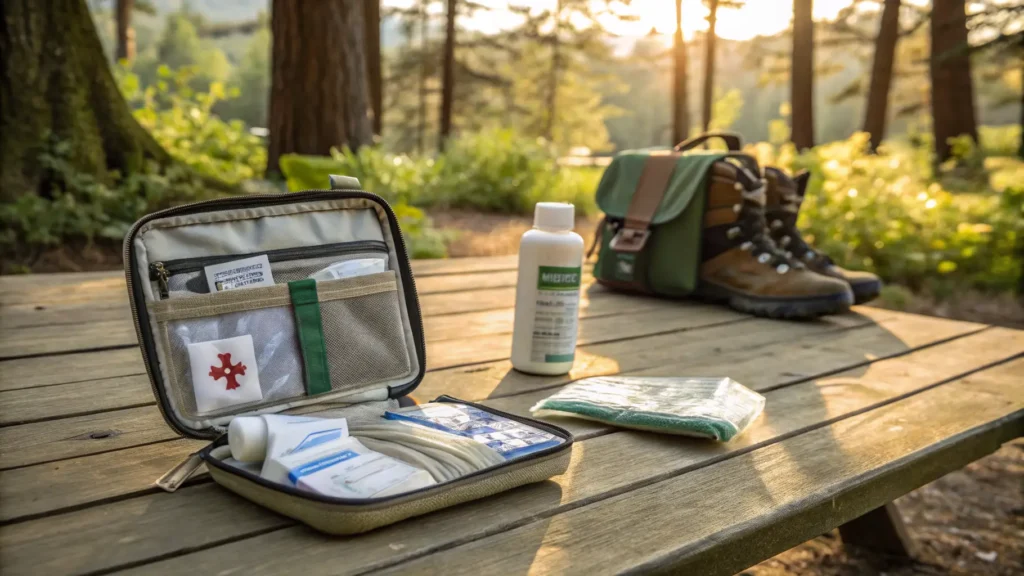
Your wound care supplies should include:
- Assorted adhesive bandages (multiple sizes, including knuckle and fingertip bandages)
- Sterile gauze pads (2×2 and 4×4 inches)
- Self-adherent cohesive bandage wrap (like ACE-style wrap)
- Medical-grade adhesive tape
- Wound closure strips or butterfly bandages (these are far more useful than you’d expect)
- Irrigation syringe for flushing out debris from wounds
- Antiseptic wipes or wound wash (saline solution works well)
- Antibiotic ointment packets (single-use is more hygienic)
One tip the pros use: carry a few extra-large non-stick dressings for covering abrasions over joints like knees and elbows. Standard bandages won’t stay put in those spots.
2. Blister Prevention and Treatment
Blisters are, hands down, one of the most common complaints on any camping or hiking trip. They’re also one of the most preventable — and yet most people’s camping first aid checklist completely ignores them.
- Moleskin (cut-to-fit sheets are more versatile than pre-cut pieces)
- Blister-specific cushioning pads like Compeed or NuSkin
- Small pair of scissors or a multi-tool with scissors
- Tincture of benzoin (helps adhesives stick better to skin — genuinely game-changing)
If a blister has already formed and is painful, draining it with a sterile needle and then applying a donut-shaped moleskin pad around it (not over it) is the standard wilderness medicine approach. Cover with a bandage, and you’re back on the trail.
3. Pain Relief and Anti-Inflammatory Medications
Aches, pains, headaches, and muscle soreness are part of camping life. Having the right over-the-counter medications in your kit isn’t optional — it’s essential for function and comfort, especially on multi-day trips.
- Ibuprofen (anti-inflammatory, pain relief, fever reduction)
- Acetaminophen (alternative pain and fever management, gentler on the stomach)
- Aspirin (also useful as a blood thinner in cardiac emergencies — important dual purpose)
Package medications in clearly labeled waterproof containers or zip-lock bags. Always include dosage information, especially if you’re camping with children or others who might use your kit.
4. Allergy and Anaphylaxis Management
The outdoors is full of potential allergens: insect stings, plant contact, new foods eaten around the campfire, and more. For most people, allergy symptoms are manageable. For some, they can become life-threatening within minutes.
- Diphenhydramine (Benadryl) — for mild to moderate allergic reactions
- Epinephrine auto-injector (EpiPen) — if you or anyone in your group has known severe allergies, this is non-negotiable
- Hydrocortisone cream — for skin rashes, contact dermatitis, and insect bite irritation
Even if no one in your group has a known allergy, carrying an antihistamine is standard practice in wilderness medicine. Bee stings and plant reactions can catch anyone off guard.
5. Gastrointestinal Medications
Stomach issues in the outdoors are extremely common. Between questionable water sources, unfamiliar foods, travel stress, and increased physical exertion, your digestive system can take a beating on a camping trip.
- Loperamide (Imodium) — for diarrhea control, especially critical in backcountry situations
- Antacids (TUMS or similar) — for heartburn and indigestion
- Oral rehydration salts — vital for replacing electrolytes lost through vomiting, diarrhea, or heavy sweating
- Anti-nausea medication if recommended by your doctor
Oral rehydration salts deserve a special call-out. They’re lightweight, inexpensive, and can genuinely prevent a situation from becoming dangerous when someone is severely dehydrated. Add them to your camping first aid checklist right now.
6. Burn Treatment Supplies
Campfire burns, scalding water from a camp stove, sun overexposure — burns are more common in camping environments than most people realize. Treating them quickly and correctly prevents infection and reduces healing time.
- Burn gel or water-based burn dressing (contains lidocaine for immediate pain relief)
- Non-adherent sterile dressings (never use fluffy cotton gauze directly on a burn)
- Aloe vera gel (sunburn and minor first-degree burns)
- High-SPF sunscreen (prevention is treatment)
For minor burns, cool (not ice cold) running water for at least 10 minutes is your first response. Then apply a burn dressing and cover loosely. If a burn is larger than the palm of the injured person’s hand or involves the face, hands, feet, or genitals, that’s an evacuation situation.
7. Splinting and Musculoskeletal Support
Ankle sprains, suspected fractures, and dislocations can happen on uneven terrain. Your ability to stabilize an injury before evacuation can make the difference between a manageable situation and a worsening one.
- SAM splint (lightweight, moldable aluminum foam — the wilderness medicine gold standard)
- Elastic bandage wrap (2–3 inch width)
- Medical tape
- Triangular bandage / sling material
A SAM splint and an elastic wrap can be used to improvise support for nearly any limb injury. If you’re car camping, a pair of instant cold packs is also worth having for immediate swelling reduction.
8. Tools and Instruments
The supplies in your kit are only as useful as your ability to apply them properly. A few well-chosen tools make an enormous difference.
- Nitrile gloves (multiple pairs — never treat a wound without them)
- Medical scissors or trauma shears
- Tweezers (fine-tipped, for splinters and tick removal)
- Safety pins (you’ll use these more than you think)
- Small LED flashlight or headlamp (emergencies don’t care what time it is)
- CPR face shield or pocket mask
- Thermometer
- Tick removal tool (these are far more effective than improvising with tweezers alone)
If you’re venturing into remote wilderness, a signal mirror and emergency whistle belong near your first aid kit, even if they’re not technically medical supplies. They could save your life when everything else fails.
9. Reference Materials and Personal Medical Information
This is the most overlooked item on almost every camping first aid checklist — and arguably one of the most important. In a high-stress emergency, your memory will fail you. Having written guidance and information on hand is invaluable.
- A wilderness first aid quick-reference card or pocket guide
- Personal medical information sheet for each group member (allergies, medications, blood type, emergency contacts)
- Local emergency services number and nearest hospital information
- Your physician’s contact information
Many experienced outdoorspeople laminate their personal medical information sheets and keep them tucked inside the kit. It takes five minutes to prepare and could save critical time in an emergency.
Quick Reference: Camping First Aid Checklist at a Glance
| Category | Key Items | Priority Level |
|---|---|---|
| Wound Care | Bandages, gauze, antiseptic, closure strips, tape | Critical |
| Blister Treatment | Moleskin, cushion pads, benzoin tincture | High |
| Pain / Fever | Ibuprofen, acetaminophen, aspirin | Critical |
| Allergy / Anaphylaxis | Benadryl, EpiPen (if prescribed), hydrocortisone | Critical |
| GI Medications | Imodium, antacids, oral rehydration salts | High |
| Burn Treatment | Burn gel, non-stick dressings, aloe vera, sunscreen | High |
| Splinting / Support | SAM splint, elastic wrap, triangular bandage | High |
| Tools / Instruments | Gloves, shears, tweezers, tick tool, CPR mask | Critical |
| Reference / Documents | First aid guide, personal medical info, emergency numbers | High |
Pro Tips for Maintaining and Using Your Kit
Keep It Organized
Label everything and organize your kit by category. In an emergency, you don’t want to be digging through a pile of loose supplies. Separate pouches or zip-lock bags for each category work brilliantly.
Check Expiration Dates Before Every Trip
Medications lose effectiveness over time, and some supplies (like adhesive bandages) dry out or degrade. Make a habit of going through your kit 2–3 weeks before any camping trip so you have time to replace anything that’s expired or depleted.
Customize for Your Group
If you’re camping with young children, add child-appropriate medication doses, more bandages (kids go through them fast), and a pediatric thermometer. If anyone in your group has a chronic condition — diabetes, heart disease, severe asthma — work with their physician to ensure your kit can support those specific needs.
Take a Wilderness First Aid Course
Supplies are only half the equation. Knowing how to use them is the other half. Organizations like NOLS Wilderness Medicine and the Wilderness Medical Society offer courses ranging from one-day workshops to comprehensive Wilderness First Responder (WFR) certifications. Even a basic course will dramatically increase your confidence and competence in the field.
Key Takeaways
- A thorough camping first aid checklist should address the most common outdoor injuries: wounds, blisters, sprains, burns, allergic reactions, and GI illness.
- Your kit should be customized for your trip type — car camping allows a more comprehensive kit, while backcountry trips require a lighter, streamlined version.
- The 9 essentials are: wound care, blister treatment, pain medications, allergy management, GI medications, burn supplies, splinting materials, tools and instruments, and reference materials.
- Nitrile gloves and a first aid reference guide are two of the most commonly forgotten items — don’t skip them.
- Checking expiration dates and restocking after every trip keeps your kit dependable when it matters most.
- No kit replaces proper training. Consider taking a wilderness first aid course before your next major outdoor adventure.
Frequently Asked Questions
What should be on a basic camping first aid checklist?
A basic camping first aid checklist should include wound care supplies (bandages, gauze, antiseptic), blister treatment materials, pain relievers, an antihistamine for allergic reactions, gastrointestinal medications like Imodium, burn treatment supplies, nitrile gloves, tweezers, and a first aid reference guide. These core items address the vast majority of wilderness medical situations.
How do I choose between a pre-made kit and building my own?
Pre-made kits are convenient and a good starting point, but they often include items you’ll never use while missing things you genuinely need. The best approach is to start with a quality pre-made kit and then customize it based on your group’s needs, your trip’s remoteness, and any individual medical considerations. Many experienced campers build their kits from scratch.
How heavy should a camping first aid kit be?
For car camping, weight isn’t a significant concern. For backpacking, a well-organized backcountry kit should weigh between 4 and 8 ounces for a solo traveler and around 12 to 16 ounces for a group of four. Eliminating redundant items and choosing lightweight packaging makes a big difference.
What’s the most important item in a camping first aid checklist?
It’s difficult to name just one, but wound care supplies are arguably the most critical because cuts and lacerations are both the most common camping injuries and the ones that carry the greatest risk of infection if untreated. Nitrile gloves are a close second, since you should never treat any wound without them.
Should I carry an EpiPen even if no one in my group has known allergies?
This is a decision best made with your physician. If you’re leading groups of people, guiding trips professionally, or going into extremely remote areas, carrying an epinephrine auto-injector is increasingly recommended in wilderness medicine circles. Severe allergic reactions can occur in people with no prior history, particularly from stings.
How often should I replace my camping first aid kit?
You should review and restock your kit after every trip and do a full inventory check at least once a year. Check all medication expiration dates, replace any used or depleted supplies, and inspect adhesives and packaging for degradation. A kit that’s been sitting in a hot car for months may have compromised supplies.
Do I need a different kit for camping with children?
Yes. Camping with children means adding age-appropriate dosages of medications, more bandages (kids tend to need more), child-friendly antiseptics, and sun protection supplies. If any child has a chronic health condition or known allergy, consult their pediatrician for specific additions to your camping first aid checklist.
Is it worth taking a first aid course for camping trips?
Absolutely, and most wilderness medicine professionals consider it essential for anyone camping in remote areas. A Wilderness First Aid (WFA) course teaches you how to assess and manage injuries when help is hours or days away. It turns your supplies from objects into tools you know how to use confidently under pressure.
Conclusion: Preparedness Is the Best Adventure Gear You’ll Ever Pack
There’s a certain kind of confidence that comes from knowing you’re genuinely prepared for the outdoors — not just hopeful that nothing will go wrong. Building a thoughtful, comprehensive camping first aid checklist is one of the most meaningful investments you can make before any trip, whether you’re heading out for a single night or a week-long expedition.
The nine essentials covered in this guide aren’t just a list of supplies. They represent a mindset — the understanding that the outdoors is magnificent and occasionally unforgiving, and that the people who enjoy it most safely are those who respect both sides of that equation.
Pack smart. Know your kit. And enjoy every single moment out there, knowing that if something goes sideways, you’re ready.
Ready to Build Your Kit?
Start by printing or saving the checklist table above and doing a quick inventory of what you already own. Identify the gaps, order what you’re missing, and take 30 minutes this weekend to organize everything into a proper kit. If you haven’t yet, look into a local or online Wilderness First Aid course — it’s one of the best ways to spend a weekend if you love the outdoors.
If you found this guide useful, share it with your camping crew. The more people who are prepared, the safer and more enjoyable every adventure becomes.