Best Camping Gear 2026: Top Picks for Beginners
You’ve probably felt it already—that pull to get out of town, shut your laptop, and trade notifications for real stars. Maybe 2026 is the year you finally stop scrolling through other people’s camping photos and go on your own first trip.
But then the questions hit you:
- What do you actually need to stay warm and dry?
- How do you choose from hundreds of tents and sleeping bags?
- How much should you spend on your first setup?
You don’t want to overpack, overspend, or find yourself shivering at 3 a.m. in the wrong gear. This guide walks you through the best camping gear 2026 has to offer for beginners, step by step, so you can feel confident instead of overwhelmed.
You’ll learn exactly what to buy first, what can wait, where you can save money, and how to put everything together into a simple, reliable camping kit that works for real trips—not just pretty photos.
Table of Contents
How to Choose the Best Camping Gear in 2026 (Beginner-Friendly Guide)
Before you start filling an online cart, you’ll make much better choices if you answer a few simple questions about how you’ll actually camp.
Start With Your Camping Style
Ask yourself:
- How will you get to camp?
- Driving and parking at your campsite (car camping)?
- Hiking in with everything on your back (backpacking)?
- When will you camp most often?
- Warm late-spring to early-fall weekends?
- Cooler shoulder seasons?
- Who’s going with you?
- Just you or you + one friend/partner?
- A small group or family with kids?
If you’re mostly car camping, you can prioritize:
- Comfort over low weight
- Easier setup
- More affordable gear
If you’re backpacking, weight and pack size matter much more, so you’ll choose lighter, more compact options.
Focus on the “Big Three” First
When you’re just starting out, most of your comfort comes from three main pieces of gear:
- Tent (Shelter) – Keeps you dry, out of the wind, and away from bugs.
- Sleep System – Sleeping bag + sleeping pad; keeps you warm and comfortable.
- Clothing Layers – Keeps you dry, insulated, and protected from the elements.
If your budget is limited, invest most of your money in these three areas first. You can improvise or go cheaper on things like kitchen extras, camp tables, or luxury items.
Cost vs. Comfort vs. Weight
Every piece of camping gear is a compromise between:
- Cost – How much you’re paying
- Comfort – How pleasant it is to use
- Weight/Bulk – How heavy and large it is to carry
For your first trips in 2026, you’ll usually be happiest if you:
- Choose mid-range, durable gear instead of ultralight, fragile gear
- Accept a bit more weight in exchange for better comfort and lower price
- Avoid the rock-bottom cheapest options, which often fail when you need them most
Beginner-Friendly Features to Look For in 2026
When you compare options, look for features that make your life simpler:
- Straightforward setup
- Color-coded tent poles
- Clips instead of complicated pole sleeves
- Clear instructions sewn into the bag
- Durable materials
- Heavier fabrics for tents and floors that resist small mistakes
- Sturdy zippers on bags and jackets
- Weather protection
- Full-coverage rainfly on tents
- Waterproof or water-resistant shells
- Good warranties and repair options
- Brands that offer repairs, spare parts, or easy returns
If you’re unsure, you can also rent or borrow gear for your first night out. That lets you test what matters most to you before you spend your own cash.
Essential Camping Gear Checklist for Beginners 2026
You don’t need a truck full of equipment to have a great trip. You just need the right basics. Use this beginner-oriented camping checklist as your foundation.
Shelter: Best Beginner Tents 2026
What to Look For in Your First Tent
For most new campers, a 3-season tent is ideal. Look for:
- Capacity:
- For comfort, choose a tent rated for one more person than will actually sleep in it.
- 2 people? Get a 3-person tent if you want more room.
- For comfort, choose a tent rated for one more person than will actually sleep in it.
- Ease of setup:
- Freestanding design (you can pitch it without exact stake placement)
- Simple two-pole design with clear clips
- Weather protection:
- Full rainfly that reaches near the ground
- “Bathtub” floor (fabric that curves up the walls a few inches)
- Sealed seams or seam-taped construction
- Ventilation:
- Mesh panels for airflow to reduce condensation
Recommended Beginner-Friendly Tents for 2026
You’ll find many solid options; here are the types of tents you should look for (specific models may vary by region and retailer):
- Budget-friendly car-camping tents
- Simple dome-style, 2–4 person models from well-known brands
- Pros: Affordable, roomy, easy setup
- Ideal if you camp a few weekends per year in fair to moderate weather
- Mid-range 3-season tents
- Slightly lighter, better materials, more weather-resistant
- Pros: More durable, handle wind and rain better, still beginner-friendly
- Good if you want to camp in mixed conditions or try short backpacking trips
- Entry-level backpacking tents
- 1–3 person tents focused on lower weight and pack size
- Pros: Lighter to carry, pack smaller
- Best if you plan to hike into campsites regularly
When you shop, check:
- Weight (in kg or lbs)
- Floor area (square feet or m²)
- Peak height (how tall you can sit or kneel inside)
- User reviews from real campers
Sleep System: Sleeping Bags & Sleeping Pads
If you’ve ever had a bad night of sleep away from home, you know how important this is. A good sleep system can make a simple tent feel like a cozy nest.
Choosing a Sleeping Bag
Look at three main things:
- Temperature rating
- For most 3-season trips, choose a bag with a comfort rating around 20–30°F (-6 to 0°C) if nights get cool in your area.
- If you’re only camping in warm summer weather, you can go with a higher (warmer) rating.
- Insulation type
- Synthetic
- Usually cheaper
- Performs better if it gets damp
- Slightly bulkier and heavier
- Down
- Warmer for weight
- Packs very small
- More expensive and needs more care around moisture
- Synthetic
- Shape
- Mummy bags – Warmer and lighter; snug fit
- Rectangular bags – Roomier; feel more like a blanket at home
For your first trips, a synthetic 3-season mummy bag is often the best balance between cost, warmth, and reliability.
Choosing a Sleeping Pad
A sleeping pad does two crucial jobs:
- Cushions you from the ground
- Insulates you from losing body heat to the ground
Key points:
- R-value:
- Measures insulation. For 3-season camping, aim for R-value around 3–4.
- Types of pads:
- Self-inflating pads – Easy to use, comfortable, moderate weight; great for car camping and easy backpacking.
- Air pads – Very comfy, pack small; can be lighter but require more care to avoid punctures.
- Foam pads – Nearly indestructible and cheap; not as plush, but good backup.
If you’re car camping, choose comfort first. For backpacking, balance weight, pack size, and insulation.
Cooking & Food: Stoves & Camp Kitchen Essentials
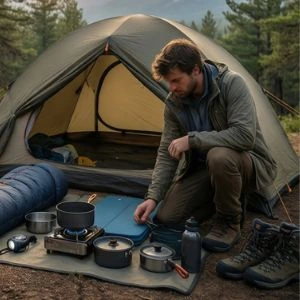
You don’t need a gourmet setup to eat well outside, but you do need a safe way to boil water and cook simple meals.
Consider:
- Stove type
- Small canister stove
- Screws onto a fuel canister
- Compact, light, easy to use
- Great for boiling water and simple one-pot meals
- Two-burner camp stove
- Runs on larger propane canisters
- Works like a simple home stove
- Best for car camping and group cooking
- Small canister stove
- Basic cookware
- 1–2 pots (one small, one medium)
- Frying pan if you like cooking breakfasts
- Spatula, spoon, and a simple knife
- Lightweight plates/bowls, mugs, and utensils
- Food storage
- Cooler for car camping trips (ice or ice packs)
- Sealable containers and bags
- In bear country: bear canister or campground-provided storage
Start with easy meals: pasta, rice bowls, pre-chopped veggies, tortillas, oatmeal, and instant coffee or tea.
Lighting & Power
You’ll be surprised how dark it feels once the sun sets away from city lights. You want hands-free light and a broader camp glow.
- Headlamp
- Essential for cooking, walking around camp, and middle-of-the-night bathroom runs
- Look for:
- At least ~200 lumens for general use
- Multiple brightness settings
- Rechargeable battery or easy-to-find batteries
- Lantern
- Lights up your whole tent or picnic table area
- Small LED lanterns are perfect for beginners
- Power bank
- Keeps your phone and headlamp topped up
- Helpful if you use your phone for photos, offline maps, or emergency contact
Safety, Navigation & First Aid
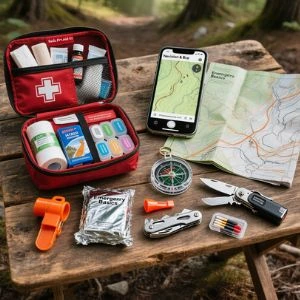
Even on easy trips, you should carry a few essential safety items:
- Basic first aid kit with:
- Bandages, gauze, tape
- Antiseptic wipes
- Pain relievers
- Blister care (moleskin or blister pads)
- Any personal medications
- Navigation and backup
- Offline maps on your phone
- Simple compass
- Printed directions or map for the area
- Emergency basics
- Whistle
- Emergency blanket
- Small multi-tool or knife
- Waterproof matches or lighter
These items are light, relatively cheap, and can make a big difference if something goes wrong.
Clothing & Footwear: What You Really Need
You don’t need a closet full of technical clothing, but you do need pieces that handle changing conditions. Focus on layers:
- Base layer (next to skin)
- Synthetic or merino wool tops and bottoms
- Wicks sweat and dries quickly
- Mid layer (insulation)
- Fleece jacket, light puffy jacket, or both
- Outer layer (shell)
- Waterproof, breathable jacket
- Optional: lightweight rain pants in wet climates
- Footwear
- For easy car camping and short hikes:
- Supportive sneakers or light hiking shoes
- For moderate to rough trails:
- Hiking boots or sturdy trail shoes with good grip
- For easy car camping and short hikes:
Avoid cotton for base layers and socks when nights could be cold. Cotton stays wet and makes you chilly. Choose wool or synthetic socks instead.
Comfort Extras That Make a Big Difference
Once you have the essentials, a few comfort pieces can change how your trip feels:
- Folding camp chair
- Small camp table (if your site doesn’t have a picnic table)
- Camping pillow or pillowcase you can stuff with clothes
- Eye mask and earplugs if you’re a light sleeper
- Simple entertainment:
- Card deck, small game, book or e-reader, stargazing app
You can add these gradually as you learn what you personally care about most.
Best Camping Gear 2026 on a Budget
You don’t have to spend a fortune to get the best camping gear 2026 that fits your situation. You just need a smart plan.
Where to Splurge and Where to Save
Spend a bit more on:
- Tent (reliable shelter is non-negotiable)
- Sleeping pad (comfort + insulation)
- Sleeping bag (warmth equals safety)
Save money on:
- Kitchen gear (thrift-store pots, basic utensils)
- Camp furniture (chairs and tables can be upgraded later)
- Clothing (start with simple synthetic layers you may already own from sports or workouts)
You can also:
- Borrow gear from friends for your first trip
- Rent gear from outdoor retailers or outfitters
- Check used gear shops or online marketplaces for tents, pads, and bags from reputable brands
Aim to build a starter kit that gets you outside safely and comfortably, then refine over time.
How to Pack & Organize Your Camping Gear
You’ll enjoy your trip much more if you can actually find what you brought. A simple system keeps your camp and car from turning into chaos.
Simple Bin System for Car Camping
Use 2–3 plastic storage bins or tough bags and group items by category:
- Bin 1: Kitchen & Food
- Stove, fuel, pots/pans, utensils
- Spices, oil, cleaning sponge, small dish soap
- Bin 2: Shelter & Sleep
- Tent, stakes, mallet
- Sleeping bags, pads, pillows
- Bin 3: Clothing & Misc
- Clothing in packing cubes or stuff sacks
- First aid kit, headlamps, lantern, power bank
- Toiletries and small items
Keep a printed or digital checklist and quickly run through it before you leave.
Packing Basics for Backpacking
If you’re hiking into your campsite:
- Put heavier items (food, water, tent body) close to the middle of your back.
- Keep frequently used items (jacket, snacks, map, headlamp) near the top or in outer pockets.
- Store your sleeping bag and clothes in waterproof stuff sacks or liners.
Try a short practice walk with your packed backpack at home to adjust straps and balance.
Beginner Camping Gear Mistakes to Avoid in 2026
You can skip a lot of frustration by knowing what trips up many first-time campers:
- Buying too much gear at once
- Start with essentials; add extras later.
- Underestimating nighttime temperatures
- Nights can feel much colder than the daytime forecast suggests.
- Not testing gear before the trip
- Practice pitching your tent in your yard or living room.
- Fire up your stove once at home so you know how it works.
- Packing only cotton clothing in cool weather
- Wet cotton makes you cold; use synthetic or wool for layers that might get sweaty or damp.
- Relying completely on phone service
- Download offline maps, bring a power bank, and have a basic plan if you lose signal.
If you avoid these, you’ll be ahead of most first-time campers.
Caring for & Upgrading Your Camping Gear Over Time
If you treat your gear well, it will last for many seasons and save you money.
Cleaning and Storage Basics
- Tent
- Shake out dirt and let it dry fully before you pack it away.
- Store it loosely in a large bag, not compressed, in a cool, dry place.
- Sleeping bag
- Air it out after each trip.
- Wash occasionally with proper soap (especially for down) and dry fully.
- Store it uncompressed in a large sack or hung in a closet.
- Sleeping pad
- Wipe it down, keep it away from sharp objects, and store unrolled if possible (for self-inflating pads).
Smart Upgrade Path
As you camp more, you’ll naturally discover what you want to improve. A common upgrade sequence:
- Start with reliable mid-range gear for everything.
- Upgrade your sleep system if you find you’re still cold or uncomfortable.
- Upgrade your tent for specific needs (more room, lighter weight for backpacking, better storm protection).
- Refine your kitchen and comfort items once you know your style—minimalist vs. “glamping”.
Take notes after each trip: what worked well, what you didn’t use, and what you wished you had. That simple habit guides your future purchases better than any ad.
Quick Comparison Table: Best Camping Gear 2026 for Beginners
Use this overview to see how the best camping gear 2026 categories line up for new campers.
| Category | What to Look For as a Beginner | Why It Works for You | Typical 2026 Price Range* |
| Tent (Shelter) | 3-season, 2–3 person, freestanding, full rainfly | Simple setup, versatile, handles typical weather | $$–$$$ |
| Sleeping Bag | Synthetic 3-season mummy bag | Warm, forgiving in damp conditions, good value | $–$$ |
| Sleeping Pad | Self-inflating pad, R-value 3–4 | Comfortable, insulated from ground, easy to use | $–$$ |
| Stove & Cookware | Small canister stove + basic pot/pan set | Compact, beginner-friendly, cooks simple meals easily | $–$$ |
| Lighting | Rechargeable headlamp + small LED lantern | Hands-free light plus area lighting for camp | $–$$ |
| Cooler (Car Camping) | Medium hard-sided or quality soft cooler | Keeps food cold for weekend-length trips | $–$$$ |
| Clothing & Footwear | Synthetic base layers, fleece, waterproof shell, trail shoes | Works in varied 3-season weather, comfortable on trails | $–$$$ |
| Safety & First Aid | Prepacked first aid kit + whistle + multi-tool | Covers minor injuries and simple gear fixes | $–$$ |
*Price ranges are approximate ($ = budget, $$$ = premium) and vary by brand and retailer.
Conclusion: Your First Camping Trip in 2026 Starts Now
You don’t need to be an expert to have a great time outside. You just need a solid tent, a warm sleep system, weather-smart clothing, and a few well-chosen extras.
Once you’ve assembled your beginner kit, the most important step is simple: use it. Book a nearby campsite, invite a friend, and treat your first trip as practice, not a test you have to pass.
Pack your essentials, run through your checklist, and let your first night under the stars in 2026 be the start of many more.
Your next move:
- Make a short list of the 3–5 pieces of best camping gear 2026 you still need.
- Set a date for your first or next camping weekend.
- After that trip, adjust your kit based on what you actually used and loved.
FAQ: Best Camping Gear 2026 for Beginners
1. What is the absolute beginner essential list for the best camping gear 2026?
For a simple weekend trip, you should have at least:
- 3-season tent with full rainfly
- Sleeping bag rated roughly to your expected low temperatures
- Sleeping pad with R-value around 3–4
- Stove and fuel, plus one pot/pan and basic utensils
- Headlamp and/or lantern
- Weather-appropriate clothing layers (including a warm layer and rain jacket)
- Basic first aid kit and personal medications
- Water bottles or a water container and a way to treat or filter water if needed
With these pieces, you can handle typical 3-season camping conditions comfortably.
2. How much should you budget for the best camping gear 2026 starter kit?
Exact numbers vary by brand and region, but as a rough guide for a beginner setup:
- Tent: mid-range price
- Sleeping bag: budget to mid-range
- Sleeping pad: budget to mid-range
- Stove + cookware: budget to mid-range
- Lighting and basic first aid: budget
If you’re careful with your choices, you can often assemble a reliable starter kit for less than many people spend on a new phone—especially if you mix used gear, sales, and borrowed items.
3. Can you rent the best camping gear 2026 instead of buying it?
Yes. Renting is a smart move if:
- You’re not sure you’ll camp often.
- You want to try backpacking gear before investing.
- You’re flying somewhere and don’t want to check bulky equipment.
Outdoor retailers, local outfitters, and some parks rent items like tents, sleeping bags, pads, and stoves. After a rented trip or two, you’ll have a clearer sense of what you want to own.
4. What is the best camping gear 2026 if you’re camping with kids or a group?
For families and groups, focus on:
- A larger tent with room to move and stand if possible
- Extra lighting (lanterns and personal headlamps)
- Comfortable sleep systems—pads or air mattresses that help everyone sleep well
- Easy, familiar meals and snacks
- Additional warm layers for kids, who cool down faster than adults
Comfort and simplicity matter more than cutting every ounce of weight when you’re taking kids or new campers along.
5. Do you need ultralight gear to have the best camping gear in 2026?
No. Ultralight gear is designed for people who hike long distances and count every gram in their pack.
As a beginner, you’ll usually be happier with:
- Slightly heavier but more durable gear
- Lower cost per item
- Simpler designs that are easier to use and more forgiving
You can always move toward lighter, more specialized gear later if you fall in love with backpacking or long-distance hiking. For now, focus on safety, comfort, and learning the basics—those are what truly make your setup the best camping gear 2026 for you.