First Time Camping With Kids: Simple Tips for Families in 2026
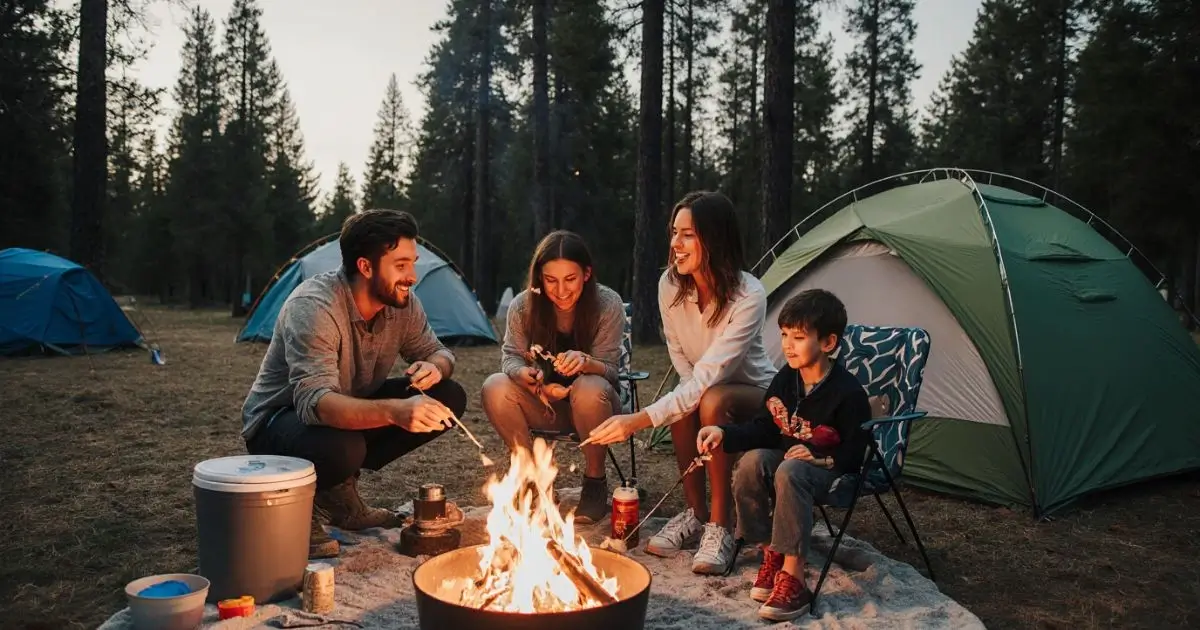
You imagine the scene: a glowing campfire, stars overhead, your kids wrapped in hoodies and blankets, sticky with marshmallow and smiling.
Then your brain jumps to the worries.
Will they sleep?
What if they’re scared of the dark?
What if you forget something important?
Your first time camping with kids doesn’t have to be perfect to be unforgettable. If you keep things simple, focus on comfort, and plan with kids in mind, you can create a trip that feels adventurous instead of stressful—and build a family tradition you’ll want to repeat.
Table of Contents
Why Your First Time Camping With Kids Matters
That very first trip shapes how your kids think about the outdoors. If you keep it fun and low-pressure, they’re far more likely to love camping for years to come.
The Moments They’ll Remember
Your kids are unlikely to remember what brand of tent you used. They will remember:
- Roasting marshmallows and telling silly stories
- Playing with flashlights in the dark
- Waking up to birds instead of alarms
- Feeling like camping is “your” family thing
If you focus on connection instead of perfection, the trip becomes about memories, not logistics.
Nature as a Reset for Your Family
Time outside helps everyone step away from screens and busy schedules. Even one weekend of first time camping with kids can:
- Lower stress levels
- Encourage real conversations
- Give your kids room to explore and be loud, messy, and curious
You’re not just going somewhere new—you’re giving your family a chance to breathe.
Planning Your First Family Camping Trip
A little planning makes everything easier, especially on your first outing.
Picking a Kid-Friendly Campground
Look for campgrounds that make life with kids simpler, such as:
- Flush toilets and running water
- Short, easy trails or a small beach/lake
- A playground or open grassy areas
- Sites with some shade and flat ground
Check recent reviews to avoid loud “party” spots. If you can, choose a site not too close to busy roads, cliffs, or fast-moving water.
Tent, Cabin, or RV?
You don’t have to be hardcore to enjoy camping with kids. Choose what makes you feel most at ease:
- Tent – Classic and affordable, but more setup and weather exposure
- Cabin – Real walls and beds; ideal if you want comfort without a ton of gear
- RV/Camper – Maximum comfort but higher cost and more logistics
For a first time camping with kids, many parents feel most relaxed in a cabin or a tent close to home.
How Long Should You Go?
For your first trip:
- Aim for 1–2 nights
- Stay within 1–2 hours’ drive of home
Knowing you could leave early if you had to takes the pressure down, even if you never use that backup plan.
What to Pack for First Time Camping With Kids
You don’t need every gadget on the market. Focus on staying warm, dry, fed, and comfortable.
Core Family Camping Gear
Shelter & Sleep
- Tent with rainfly and groundsheet (or cabin/RV booking)
- Sleeping bags rated for expected lows
- Sleeping pads or air mattresses
- Pillows from home
- Extra blanket for chilly nights
Lighting
- Headlamps for each person (kids love them)
- Lantern for the picnic table
- Small battery nightlight if kids are nervous in the dark
Safety & Hygiene
- First-aid kit (bandages, antiseptic, tweezers, kids’ pain reliever)
- Child-safe insect repellent and sunscreen
- Hand sanitizer, wipes, and tissues
- Any daily medications
Comfort Items for Kids
- Favorite stuffed animal, blanket, or comfort toy
- Beloved bedtime book
- Backup pacifier or lovey if needed
Clothing: Plan for Layers and Extras
Kids get wetter, dirtier, and colder than adults—often all in one day. Pack by layering:
- Base layer: T-shirt or thermal, underwear, socks
- Warm layer: Fleece, sweatshirt, or light puffy jacket
- Outer layer: Waterproof/windproof jacket
Plan extra outfits, especially for toddlers.
Age-Based Essentials Table
| Age Group | Must-Have Items for First Time Camping With Kids | Parent Tips |
| Babies (0–2) | Sleep sack, portable crib, extra onesies, sunhat, diapers, wipes, changing pad | Pick a site near bathrooms; keep a fully stocked diaper “go bag.” |
| Toddlers (2–4) | Multiple extra outfits, waterproof shoes, favorite stuffed toy, tiny flashlight | Expect maximum mess; pack 1–2 spare outfits per day. |
| School-age (5–9) | Layers, sneakers + sandals, headlamp, small backpack | Let them pack their own small day bag with water and a snack. |
| Tweens/Teens (10+) | Warm layers, hat, good socks, journal/book, optional portable charger | Involve them in choosing activities and planning meals. |
Keeping Your Gear Organized
A little structure keeps the chaos down:
- Use one bin or bag per category: food, clothes, toiletries, entertainment
- Keep a small grab-and-go day bag with wipes, snacks, sunscreen, bug spray, and bandaids
- Follow campground rules for food storage (car, locker, or bear box) so animals stay out of your site
Setting Up Camp & Daily Life Outdoors
How you handle arrival and daily routines can make or break your first time camping with kids.
Involving Kids in Camp Setup
Turn setup into a team effort instead of trying to rush through it alone.
Give each child a job:
- Toddlers: carry pillows or stuffed animals, “help” sweep inside the tent
- School-age kids: pass tent stakes, unroll sleeping bags and pads, collect small sticks (where allowed)
- Tweens/teens: help with tent poles, set up the cooking area, learn safe fire skills if fires are permitted
Walk the campsite together and set simple rules like:
- Stay where you can see our tent
- No running near the fire or stove
- Ask before leaving the campsite or going to the bathroom
Easy Meals Kids Actually Eat
This is not the trip to experiment with unfamiliar recipes. Stick to simple, familiar foods:
Breakfast ideas
- Instant oatmeal with toppings
- Cereal, milk, and fruit
- Yogurt and granola
Lunch ideas
- Sandwiches or wraps
- Crackers, cheese, hummus, and veggies
- Snack-style plates
Dinner ideas
- Hot dogs or sausages with cut veggies
- Quesadillas or grilled cheese
- Pasta with jarred sauce and pre-cooked meatballs
Bring plenty of snacks: trail mix, granola bars, apples, clementines, popcorn for the stove or fire.
Safety Basics Without Stress
Keep safety clear and simple so kids can remember it. Go over these rules:
- Stay where you can see an adult.
- No running near fire, stove, or grill.
- Don’t touch plants or animals without asking.
- Always tell an adult before leaving the campsite.
Check the weather before you go, pack for rain and cool nights, and keep your first-aid kit accessible. Store all food and scented items in your car or provided containers to avoid wildlife problems.
Keeping Kids Entertained Without Screens
Kids don’t need elaborate schedules, but some options help prevent “I’m bored” meltdowns.
Simple Activities at the Campsite
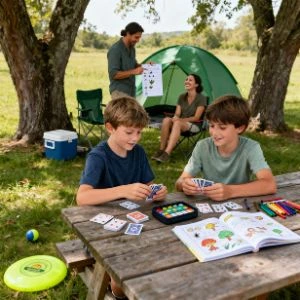
Pack a small fun kit with:
- A deck of cards or travel games
- Coloring books and crayons
- A frisbee or small ball
Lean on easy, no-gear games like:
- I Spy
- 20 Questions
- Simon Says
- Nature scavenger hunts (“Find something soft, something rough, something that smells good…”)
Exploring Nature at Their Pace
You don’t need to be an expert to help your kids enjoy the outdoors:
- Little ones can collect rocks and leaves, stomp in puddles, and watch bugs.
- School-age kids can try short hikes, leaf rubbings, or keeping a simple nature journal.
- Older kids can help read trail maps, plan a hike, or manage the campfire with supervision.
In the evenings, cuddle up to read, tell stories, or look for constellations together.
Preparing Your Kids Emotionally
Kids handle new situations better when they know what to expect.
Talk Through What Camping Is Like
A few days before your trip, explain:
- Nights will be darker than at home—but you’ll have flashlights and lanterns.
- They may hear new sounds like frogs, crickets, and wind in the trees.
- Bathrooms might be a short walk away.
Reassure them that if they feel scared or uncomfortable, they can always wake you up or ask for help.
Do a Mini “Practice Campout”
If you have a tent, try a trial run at home:
- Set it up in the living room or backyard
- Use sleeping bags and headlamps
- Practice lights-out and listening to nighttime sounds
This small step can make your first time camping with kids feel less intimidating for everyone.
Common Beginner Mistakes to Avoid
You’ll learn as you go, but you can dodge a few common problems from the start.
- Overpacking random stuff, underpacking essentials
- Prioritize warm layers, sleep comfort, and basic kitchen gear over extra gadgets.
- Overscheduling the day
- Plan one or two main activities and leave room for naps, snacks, and free play.
- Chasing “perfect camper” status
- Takeout on the drive, instant oatmeal, or using the car as a windbreak doesn’t make you a failure. It makes you practical.
Remember: the goal is connection, not impressing anyone.
Conclusion: Your First Time Camping With Kids Starts Now
Your first time camping with kids doesn’t have to be epic, wild, or far from home. It just needs to feel safe, simple, and fun enough that everyone says, “Let’s do that again.”
If you:
- Pick a family-friendly campground
- Pack for comfort instead of perfection
- Set simple rules and realistic expectations
…you’ll give your kids the kind of memories that last—sticky fingers, smoky hoodies, late-night giggles, and all.
Your next step: choose a weekend within the next month, pick a campground within a short drive, and use this guide as your checklist. After your trip, jot down what worked (and what didn’t) so the next adventure is even smoother.
FAQs About First Time Camping With Kids
How do you prepare for first time camping with kids if you’ve never camped before?
Start small. Do a practice night in a tent at home, borrow gear where you can, and choose a campground close to home with bathrooms and easy access to help if you need it. Keep your first trip to 1–2 nights and focus on simple meals and comfort.
What should you bring for first time camping with kids under 5?
Pack extra clothes, wipes, and comfort items. For toddlers and preschoolers, bring a favorite blanket or stuffed animal, familiar snacks, and simple toys. For babies, add a portable crib, sleep sack, diapers, and a changing pad. Shade (like a pop-up canopy) and a safe play area, such as a blanket on the ground, are also helpful.
How long should a first time camping with kids trip be?
One or two nights is usually perfect for a first try. You’ll experience the full rhythm of camp—arriving, setting up, cooking, sleeping, and packing up—without stretching your kids (or yourself) too far.
Is first time camping with kids safe in areas with wildlife?
Yes, as long as you follow campground rules. Store all food and scented items in your car or bear box, never feed animals, keep your campsite clean, and teach kids to watch wildlife from a distance. Check the campground’s website for any special advisories before you go.
What are good beginner meals for first time camping with kids?
Stick to foods your kids already enjoy at home. Hot dogs, quesadillas, grilled cheese, pasta with jarred sauce, instant oatmeal, cereal, yogurt, and cut fruit are reliable options. Pre-chop veggies and pre-cook some proteins at home to keep cooking at camp quick and easy.