Camping Skills for Beginners Checklist: Build Confidence Before Your First Night Outside
Your first camping trip has a funny way of making everyday things feel brand new. A simple task—like finding your toothbrush in the dark—suddenly becomes a project. And when the wind picks up or the stove clicks but won’t light, you might catch yourself thinking, “Was I supposed to know this already?”
You’re not alone. Most new campers don’t need more gear—they need a few dependable skills that remove the stress and make the whole experience feel doable. This camping skills for beginners checklist walks you through the practical basics, in the order you’ll actually use them, so you can spend less time troubleshooting and more time enjoying being outside.
Table of Contents
How to Use This Camping Skills for Beginners Checklist
Think of this as a skill checklist, not a shopping list. Your goal isn’t perfection—it’s familiarity.
Your simple plan
- Pick 5–7 skills from this article and practice them once at home.
- If this is your first trip, choose car camping at an established campground (bathrooms, marked sites, often potable water).
- Check local rules before you go (fire restrictions, food storage requirements, quiet hours).
If you want reliable guidance, look at resources from Leave No Trace, your local park service, and weather updates from NOAA (or your national weather service).
Quick Skills Self-Assessment (2 Minutes)
Answer “yes” or “not yet”:
- Can you set up your tent without guessing?
- Do you know how you’ll stay warm if the temperature drops 15°F/8°C at night?
- Can you make one hot meal on a camp stove?
- Do you know how you’ll store food so animals don’t get it?
- Can you find your way back to your campsite after a short walk?
- Do you have a basic plan for blisters, small cuts, or a headache?
If you answered “not yet” to a few, perfect—those are your practice targets.
Core Camping Skills for Beginners Checklist (The Essentials)
Camp Setup Skills: Shelter + Sleep
This is the backbone of a comfortable trip. A solid shelter setup and warm sleep system can turn “I want to go home” into “I could do this again.”
Choose a good campsite spot
Even in established campgrounds, you still make choices:
- Pick flat ground (or as flat as possible).
- Avoid low spots where rainwater can pool.
- Look up: avoid hanging dead branches (often called “widowmakers”).
- Think wind: place your tent door away from the strongest gusts if possible.
Pitch your tent the right way
Practice once at home. You’ll learn where poles stick, which clips go where, and what “tight enough” feels like.
Mini-checklist (Shelter & Sleep)
- Lay down footprint/tarp (if you use one) so it doesn’t stick out past the tent floor
- Assemble poles and clip/slide them correctly
- Stake corners (even if it’s calm)
- Add rainfly and check that vents aren’t blocked
- Use guylines if wind/rain is expected
- Set up sleeping pad + sleeping bag (pad matters more than most beginners realize)
Helpful note: Sleeping bag temperature ratings vary by brand. A sleeping pad with an appropriate R-value helps you hold warmth from the ground.
Fire & Stove Skills: Cook Without the Drama
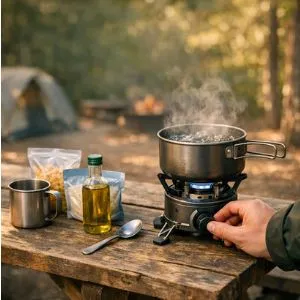
If you’re new, a camp stove is usually easier and more reliable than building a fire—especially when conditions are wet or fire rules are strict.
Know the rules first
Fire restrictions can change quickly. Parks and forests often update rules during dry months. Always check the official site for your destination.
Master one basic cooking routine
You don’t need fancy meals. You need one repeatable win:
- Boil water
- Cook a simple staple (pasta, rice, oatmeal)
- Add protein (eggs, canned chicken, beans) and something salty/crunchy
Mini-checklist (Fire & Cooking)
- Check current fire restrictions and campground rules
- Light your stove safely on stable ground
- Boil about 1 liter/quart of water
- Cook one easy meal end-to-end
- If a fire is allowed: extinguish fully (douse, stir, feel for heat)
Source ideas: Leave No Trace fire guidance + local land agency updates (state parks, forest service).
Water Skills: Carry, Treat, and Avoid Getting Sick
Water is where beginners can get tripped up—either by carrying too little or assuming a stream is safe.
Your three options
- Bring potable water from home (best for car camping).
- Use campground potable spigots (common in developed sites).
- Treat natural water with:
- a filter,
- purification tablets,
- or boiling.
CDC-style guidance generally supports these methods when used correctly, but always follow your specific product instructions.
Mini-checklist (Water)
- Confirm your water plan (bring it vs. source it)
- Keep “dirty” and “clean” containers separate
- Treat water consistently (not “only sometimes”)
- Drink regularly—thirst often shows up late outdoors
Food Storage Skills: Keep Wildlife Wild (and Your Trip Calm)
Even if you never see an animal, your snacks can still attract one at night.
Know what counts as “smellables”
It’s more than food:
- snacks, cooking oil, dishes and cookware
- toothpaste, deodorant, lip balm
- trash, wrappers, gum
In many areas, parks require bear lockers, bear-resistant containers, or specific storage methods. Follow the posted rules—this protects you and the wildlife.
Mini-checklist (Food Storage)
- Store all smellables in approved storage (locker/canister/vehicle as allowed)
- Never keep food in your tent
- Clean up crumbs and food scraps right away
- Pack out trash completely
Navigation & Camp Awareness: Don’t Get Turned Around
You don’t need to be a map expert to avoid the most common “where am I?” moments.
Keep it simple
- Download offline maps before you lose signal.
- Learn your campground details: site number, loop name, nearest restroom.
- Use landmarks: a big boulder, a unique tree, a signpost.
Mini-checklist (Navigation)
- Offline maps saved and opened once (so you know they work)
- Paper map or campground map photo stored on your phone
- Know your site/loop number
- Carry a whistle and headlamp for short walks after dark
Weather Skills: Stay Comfortable When Conditions Shift
Weather is the fastest way to turn an okay trip into a miserable one—especially at night.
Get layering right
- Base layer: manages sweat
- Mid-layer: warmth
- Outer layer: blocks wind/rain
A common beginner mistake is packing a warm jacket but forgetting dry socks or a rain shell. Also, tents need ventilation; sealing everything tight can trap moisture inside.
Mini-checklist (Weather)
- Check forecast (including overnight low and wind)
- Pack a rain layer even if it “probably won’t rain”
- Keep one set of clothes dry for sleeping
- Adjust plans if storms are expected
Source ideas: NOAA (US) or your local national weather service.
Hygiene & Bathroom Skills (The Part Nobody Wants to Talk About)
If your campground has bathrooms, your life is easy—learn where they are and bring a headlamp.
If you’re camping without facilities, follow Leave No Trace guidance for human waste disposal and local regulations (these rules vary a lot).
A simple hygiene system that works
- Hand sanitizer where you can reach it (not buried in a bag)
- A small wash setup: water container + a little soap used responsibly
- A dedicated trash bag for food waste and hygiene items
Mini-checklist (Hygiene)
- Know bathroom locations or backcountry rules
- Wash/sanitize hands before eating
- Keep dishwashing away from water sources if outdoors rules require it
- Pack out what you bring in
Safety Skills for First-Time Campers (Simple, Practical)
You don’t need to fear the outdoors. You do need a basic plan.
First aid basics you’ll actually use
Start with the common stuff:
- Blisters (prevention tape, moleskin, clean socks)
- Small cuts (clean, cover, monitor)
- Minor burns (cool water, protect the area)
- Sprains (rest, compression, elevation; seek care if severe)
For clear, conservative guidance, check the Red Cross first aid resources.
Emergency readiness (low effort, high payoff)
- Share your plan with someone: where you are, when you return
- Bring a headlamp (hands-free beats phone light every time)
- Keep your car keys, light, and a warm layer easy to grab at night
Table: Camping Skills for Beginners Checklist (Skill + Why + Quick Practice)
| Skill | Why it matters | Quick practice tip |
| Pitch a tent | Shelter = warmth, safety, sleep | Set it up once at home and time yourself |
| Use a camp stove | Hot meals and safe cooking | Boil water on your patio/driveway |
| Manage warmth at night | Cold ruins sleep fast | Test your sleep system in cooler temps if possible |
| Treat or source water | Prevent illness and dehydration | Run your filter once before the trip |
| Store food correctly | Prevent wildlife problems | Pack a “smellables” bag now |
| Basic navigation | Avoid getting turned around | Download offline maps and open them once |
| Basic first aid | Small issues become big if ignored | Build a tiny kit and learn where everything is |
24 Hours Before You Leave: A Beginner-Friendly Pre-Trip Checklist
Use this the day before so you’re not packing in a panic:
- Check weather, wind, and any advisories
- Confirm fire rules and campground regulations
- Charge headlamp, phone, and battery pack
- Prep meals and snacks (label by day/meal)
- Fill water containers or confirm water access
- Do a quick gear check: tent poles/stakes, lighter, stove fuel
- Tell a friend your plan and return time
Common Beginner Camping Mistakes (And How You Avoid Them)
- Skipping the practice setup → You arrive late, tired, and guessing.
Fix: Pitch your tent once at home. - Packing too much, forgetting the basics → You haul extras but miss a lighter.
Fix: Pack by system: sleep, cook, light, water, clothing. - Underestimating nighttime cold → You shiver and don’t sleep.
Fix: Bring a warmer layer and a proper sleeping pad. - Messy food habits → Animals get curious.
Fix: Store smellables properly and keep a clean camp. - No lighting plan → Simple tasks become frustrating.
Fix: Headlamp + backup batteries.
FAQ: Camping Skills for Beginners Checklist
What is the most important item on a camping skills for beginners checklist?
Your most important “item” is the skill of staying warm and dry, which starts with proper shelter setup and a reliable sleep system. If you sleep well, everything else feels easier the next day.
How do you practice camping skills for beginners at home?
Run a quick rehearsal:
- Set up your tent once.
- Boil water on your stove.
- Pack your food storage setup.
- Do a “test night” with your sleeping bag and pad, even if it’s indoors.
How many camping skills should you learn before your first trip?
Aim for 5–7 core skills: tent setup, stove use, staying warm, water plan, food storage, lighting, and basic first aid.
Do you need navigation skills for campground camping?
You don’t need advanced navigation, but you should know your site number, have offline maps, and recognize a few landmarks so you can return easily after a walk.
What’s the easiest first camping trip for a beginner?
A one-night car camping trip in mild weather at an established campground with bathrooms and potable water is the simplest way to start.
Conclusion: Your First Camping Win Starts Before You Leave
Camping isn’t about being tough or owning expensive gear. It’s about stacking small skills until you feel steady—pitching your tent without stress, cooking one hot meal, and knowing you can handle the basics if the weather shifts.
Now use this camping skills for beginners checklist in the most practical way: choose three skills to practice this week, then schedule a one-night trip and build from there.