DIY Camping Hacks for Smarter Outdoor Adventures (Budget-Friendly, Safer, and More Comfortable)
You don’t remember every campsite you’ve slept at—but you do remember the little problems that showed up at the worst time. The zipper that jammed when the wind kicked up. The “quick dinner” that turned into a greasy mess because your setup wasn’t dialed in. The cold spot under your hip that kept you half-awake all night.
If you’ve ever thought, “There has to be an easier way to do this,” you’re right. The best DIY camping hacks aren’t flashy. They’re small, practical moves that make your camp feel calmer, your gear behave better, and your day run smoother—without buying a pile of new stuff.
Below, you’ll find smart, field-tested hacks for shelter, sleep, food, organization, safety, hygiene, and weather—plus a cheat-sheet table and a FAQ that covers what people actually search before their next trip.
Table of Contents
Quick-Start Checklist: What to Pack for DIY Camping Hacks (And Why)
Before you get clever, get prepared. A tiny “camp hacks kit” gives you options when something breaks, gets wet, or turns annoying.
Core DIY Camping Hack Kit (Small Items, Big Payoff)
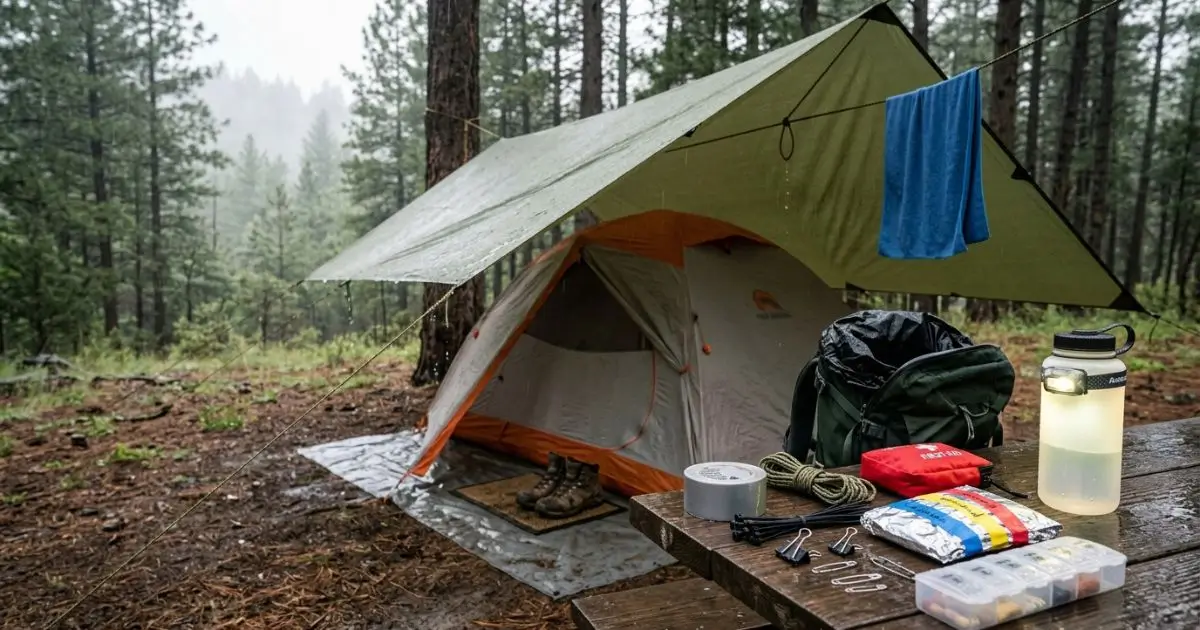
Pack these in one pouch so you can grab it fast:
- Duct tape (wrap a few feet around a lighter or water bottle)
- Paracord (25–50 ft)
- Binder clips (2–6 in mixed sizes)
- Zip ties (assorted)
- Safety pins + a tiny sewing kit
- Heavy-duty trash bags or a contractor bag
- Microfiber towel
- Aluminum foil
- Carabiners (2–4)
- Headlamp + spare batteries
What to reference (for credibility)
When you write or share tips with friends, it helps to anchor basics in trusted guidance:
- Leave No Trace’s 7 Principles (waste and campsite impact)
- USDA food safety guidance (cooler temps and handling)
- CDC tips for ticks and mosquitoes (regional safety)
- NOAA forecasts for weather planning
- USFS/state park alerts for fire restrictions
DIY Camping Hacks for Shelter & Sleep (Stay Dry, Warm, and Comfortable)
Your shelter and sleep system decide whether you wake up rested… or feel like you fought the night.
Tent & Tarp Hacks for Wind and Rain
1) Add drip lines to stop “rope rain.”
If water runs down your tarp line toward your tent, tie a short piece of cord (or even a strip of cloth) onto the line before it reaches your shelter. Water follows the drip line and falls off.
2) Tension guylines without fancy hardware.
You can tighten lines with simple hitches (like a taut-line hitch) or create a quick tensioner using a small stick as a toggle. This keeps tarps from sagging after the temperature drops.
3) Fix stubborn zippers fast.
A stuck zipper can ruin a late-night bathroom run. Rub a pencil (graphite) along the zipper teeth, or use a tiny bit of candle wax if you have it. Don’t force it—gentle back-and-forth usually wins.
Helpful knot resources
If you want clean visuals for key hitches, look up reputable knot libraries (scouting resources or Animated Knots-style guides).
Sleep System DIY Camping Hacks (Warmer Nights Without New Gear)
1) Hot water bottle trick (safe version).
Boil water, pour it into a hard-sided bottle you trust, tighten the lid, then wrap it in a sock. Put it near your feet or core. You get real warmth without extra gear.
Safety note: Keep it off bare skin and check for leaks before it goes in your bag.
2) Boost insulation under pressure points.
Cold often creeps in where your body compresses insulation. If your sleeping pad is thin, place spare clothes (fleece, puffy, even tomorrow’s shirt) under hips/shoulders to reduce conductive heat loss.
3) DIY pillow that doesn’t feel like a rock.
Stuff a jacket into a soft sleeve (buff, spare T-shirt, pillowcase). Add a small layer on top—like a beanie—so it feels less “lumpy.”
DIY Camping Hacks for Camp Kitchen & Food (Faster Meals, Less Mess)
A tidy camp kitchen saves time, reduces wildlife risk, and keeps you from spending the evening scrubbing.
Smarter Camp Cooking Setup
Pre-build a “grab and cook” workflow:
- Prep meals at home and use labeled foil packets (date + meal name)
- Store spices in a pill organizer or tiny jars
- Designate one bin as the kitchen bin (stove, fuel, lighter, utensils)
DIY dishwashing station that actually works
- Small tub or collapsible bucket for wash water
- Biodegradable soap (use it responsibly, away from water sources)
- Scrubber + microfiber towel
- Strain food bits and pack them out (Leave No Trace guidance is clear on minimizing residue)
Food Storage & Cooler Tricks
1) Freeze water bottles instead of loose ice.
They keep food cold and turn into drinking water as they melt—less mess, fewer soggy packages.
2) Layer the cooler like you mean it.
- Bottom: frozen items and long-term cold packs
- Middle: meals for later
- Top: day-one foods you’ll open often
Every time the lid opens, you trade cold air for warm air—so reduce “browsing.”
3) Shade the cooler.
Even a towel or reflective sunshade makes a difference. Keep it out of direct sun.
Data/source note
For cooler food safety and safe temps, point readers to USDA food handling guidelines.
DIY Camping Hacks for Fire, Light & Warmth (When Allowed)
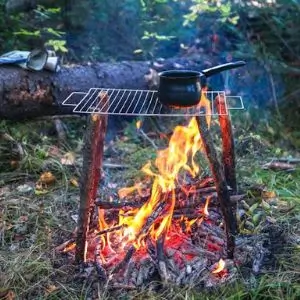
Fire rules change fast. Always check local restrictions (USFS, state parks, and campground notices).
Fire Starters You Can Make at Home
If fires are permitted, these are reliable:
- Cotton pads + petroleum jelly (store in a tiny container)
- Wax-dipped tinder (burns longer and resists moisture)
- Dryer lint (use carefully; burns quickly and hot)
Windproof Lighting Hacks (No Lantern? No Problem.)
Headlamp lantern hack:
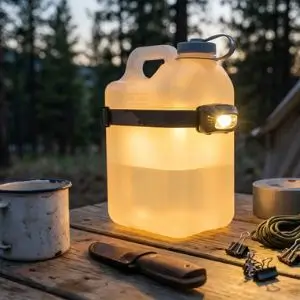
Aim your headlamp into a translucent jug or bottle to diffuse the beam and light up your table. It’s one of those DIY camping hacks you’ll use forever because it’s so simple.
Important safety note:
Avoid candles inside tents. Open flame + fabric + fatigue is a bad combination.
DIY Camping Hacks for Organization & Camp Setup (Less Chaos, More Relaxing)
If your campsite feels messy, your brain feels messy too. A few systems change everything.
Ridgeline Organizer (Your Camp’s “Back Wall”)
Run paracord between two trees (or poles) and use binder clips/carabiners to hang:
- Headlamps
- Wet socks (away from your sleeping area)
- Kitchen towel
- Bug net
- Trash bag (sealed)
Set a Shoe Zone
Put down a small tarp square or a trash bag near the tent door. It keeps grit out of your sleeping area—and stops you from losing a shoe in the dark.
Pack Clothes by Day
Instead of digging through your duffel:
- Pack outfits in separate bags: Day 1, Day 2, Day 3
- Keep a dedicated night bag: headlamp, warm layer, toiletries, charger
DIY Camping Hacks for Safety, First Aid & Repairs (Small Fixes That Save Trips)
You don’t need a full workshop outdoors. You need the ability to stabilize problems until you’re back home.
Quick Gear Repair Hacks
- Duct tape patch: temp repair for small tent tears or pad punctures
- Zip ties: replace a broken buckle, secure a loose strap, stabilize a cracked plastic piece
- Paracord: replace a snapped guyline, hang gear, reinforce a sagging tarp setup
Reality check
Repairs in camp are usually temporary. Your goal is function and safety, not perfection.
First Aid Add-Ons Worth Carrying
A few extra items cover the most common “camp problems”:
- Blister tape or moleskin (treat hot spots early, not after they’re blisters)
- Tweezers for splinters/ticks
- Small mirror (tick checks are easier)
- Whistle (simple, loud, effective)
- Antihistamine (if appropriate for you)
Source note
For tick and mosquito prevention guidance, the CDC is a solid reference. For first aid basics, Red Cross guidance is widely used.
DIY Camping Hacks to Stay Clean & Comfortable (Without Overpacking)
Feeling grimy is normal. Feeling miserable doesn’t have to be.
A Simple Handwashing Station
Hang a small water jug or place it on a table with:
- Soap
- Microfiber towel
- Trash bag for used paper/pack-out waste
You’ll cook cleaner, snack cleaner, and get fewer “mystery stomach” moments.
Wipes Strategy (Leave No Trace Friendly)
Bring wipes if you like them—just don’t treat them like magic disappearing cloth.
- Pack them out in a sealed bag
- Don’t bury them
- Don’t burn them
Waste & Bathroom Basics
Follow local rules, but generally:
- Stay away from water sources and trails
- Dig to the recommended depth (check area guidance)
- Pack out hygiene products
Leave No Trace principles are the right backbone here.
DIY Camping Hacks for Weather-Proofing (Heat, Cold, Wind, and Bugs)
Most “bad camping” stories start with weather you didn’t plan for.
Rain and Moisture Control
- Use a contractor bag as a pack liner (cheap and effective)
- Keep one bag as the “dry-only” zone for sleep clothes
- Wipe tent condensation with a microfiber towel in the morning
Hot Weather & Sun Hacks
- Pitch a tarp for shade (even a small one can change your day)
- Hydrate early and consistently (not only when you feel thirsty)
- Keep salty snacks or electrolytes available
Bug Defense Without Fancy Gear
- Keep camp clean (food smells invite more than mosquitoes)
- Wear long sleeves at dusk when bugs spike
- Do regular tick checks if you’re in tick country (CDC guidance helps you do this right)
Table: DIY Camping Hacks Cheat Sheet (Problem → Fix → What You Need)
| Camping Problem | DIY Camping Hack (Quick Fix) | What You Need |
| Water runs down your tarp line | Tie a drip line to redirect water | Cord scrap/paracord |
| No lantern | Headlamp shining into a translucent bottle | Headlamp + bottle |
| Cold feet at night | Hot water bottle wrapped in a sock | Hard bottle + sock |
| Wet gear in your pack | Contractor bag as pack liner | Contractor bag |
| Camp cooking feels chaotic | Labeled foil meals + mini spice kit | Foil, marker, small containers |
| Blisters starting | Tape hot spots immediately | Blister tape/moleskin |
| Trash attracts critters | Seal, clip, and hang trash (where allowed) | Trash bag + clip/carabiner |
| Strap/buckle breaks | Temporary zip-tie repair | Zip ties |
Budget DIY Camping Hacks (Save Money Without Feeling “Cheap”)
You don’t need top-shelf everything. Spend where it matters, improvise where it doesn’t.
Repurpose What You Already Own
- Old sunglasses pouch → mini repair kit holder
- Shower cap → quick cover for muddy shoes
- Old spice jars → camp spice kit
- A grocery bag + clip → quick trash setup
Where to Spend vs. Where to DIY
Spend on:
- A sleeping bag/pad suited to your temperatures
- A dependable headlamp
DIY is great for:
- Organization systems
- Spice kits and meal prep
- Simple repair supplies
FAQ: DIY Camping Hacks (What People Ask Before They Pack)
What are the best DIY camping hacks for beginners?
Start with the ones you’ll use every trip: a headlamp lantern diffuser, contractor-bag pack liner, drip lines for rain, a ridgeline organizer, and blister prevention tape.
Which DIY camping hacks help you stay warm at night?
Use the hot water bottle trick (carefully), add insulation under your hips and shoulders, keep a dry sleep-only clothing set, and block wind with a better tarp/tent pitch.
Are DIY camping hacks safe to use inside a tent?
Organization and insulation hacks generally are. Open flames usually aren’t. Always prioritize ventilation and follow campground rules.
What DIY camping hacks work best for rainy camping trips?
Contractor bag pack liner, drip lines on tarp cords, a dedicated dry bag for sleep clothes, and a condensation wipe-down routine.
What DIY camping hacks help with food storage and animals?
Keep food sealed, follow local wildlife rules (bear lockers/canisters if required), minimize smells, and keep a clean cooking area.
Conclusion: Your Next Trip Can Feel Easier (Without Buying More Gear)
The point of DIY camping hacks isn’t to turn your campsite into a gadget show. It’s to make the basics—sleep, shelter, food, and safety—feel dependable. Once those are handled, the outdoors gets quieter in the best way. You stop fussing and start paying attention to what you came for.