Best Month to Go Camping: Find the Perfect Balance of Great Weather & Fewer Crowds
You know that feeling when you unzip your tent and the morning air is cool—but not cold—and the whole campground is still quiet? No slammed car doors. No line for the bathroom. Just birds, pine, and a mug warming your hands.
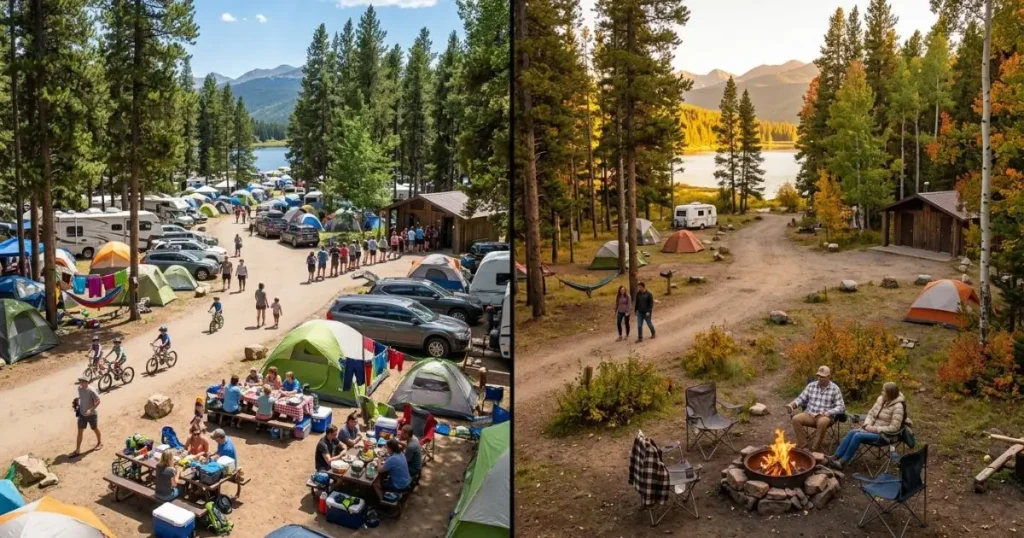
Now picture the opposite: a fully booked campground, your neighbor’s generator running at dinner, and a surprise downpour that turns your site into a puddle. Same gear. Same you. Totally different trip.
That’s why choosing the best month to go camping isn’t just a calendar decision—it’s how you stack the odds in your favor for better sleep, easier reservations, and the kind of calm you actually came for.
Below, you’ll get a practical, weather-and-crowds approach to choosing your ideal month—plus a quick table, region-by-region guidance, and a planning checklist you can use for any trip.
Table of Contents
Quick Answer: What’s the Best Month to Go Camping?
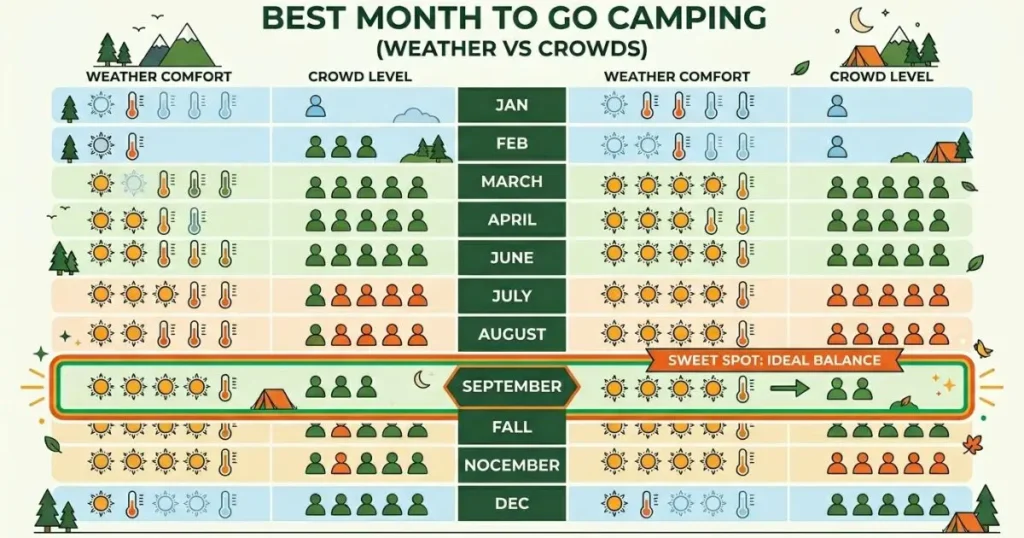
If you want one month that often delivers the best mix of comfortable camping weather and lighter crowds, September is a standout in many parts of the U.S.
Why September tends to work so well:
- Crowds drop after Labor Day as school schedules kick in.
- Nights cool down, which usually means better sleep.
- Bugs often ease up, especially compared to midsummer.
- Many places still have full campground access before fall closures.
That said, the “best month” changes by region. September in the Mountain West can bring early cold snaps, and September on some coasts overlaps with storm season. So use September as a strong default—but confirm with local conditions.
Helpful sources to check for your exact destination:
- NOAA Climate Normals (typical highs/lows and precipitation)
- National Park Service (NPS) visitation stats (crowd trends by month where available)
- Recreation.gov or your state park booking site (availability patterns)
How Weather & Crowds Decide the Best Month to Go Camping
Weather factors that matter most
You don’t need perfect sunshine. You need the right conditions for your comfort and safety.
Pay attention to:
- Daytime highs vs. nighttime lows (sleep quality depends more on nights than afternoons)
- Rain frequency and storm timing (afternoon thunderstorms, monsoons, coastal storms)
- Wind (especially on ridgelines, open desert, and beaches)
- Wildfire season and smoke (common late summer into early fall in many western areas)
- Snowpack/road access (mountain roads can stay closed into late spring)
If you want reliable baseline data, NOAA’s climate normals are a good starting point for “what’s typical,” then you can layer in current forecasts.
Crowd factors (the part people underestimate)
You can handle a few hikers on the trail. What usually ruins the vibe is when everything is maxed out—campground loops, parking lots, permit quotas, even grocery shelves in small towns.
Crowd levels are shaped by:
- School breaks and holiday weekends (summer is peak almost everywhere)
- Friday/Saturday arrivals (weekends feel like a different season)
- Reservation windows (popular parks can book out months ahead)
- Special events (festivals, foliage weekends, fishing openers)
Best Month to Go Camping by Season (Pros, Cons, and Who It’s For)
Spring (March–May): fresh air, fewer people, unpredictable weather
Spring is beautiful—green hills, roaring waterfalls, wildflowers—but it can also be messy.
Pros
- Often lower crowds than summer
- Landscapes feel alive (blooms, flowing rivers)
- Great for desert and southern destinations before heat arrives
Cons
- Rain and mud can limit roads and trails
- Cold nights sneak up on you, especially at elevation
- Some mountain areas still have snowpack and closures
Best for you if: you’re flexible and don’t mind packing layers and rain gear.
Summer (June–August): easiest access, biggest crowds
Summer is popular for a reason: long days, warm lakes, and predictable access to high country roads.
Pros
- Longest daylight for hikes and swimming
- Most campgrounds and roads are fully open
- Great for mountain camping where spring is still winter-ish
Cons
- Peak crowds and tough reservations
- Heat in low-elevation and desert locations
- Bugs can be intense
- In some regions, wildfire smoke becomes a real factor
Best for you if: you’re traveling with kids, want warm-water activities, or need guaranteed access.
Fall (September–November): crisp nights, calmer campgrounds
Fall camping often feels like the “real” version of camping—campfires, cozy layers, and quieter trails.
Pros
- Fewer crowds (especially after Labor Day)
- Cooler nights and fewer bugs in many regions
- Foliage can be spectacular where it applies
Cons
- Shorter days
- Colder nights (sometimes freezing in October)
- Some services start to scale back
Best for you if: you want comfort, quiet, and classic campfire weather.
Winter (December–February): solitude, but only if you’re prepared
Winter is the least crowded season, but it’s not forgiving.
Pros
- Maximum solitude
- Unique scenery and often clearer night skies
- Best time for desert camping in many areas
Cons
- Requires serious insulation and planning
- Road closures and limited facilities are common
- Higher safety risks (hypothermia, storms)
Best for you if: you’re experienced or heading to mild winter climates.
Best Month to Go Camping by U.S. Region (Weather + Crowds)
Northeast (Adirondacks, White Mountains, Acadia)
Best months: September–October (cooler, quieter, fall color), June (before peak crowds)
Watch for: blackflies late spring/early summer; cold nights in October.
Southeast (Smokies, Florida springs, coastal Carolinas)
Best months: March–April and October–November
Watch for: summer humidity/storms; late summer and early fall storm risk on coasts.
Midwest (Great Lakes, Boundary Waters, Ozarks)
Best months: June and September
Watch for: mosquitoes in midsummer; early frosts later fall.
Southwest deserts (Joshua Tree, Sedona, Big Bend)
Best months: October–April (this is prime time)
Watch for: monsoon storms and flash flood risk mid-to-late summer.
Mountain West (Colorado, Tetons, Glacier)
Best months: July–September, with September often best for fewer crowds
Watch for: lingering snow into June; smoke late summer; early cold snaps at elevation.
Pacific Northwest (Olympic, Cascades, Mt. Hood area)
Best months: July–September, with September often calmer
Watch for: shoulder-season rain; occasional late-summer smoke.
Table: Best Month to Go Camping (Weather vs. Crowds at a Glance)
| Month | Typical Weather (General) | Crowds Level | Best For | Watch Outs |
| March | Cool, early storms | Low–Med | Southern parks, deserts | Mud, chilly nights |
| April | Mild, changing | Med | Wildflowers, shoulder-season | Temperature swings |
| May | Warmer, mixed rain | Med–High | Pre-summer trips | Bugs begin, storms |
| June | Warm, long days | High | Lakes, mountains opening | Reservations needed |
| July | Hot, stable access | Very High | Family trips, high elevation | Heat, bugs, smoke |
| August | Hot, late-summer | Very High | Water activities | Storms, smoke |
| September | Cooler, often stable | Med | Best overall balance | Early cold at elevation |
| October | Crisp, colder nights | Low–Med | Foliage, quiet trips | Frost, shorter days |
| November | Cold, variable | Low | Quick getaways | Closures, early snow |
| December | Winter conditions | Very Low | Desert, winter camping | Limited services |
| January | Coldest stretch | Very Low | Solitude | Safety + gear demands |
| February | Late winter mix | Very Low | Shoulder winter | Ice, storms |
Use this as a starting point, then confirm with NOAA climate normals and local park alerts for your destination.
Choosing the Best Month to Go Camping for Your Style
If you want fewer bugs
Try:
- September in many regions
- Higher elevations during summer (often less buggy than wetlands/lowlands)
- Breezier sites near open ridges or coasts (wind helps)
Also, call a ranger station or check recent trip reports—bug pressure changes fast.
If you want family-friendly timing
Realistically, your window may be June–August. You can still improve the experience by:
- Camping midweek
- Picking less famous campgrounds near major parks
- Booking earlier and bringing shade/water for hot afternoons
If you want to save money
Look at shoulder season:
- April–May
- September–October
You’ll often get better campsite availability and a quieter feel without pushing into harsh weather.
If you want mild temperatures (not too hot, not too cold)
Aim for:
- Spring/fall in temperate regions
- Winter in deserts and parts of the South
The best indicator: average nighttime lows. If your sleep system isn’t built for it, even a perfect day can turn into a long night.
How to Avoid Crowds (Even in the Best Month to Go Camping)
Timing moves that work
- Arrive Sunday–Thursday, not Friday night
- Camp just after major holidays (especially after Labor Day)
- Choose early trail starts (sunrise departures feel like a cheat code)
Location moves that work
- Consider national forests and state parks near famous national parks
- Look for walk-in or hike-in sites if you want quiet
- If you try dispersed camping, follow local rules and Leave No Trace practices
Reservation strategy (simple and effective)
- Learn the booking window for your campsite system (often months ahead).
- Make a short list of 3–5 backup campgrounds within 30–60 minutes.
- Book a strong “good enough” base early, then refine if something better opens.
- If your schedule allows, target midweek openings—availability is usually better.
Weather-Smart Planning Checklist (So Your Month Stays “The Best”)
Check 2–4 weeks out
- Typical highs/lows and rainfall (NOAA climate normals)
- Seasonal risks: smoke/fire outlooks, storm patterns, snowpack
- Trail/road status from official park/forest pages
Check 48 hours out
- Wind gusts and thunderstorm timing
- Flood watches in canyon/desert areas
- Air quality if you’re in wildfire-prone regions
Pack smart for what you’re likely to face
- Cold nights: warmer sleeping bag rating + insulated sleeping pad + warm hat
- Rain: reliable rain jacket + tarp + dry bags
- Heat: shade setup + extra water capacity + electrolytes
FAQ: Best Month to Go Camping (Weather & Crowds)
What is the best month to go camping for good weather?
For many destinations, September lands in the comfort zone: warm enough days, cooler nights, and fewer extremes. For deserts, you’ll often get better weather in winter and early spring.
What is the best month to go camping to avoid crowds?
September (after Labor Day) and October are strong picks in many places. If you can camp midweek, you’ll feel an even bigger difference.
Is September the best month to go camping everywhere?
Not everywhere. In some regions, September can overlap with storm season or bring early snow at elevation. It can also be a smoky month in parts of the West during active fire years. Always check local patterns.
What is the best month to go camping with kids?
Usually June through August because of school schedules. To keep it enjoyable, plan midweek trips, reserve early, and choose destinations with water access or higher elevation to avoid peak heat.
What is the best month to go camping in national parks?
It depends on the park, but May, June, and September often offer a strong balance of access and comfort. The most popular parks can still be busy—so treat reservations as part of the trip planning, not an afterthought.
Conclusion: Your Best Month to Go Camping Is the One That Matches Your Comfort (and Your Patience)
If you’re trying to choose one month with the best odds of comfortable weather and lighter crowds, September is a smart place to start. But the real win comes when you match the month to your region, your sleep comfort, and how much company you’re willing to share the trail with.