Camping safety tips for outdoor safety
Imagine this: you’re setting up your tent under a sky painted with stars, the scent of pine in the air, the gentle crackle of a campfire nearby. It’s peaceful, thrilling, and utterly freeing. Yet, one wrong step, an unexpected storm, or a moment of carelessness can turn this perfect experience into a dangerous situation. That’s why knowing and applying camping safety tips isn’t just smart—it’s essential.
Whether you’re a seasoned camper or planning your first outdoor adventure, this guide will equip you with everything you need to enjoy nature safely. From preparation to first aid, fire safety, and wildlife precautions, we’ll cover it all.
Table of Contents
Why Camping Safety Matters
Camping is an incredible way to connect with nature, recharge your mind, and bond with friends or family. However, the outdoors can be unpredictable. Understanding potential hazards before you set foot in the wilderness keeps your adventure safe and enjoyable.
Here are some reasons why you should prioritize safety:
- Prevent injuries: Falls, burns, and cuts are common on camping trips. Proper precautions reduce these risks.
- Avoid wildlife encounters: From curious raccoons to bears, knowing how to behave around animals protects both you and them.
- Weather preparedness: Sudden storms, extreme heat, or cold can create dangerous situations if you’re unprepared.
- Emergency readiness: Knowing what to do in unexpected situations can save lives.
Statistic: According to the National Park Service, approximately 400,000 camping-related injuries occur annually in the U.S., many of which are preventable with proper preparation.
Essential Camping Safety Tips Before You Go
Plan Your Trip and Research Your Destination
Preparation is the first step toward a safe camping experience. Researching your destination ensures you’re ready for whatever nature throws your way.
- Check the weather forecast and be ready for sudden changes.
- Research local wildlife hazards. Some parks have bears, snakes, or ticks to be aware of.
- Know the park regulations: fire restrictions, trail guidelines, and camping permits.
Destination Safety Checklist
| Task | Importance | Notes |
|---|---|---|
| Check weather | High | Avoid storms & extreme temperatures |
| Park regulations | High | Fire restrictions, trail rules |
| Emergency contacts | High | Nearest hospital, ranger station |
By doing a bit of homework, you reduce the chances of unexpected emergencies, giving you peace of mind to enjoy your trip.
Pack the Right Gear for Safety
Your gear can make the difference between a safe trip and a hazardous one. Make sure you have the essentials:
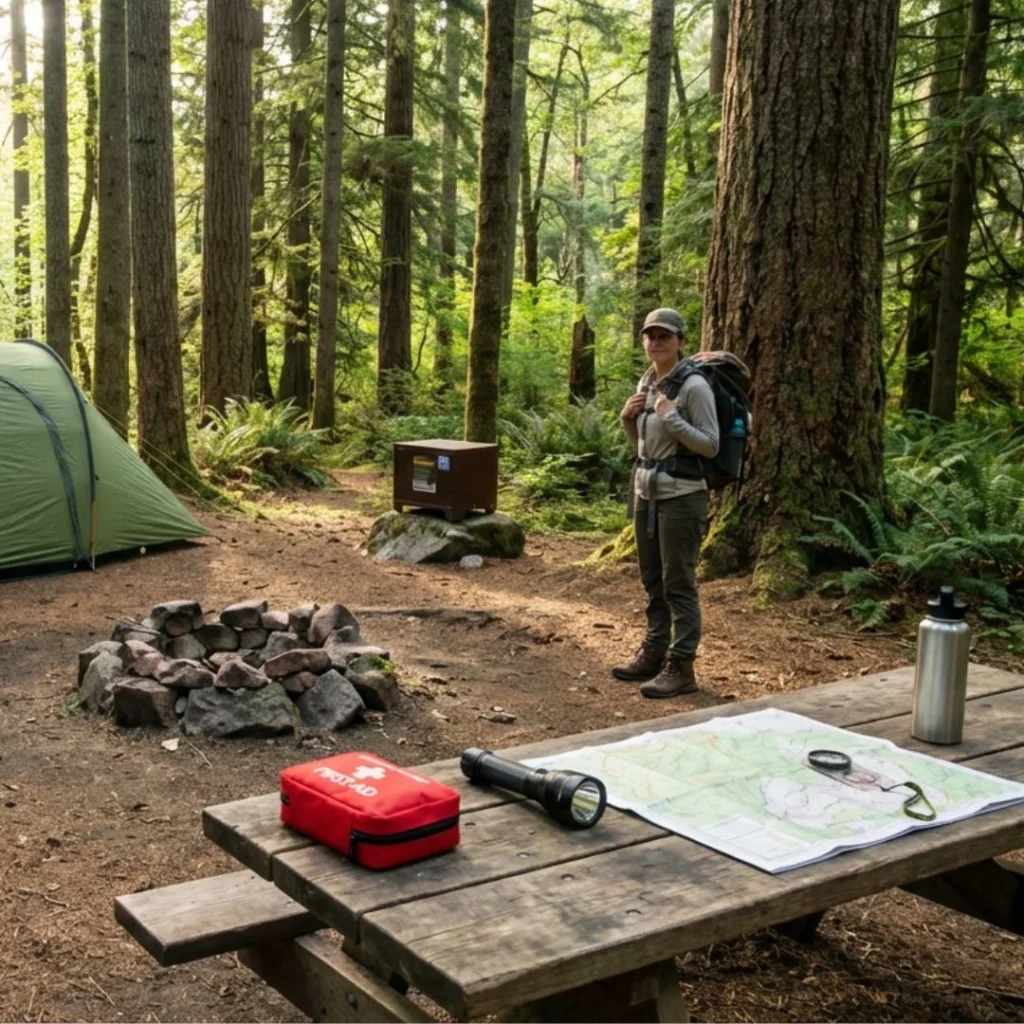
- First aid kit: Include bandages, antiseptic wipes, tweezers, pain relief medication, and blister care items.
- Emergency gear: A whistle, flashlight, multi-tool, and fire starter are must-haves.
- Proper clothing and footwear: Dress in layers for varying temperatures, and wear sturdy, closed-toe shoes.
Tip: Opt for lightweight, compact equipment that doesn’t weigh you down but keeps you prepared.
Food and Water Safety Tips
Eating and drinking safely is crucial when camping. Contaminated food or water can quickly ruin your trip.
- Store food properly: Use airtight containers or bear-proof boxes to avoid attracting animals.
- Water: Carry enough for your trip or use purification tools like filters or tablets if sourcing water from streams.
- Hygiene: Wash your hands frequently, especially before handling food.
Quick Food & Water Tips:
- Boil or filter water from natural sources.
- Avoid leaving food out overnight.
- Carry portable hand sanitizers.
Staying Safe While Camping
Fire Safety Tips
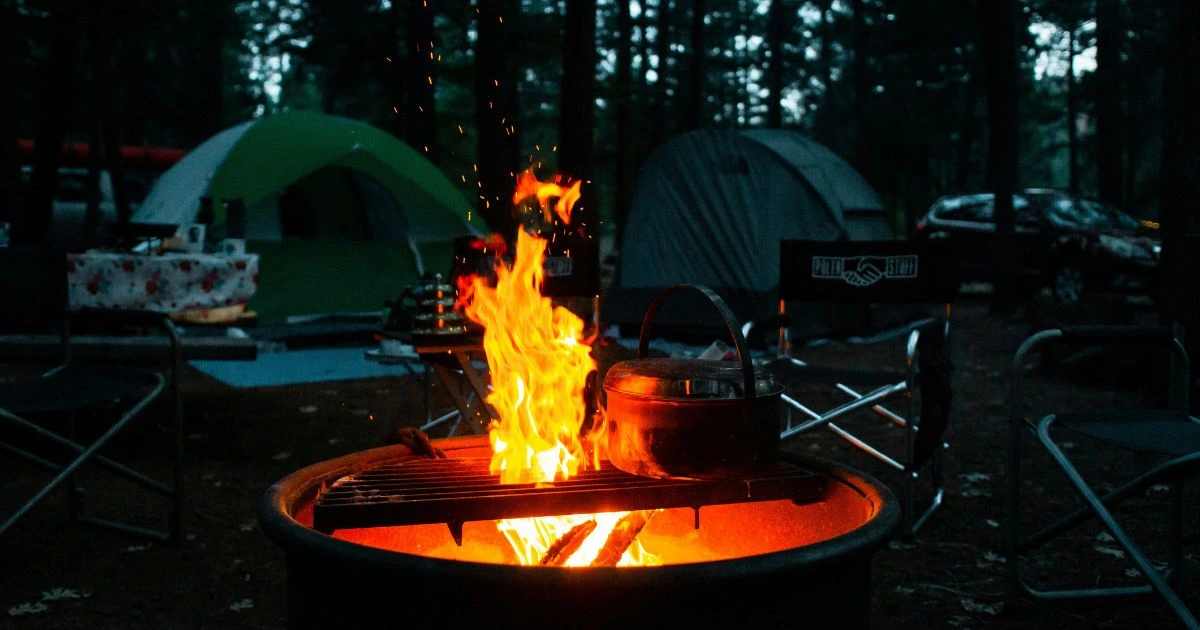
A campfire is central to many camping experiences, but it can be dangerous if mishandled.
- Only use designated fire pits.
- Never leave a fire unattended.
- Keep water or sand nearby to extinguish flames quickly.
Common Campfire Hazards and Prevention
| Hazard | Prevention |
|---|---|
| Sparks | Keep fire small, clear area of flammable debris |
| Wind gusts | Avoid fire on windy days |
| Clothing burns | Maintain safe distance |
A controlled fire is enjoyable and safe when these precautions are followed.
Wildlife Safety Tips
Encounters with wildlife can be thrilling, but they also carry risk. Protect yourself and the animals by:
- Keeping a safe distance: Never approach or feed wild animals.
- Storing food securely: Use containers or hang food in trees if necessary.
- Knowing local wildlife behavior: Learn how to react in case of an encounter with bears, snakes, or raccoons.
Emergency wildlife hotlines and park ranger contacts can be lifesavers. Always have these numbers on hand.
Navigation and Personal Safety
Getting lost is a common camping mishap that can escalate quickly. Here’s how to prevent it:
- Carry a map and compass, or a reliable GPS device.
- Inform someone of your route and expected return time.
- Stick to marked trails.
- Consider apps or devices designed for outdoor safety, such as satellite messengers.
Health & Hygiene Tips
Your well-being is a priority. Protect yourself from environmental hazards:
- Hydration: Drink plenty of water to avoid dehydration.
- Insect protection: Use repellents and wear protective clothing to prevent bites.
- Sun protection: Apply sunscreen, wear a hat, and use sunglasses.
- Temperature control: Dress appropriately to prevent hypothermia in cold weather or heatstroke in hot conditions.
Camping Safety Checklist
Here’s a concise checklist to ensure nothing is overlooked:
Camping Safety Checklist Table
| Category | Items |
|---|---|
| Preparation | Weather check, maps, emergency contacts |
| Gear | First aid, flashlight, fire starter, proper clothing |
| Food & Water | Stored properly, enough supply, purification tools |
| Safety Practices | Trail adherence, wildlife precautions, fire safety |
Use this checklist as your quick reference before and during your trip.
Common Camping Mistakes and How to Avoid Them
Even experienced campers can make mistakes. Avoid these pitfalls to stay safe:
- Not checking weather or terrain: Sudden storms or rough terrain can catch you off guard.
- Improper food storage: Attracts wildlife and increases health risks.
- Ignoring campsite rules: These rules exist to protect you and the environment.
Top Camping Mistakes & Prevention
| Mistake | Risk | Prevention |
|---|---|---|
| Leaving food out | Attracts wildlife | Use sealed containers |
| Not planning route | Getting lost | Carry map & GPS |
| Unsafe fires | Wildfire risk | Follow fire rules |
Learning from these common errors can prevent mishaps before they happen.
Conclusion
Camping is a magical experience, but safety should always come first. By planning ahead, packing the right gear, respecting wildlife, and following these camping safety tips, you can enjoy the outdoors with confidence. Remember, a well-prepared camper is a safe camper.
Next time you pack your tent and hiking boots, review this guide and apply these tips—it could make the difference between a memorable adventure and an avoidable mishap.
Call-to-Action: Share this guide with friends or family planning a camping trip and make your next outdoor adventure safer and more enjoyable.
FAQ – Camping Safety Tips
Q1: What are the most important camping safety tips for beginners?
- Always plan ahead, pack essential safety gear, and inform someone of your location.
Q2: How can I stay safe from wildlife while camping?
- Keep food sealed, maintain distance, know local wildlife behavior, and carry deterrents if allowed.
Q3: What should I include in a camping first aid kit?
- Bandages, antiseptic wipes, tweezers, medications, blister care, and emergency contacts.
Q4: How do I prevent campfire accidents?
- Use designated pits, never leave a fire unattended, keep water nearby, and maintain a safe distance.
Q5: Are there apps or tools for camping safety?
- GPS navigation apps, weather alert apps, and emergency signal devices (satellite messengers) are excellent for safety.
One Comment
Comments are closed.