How to Learn Camping Skills Step by Step: From Nervous Beginner to Confident Camper
The first time you step out of the car and hear nothing but wind in the trees, it can feel strangely loud. No traffic, no humming appliances, no TV in the background—just your thoughts, the sky, and a whole lot of “I hope I know what I’m doing.”
Maybe you’ve already had that moment. You wrestled with a tent that wouldn’t cooperate, struggled to light a stove, or lay awake wondering whether that rustle outside the tent was just the wind.
You’re not “bad at camping.” You simply haven’t had a clear path for how to learn camping skills in a calm, step-by-step way.
Camping isn’t a personality trait. It’s a stack of very learnable skills:
- How to pitch a tent without drama
- How to stay warm and dry
- How to cook a simple meal outside
- How to choose a safe campsite and read a basic map
When you learn those camping skills step by step, your trips change completely. Instead of worrying about what might go wrong, you spend your energy watching the fire, counting shooting stars, and actually relaxing.
This guide gives you a practical roadmap so you know exactly where to start, what to practice, and how to build real confidence outdoors.
Table of Contents
Why Learning Camping Skills Before You Go Matters
Safety, Comfort, and Real Enjoyment
You already know camping can be great for you—fresh air, movement, unplugging from screens. Research on time in nature consistently links it with:
- Lower stress and anxiety
- Better sleep
- Improved mood and focus
But those benefits only really show up when you feel reasonably prepared. Knowing how to learn camping skills step by step gives you:
- Safety – You avoid common issues like getting chilled, dehydrated, or lost.
- Comfort – You tweak your gear and habits so you actually sleep, eat, and move well.
- Freedom – With each new skill, more places and seasons become realistic options for you.
What Happens If You Skip the Basics
Most “disaster camping stories” come from the same causes:
- No idea how to set up the tent in wind or rain
- Cotton hoodie that stays wet and cold all night
- No backup light when the only flashlight dies
- Overestimating fitness or underestimating a trail
Almost all of these are preventable. A few evenings of practice and some simple checklists are usually enough to turn chaos into a manageable learning curve.
Your Step-by-Step Roadmap to Camping Skills
Instead of trying to learn everything at once, you’ll move through clear stages. Each step adds a layer of skills and confidence.
Camping Skills Progression Table
| Step | Focus Area | Level | Where You Practice | Example Skills |
| 1 | Gear & tent basics | Beginner | Living room / backyard | Pitch tent, use sleeping bag, organize base kit |
| 2 | Navigation & safety | Beginner–Intermediate | Local parks / neighborhood | Read simple map, follow trail markers, Ten Essentials |
| 3 | Fire & camp cooking | Beginner–Intermediate | Backyard / campsite fire ring | Safe fire-building, use stove, easy meals |
| 4 | Shelter, sleep & warmth | Beginner | Backyard / car campground | Choose campsite, stay warm, test sleep system |
| 5 | Water, hygiene & Leave No Trace | Beginner–Intermediate | Short hikes / campgrounds | Treat water, manage waste, basic hygiene |
| 6 | First overnight car-camping | Beginner | Established campground | Full trip planning, setup, teardown |
| 7 | More advanced trips | Intermediate | Backcountry trails | Backpacking basics, longer routes, more weather |
Use this as your roadmap. You don’t have to master step 7 right away. Focus on the step you’re currently in, and let the rest come later.
Step 1 – Practice Core Camping Skills at Home
You can start learning camping skills without leaving your driveway.
Get to Know Your Gear
Tent, Sleep System, and Lighting
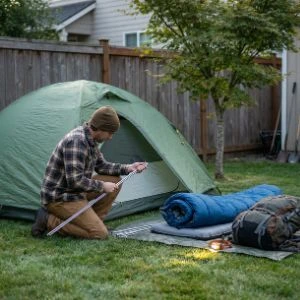
Set everything up where there’s zero pressure—your living room, yard, or a nearby park.
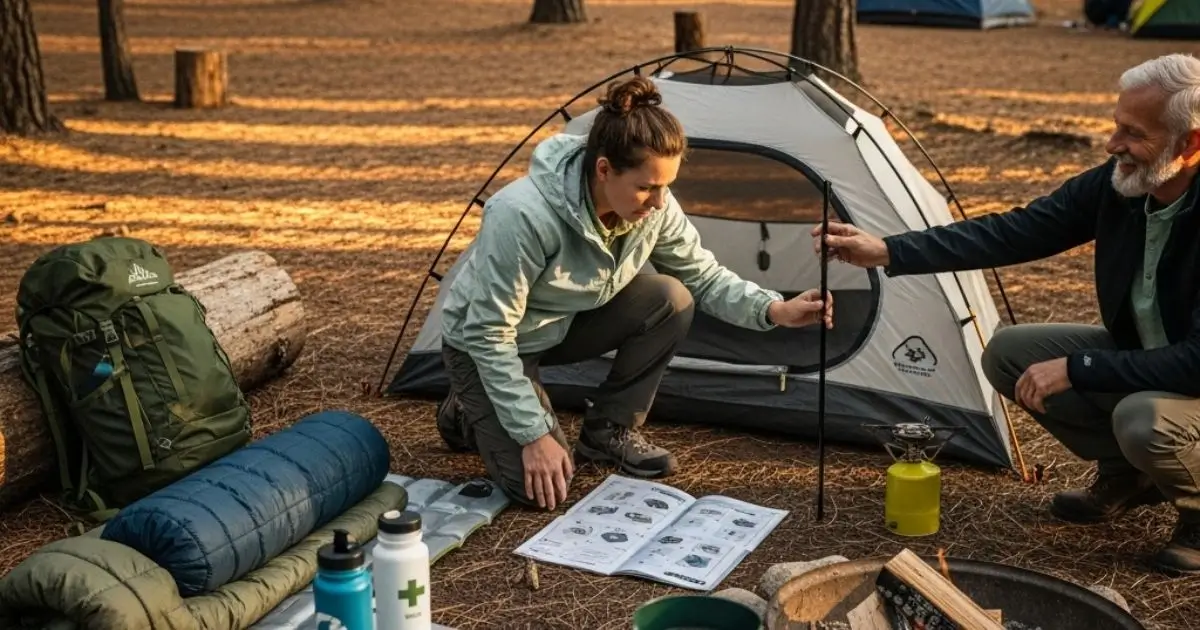
- Pitch your tent two or three times until it feels automatic
- Practice putting the rainfly on quickly
- Inflate or unroll your sleeping pad and lie on it for a while
- Climb into your sleeping bag, zip it fully, and see if the size and warmth feel right
- Test your headlamp or flashlight and keep spare batteries with it
Do a full “mock camp” at home: lights off, gear set up, a book or podcast, and see how it feels.
Build a Simple Base Kit
Start with a small but solid core kit:
- Shelter: tent or tarp, sleeping bag, sleeping pad
- Light: headlamp + extra batteries
- Warmth: extra layer, hat, gloves (even in summer nights can be chilly)
- Basic first-aid: bandages, blister care, pain reliever, any personal meds
You can rent or borrow big items (tent, bag, pad) while you figure out what you really like.
Step 2 – Navigation and Safety Fundamentals
You don’t need to be a wilderness navigator, but you do need the basics.
Read a Map, Trust a Compass
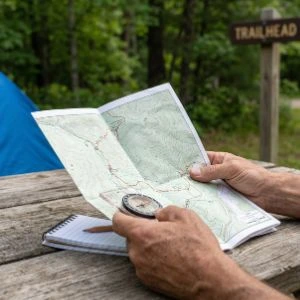
Simple Map Skills
Start with easy, well-marked parks and trails:
- Look at the trail map before you start: where does the loop go, how long is it, where are the junctions?
- Notice trail signs and blazes as you walk
- Match what you see (hills, streams, trail junctions) to what’s on the map
Phone apps are handy, but batteries die. Getting comfortable with a paper map and a basic compass puts you ahead of many new campers.
The Ten Essentials and Core Safety Habits
Build simple habits that dramatically improve your safety:
- Tell someone where you’re going and when you’ll be back
- Check the weather forecast and fire danger before you leave
- Carry the Ten Essentials (navigation, sun protection, insulation, illumination, first-aid, fire, repair kit/tools, nutrition, hydration, emergency shelter)
These don’t need to be fancy or expensive. They just need to be there when you need them.
Step 3 – Fire and Camp Cooking Basics
If campfires are allowed where you live, this is a fun skill to learn.
Building a Safe Campfire
Know the Rules First
Before you strike a match:
- Check whether fires are allowed (and where)
- Respect fire bans and posted signs
- Use a designated fire ring or build a small, safe one where permitted
Then practice:
- Gather three sizes of fuel: tinder (very small, dry), kindling (pencil-thick), and larger fuelwood
- Build a small structure (teepee or log cabin) with good airflow
- Keep water or dirt nearby to fully extinguish the fire
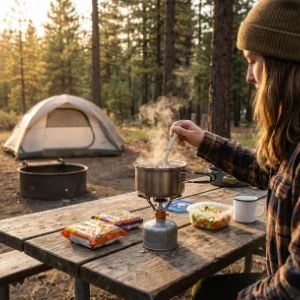
Simple Meals You Can Actually Cook Outdoors
Start with Easy Wins
Think “simple, hearty, low-stress.” For example:
- Instant oatmeal with nuts and dried fruit
- Ramen or instant rice with pre-cooked meat or beans
- Foil packet meals (chopped veggies + protein + seasoning, wrapped and cooked)
- No-cook backups: wraps, cheese, hard-boiled eggs, bars
Practice lighting and using your stove at home or in a safe outdoor spot so you’re not learning hungry in the dark.
Step 4 – Shelter, Sleep, and Staying Warm
A good night’s sleep can make or break your first few trips.
Choosing a Safe, Comfortable Campsite
What to Look For
When you arrive at a campground or backcountry site, aim for:
- Flat ground, free of rocks and roots
- A spot that won’t collect water if it rains
- Reasonable distance from water sources (often 200 ft) to protect shorelines
- Some natural wind protection (trees, bushes) but not directly under dead branches
Think about wind direction and sunrise if that matters to you.
Dialing In Your Sleep System
Test Before You Commit
Before your first “real” night out:
- Check your sleeping bag’s temperature rating against the forecast
- Use a sleeping pad with enough insulation (look at the R-value)
- Do a test night at home or in the backyard with the same clothes and bedding you plan to use
If you wake up cold, you’ll know to add a liner, warmer base layers, or an extra blanket before your actual trip.
Step 5 – Water, Hygiene, and Leave No Trace
Comfort and confidence skyrocket when you know how to handle the everyday basics.
Finding and Treating Water
Simple Water Rules
On short trips with access to taps, you may only need to carry bottles. Once you’re away from faucets:
- Assume surface water (streams, lakes) needs treatment
- Learn one or two methods:
- Boiling
- Filter or purifier
- Chemical treatments (tablets or drops)
- Aim for at least 2–3 liters per person per day, more in heat or on strenuous trips
Check local guidelines; some areas have specific advice or hazards.
Hygiene and Waste Without Running Water
Stay Clean Enough to Stay Healthy
You don’t need a full bathroom to stay reasonably clean:
- Use hand sanitizer often, especially before eating and after using the bathroom
- Wash with a small amount of biodegradable soap at least 200 ft from streams or lakes
- Pack out used toilet paper where required, or follow local rules with a proper cat hole
Follow Leave No Trace principles to protect wildlife, water, and other visitors. A clean camp is also less attractive to animals.
Step 6 – Plan and Take Your First Overnight Car-Camping Trip
Now you start putting your skills together in a low-risk setting.
Choosing a Beginner-Friendly Campground
What Makes a Great First Campsite
Look for:
- Drive-in (car) access so you’re not carrying heavy gear far
- Marked sites with level pads
- Access to toilets and (ideally) potable water
- A campground not too far from home
Crowds may feel less “wild,” but for a first trip they add a layer of safety and reassurance.
A Simple Planning Checklist
Step-by-Step Trip Plan
Use this quick structure:
- Pick your dates and a backup date if possible
- Reserve a site online if required
- Check conditions (weather, road closures, fire bans) a few days before
- Plan meals for each day, plus extra snacks
- Pack with a checklist so you don’t forget essentials
- Aim to arrive early so you can pitch the tent in daylight
Treat this first outing as a practice run. Your goal isn’t a perfect Instagram trip; it’s building a foundation.
Step 7 – Level Up to More Adventurous Camping
Once basic camping feels steady, you can start stretching your comfort zone.
Signs You’re Ready for More
You might be ready to try backpacking or more remote spots when:
- You can set up and break down camp smoothly
- You’ve already dealt with some rain or wind without panicking
- You’re comfortable cooking, staying organized, and packing out trash
- Your fitness matches the hikes you’re eyeing
Next Skills to Explore
Possible next steps:
- How to pack a backpack efficiently
- Wilderness first aid courses
- Shoulder-season or mild winter trips with proper gear
The same principle still applies: one small new skill at a time, built on the foundation you already have.
H2: FAQ: How to Learn Camping Skills Step by Step
How can I learn camping skills step by step if I’ve never camped before?
Start at home:
- Practice pitching your tent and using your sleeping gear
- Cook a simple camp-style meal on your stove
- Take short day hikes to get used to being on trails
Then book one night at a car-accessible campground. Treat it as a test, not a vacation you must “get right.”
How long does it take to feel comfortable with basic camping skills?
If you practice consistently, you can feel surprisingly comfortable in a few weekends:
- One or two evenings for gear and tent practice
- A handful of walks or short hikes for navigation basics
- One or two overnight trips to pull everything together
The learning never really stops, but a basic level of confidence comes faster than you might expect.
What camping skills should I learn first?
Focus on:
- Pitching your tent and staying dry
- Using your sleep system and managing warmth
- Simple camp cooking and safe food storage
- Basic safety habits: telling someone your plan, checking weather, carrying essentials
These cover most of what makes a trip feel safe and comfortable.
Can I learn how to learn camping skills without spending a lot of money?
Yes. You can:
- Borrow or rent larger gear (tent, sleeping bag, backpack)
- Use budget-friendly clothing layers you already own (avoid heavy cotton)
- Learn from free online resources, library books, and local clubs
Invest slowly, starting with what affects comfort and safety the most.
Is it okay to camp alone as a beginner?
Many people eventually enjoy solo camping, but for your first few trips it’s usually better to:
- Go with a trusted friend who has some experience
- Join a local hiking or camping group
- Choose well-populated campgrounds with hosts or rangers on site
If solo trips are your long-term goal, build up to them: start with solo day hikes, then a single night at a busy, close-to-home campground.
Conclusion: Your Next Step Toward Confident Camping
You don’t have to be fearless, ultra-fit, or born into an “outdoorsy” family to camp well. You only need a clear path for how to learn camping skills, plus the willingness to practice them bit by bit.
Each small step matters:
- Pitching your tent in the backyard
- Cooking one simple meal on your camp stove
- Taking a short hike with a map in your pocket
- Spending a single night at an easy car campground
Over time, those small skills stack up into real confidence. The day comes when a dark forest feels less like a threat and more like a peaceful, quiet place you know how to live in for a while.
If you’re ready to move from “I wish I camped more” to “I know how to do this,” choose one skill from this guide and practice it this week—no big trip required.
Then, when you’re ready, plan that first overnight. You might be surprised how quickly the nervousness gives way to something else: the feeling that you belong out there.
Your next move:
Pick a weekend, borrow or rent the basics if you need to, and schedule a practice night—backyard or campground. Put it on your calendar now, and start turning camping from an idea into a skill set you actually own.