Kids Camping Packing List: 12 Must-Have Essentials (Plus a Kid-Proof Checklist You’ll Actually Use)
You picture it perfectly: your kid in a too-big hoodie, holding a flashlight like it’s a treasure map, watching the campfire like it’s the best show on earth. Then real life taps you on the shoulder—your child can’t sleep because they’re cold, the only light is your phone at 3%, and someone is melting down because snacks are “taking too long.”
A solid kids camping packing list isn’t about packing everything. It’s about packing the right things so you can spend less time solving problems and more time enjoying the reason you came: those little moments when your kid feels brave, capable, and completely alive outdoors.
Below is a practical, parent-tested list built around comfort, safety, and simplicity—without turning your trunk into a sporting goods store.
Table of Contents
How to Use This Kids Camping Packing List (So You Don’t Overpack)
Before you load a single bag, take two minutes to pack with a plan.
Start with the “Big 3” for kid camping
Most kid camping stress comes from three gaps:
- Warmth (cold nights surprise everyone)
- Hydration (cranky + tired often equals thirsty)
- Light (darkness makes everything feel bigger)
If you cover those three, you’ve already prevented most of the usual camp headaches.
Do a fast “night-before” check
Use this quick reset:
- Check the overnight low (not just daytime temperature)
- Look up campground rules (food storage, quiet hours, fire rules)
- Charge headlamps/phones and pack a power bank
- Put essentials in one “grab bag” (first aid, meds, lights)
Helpful references as you plan: the National Park Service (NPS) for park-specific safety notes, and Leave No Trace guidance for low-impact camping habits.
Kids Camping Packing List — The 12 Must-Have Essentials
These are the non-negotiables. If you bring nothing else, bring these.
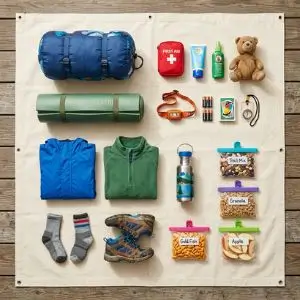
1) Sleeping bag (or warm sleep system)
A kid who sleeps well is a kid who hikes better, listens better, and enjoys camp more.
- Choose based on the overnight low temperature
- Consider a sleeping bag liner for extra warmth and easy washing
- For little kids, a too-large bag can feel drafty—size matters
2) Sleeping pad (comfort + insulation)
A pad isn’t just for cushioning—it helps stop cold from creeping up from the ground.
- Closed-cell foam pads are tough, simple, and kid-proof
- If you’re using inflatable pads, bring a patch kit
3) Tent (plus rainfly and ground protection)
Your tent is your home base.
- Make sure the rainfly covers well
- Bring a footprint or a tarp under the tent to protect the floor
- Pack extra stakes if your site is windy or the ground is soft
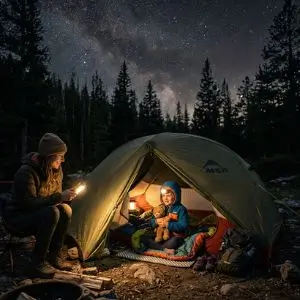
4) Headlamp or flashlight (plus extra batteries)
Darkness changes the mood fast—especially for kids.
- Headlamps keep hands free for nighttime bathroom trips
- Pack one light per kid (even a simple one), plus an adult backup
- Add spare batteries or a charging cable
5) Warm layers (base, mid, outer)
Kids cool down quickly once the sun drops.
- Aim for layers you can add/remove easily
- Keep a dry “sleep-only” outfit to avoid going to bed damp
- If possible, avoid cotton for nighttime warmth (it holds moisture)
6) Rain gear (jacket + pants)
Even a light drizzle can soak clothes and ruin the evening.
- Pack rain gear even if the forecast looks “fine”
- A simple poncho works in a pinch, but real rain gear is better for play
7) Extra socks + sturdy shoes
Wet feet can derail a whole day.
- Pack more socks than you think you’ll need
- Bring sturdy shoes for exploring, plus easy camp shoes (sandals/clogs)
8) Water bottle or hydration system
Hydration is the quiet hero of a smooth trip.
- Use a bottle your kid can open and close by themselves
- Label it with their name (or colored tape)
- Set small “sip breaks” during hikes
9) Food + snacks (pack 30% more than normal)
Camping uses energy—running around, temperature shifts, excitement.
- Bring snack options that include protein + carbs
- Include one or two “comfort snacks” you know they’ll eat
- If you’re storing food where animals are active, follow local rules (many parks require lockers or bear-safe storage)
10) First aid kit + personal meds
Keep this accessible, not buried.
- Bandages (variety), antiseptic wipes, gauze, tape
- Blister care (critical if you’re walking a lot)
- Any prescribed meds (and allergy meds if you normally carry them)
For general first aid prep, the Red Cross is a solid reference for what a basic kit should include.
11) Sun and bug protection
You’ll enjoy camp more when you’re not dealing with sunburn or relentless bites.
- Sunscreen, hat, sunglasses
- Insect repellent (follow label directions; for repellents and tick guidance, the CDC is a reliable source)
- After-bite relief can save bedtime
12) Comfort item + simple entertainment
This is the “happy camper” category.
- A small stuffed animal, blanket, or familiar sleep item
- Cards, a tiny coloring kit, or a scavenger hunt list
- Glow sticks can help kids feel secure after dark (and help you spot them)
Kids Camping Packing List Table (Save This for Your Notes)
Use this as your quick reference when you pack.
| Category | Must-Have Item | Why It Matters | Pro Tip |
| Sleep | Sleeping bag | Warmth overnight | Choose by overnight low |
| Sleep | Sleeping pad | Comfort + insulation | Foam pads are durable |
| Shelter | Tent + rainfly/footprint | Dry home base | Check seams/stakes |
| Safety | Headlamp + batteries | Night confidence | One per kid + spare |
| Clothing | Warm layers | Prevent chills | Pack a dry sleep set |
| Weather | Rain gear | Avoid soaked clothes | Easy on/off matters |
| Footwear | Socks + sturdy shoes | Prevent blisters | Pack extra socks |
| Hydration | Water bottles | Energy + fewer meltdowns | Label each bottle |
| Food | Meals + snacks | Mood + stamina | Pack 30% more snacks |
| Safety | First aid + meds | Handle small issues fast | Add blister care |
| Protection | Sun + bug items | Comfort + prevention | Apply sunscreen early |
| Comfort/Fun | Lovey + small games | Better sleep + less boredom | Keep in a kid bag |
Clothing Checklist for Camping with Kids (Simple and Flexible)
Clothing is where most overpacking happens. This keeps it realistic.
A reliable baseline clothing list
Pack:
- 2–3 quick-dry tops
- 1–2 pants/leggings
- 1 warm mid-layer (fleece/hoodie)
- 1 outer layer (windbreaker or insulated jacket depending on weather)
- Warm pajamas (or base layers)
- Underwear (extras)
- Socks (bring extra pairs)
- Hat (sun hat + warm beanie if nights are cold)
Add-ons for colder nights
- Gloves/mittens
- Neck gaiter
- Extra warm layer
- Thick sleep socks
Tip: check the overnight low and wind forecast. A warm afternoon can still turn into a chilly night in the woods.
Toiletries & Hygiene for Camping with Kids (Less Fuss, More Function)
You don’t need a full bathroom setup—just enough to keep everyone comfortable.
Hygiene essentials
- Toothbrush/toothpaste
- Biodegradable soap (if allowed) and hand sanitizer
- Wet wipes (great for hands and faces)
- Quick-dry towel
- Toilet paper (even if bathrooms exist)
- Trash bags (wet clothes, diapers, used wipes)
If you’re camping in a sensitive area, follow Leave No Trace disposal guidelines and campground rules.
Safety Essentials for Camping with Kids (What Parents Forget)
The “12 essentials” cover your base. These add-ons make you feel in control.
Smart safety extras
- Map of the campground/trails (or downloaded offline maps)
- Whistle for each child (teach one simple rule: three short blasts = help)
- Portable power bank
- Small emergency blanket
Food storage and wildlife basics
- Never store food in your tent
- Use campground lockers or bear canisters where required
- Clean up crumbs fast—little snacks attract big visitors
Many NPS and forest service sites publish food-storage requirements specific to local wildlife. Check before you arrive.
Food & Cooking Tips (So Meals Don’t Become the Hard Part)
Food should feel easy at camp. Aim for familiar, filling, low-mess meals.
Kid-approved meal ideas
- Breakfast: oatmeal packets, yogurt + granola, pancakes (pre-mix at home)
- Lunch: wraps, cheese sticks, fruit, trail mix
- Dinner: hot dogs, foil packet meals, simple pasta, chili
- Snacks: applesauce pouches, crackers, jerky, nuts (age-appropriate), marshmallows
If you’re bringing perishable food, basic USDA food safety guidance helps you plan cooler space and ice.
Minimal cooking kit for car camping
- Stove + fuel (if you’re not cooking on a fire)
- Lighter/matches in a waterproof bag
- Pot/pan, utensils, kid cup/plate
- Cooler and ice packs
- Paper towels + trash bags
Packing Systems That Keep You Sane (Even With Excited Kids)
A good system prevents lost socks, scattered gear, and bedtime chaos.
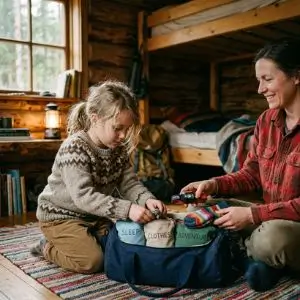
The “3-bag method”
Use three clearly separate bags:
- Sleep bag: sleeping bag, pad, pajamas, comfort item
- Clothes bag: daily outfits, layers, rain gear, extra socks
- Adventure bag (daypack): water, snacks, headlamp, jacket, small first aid
Label everything
A strip of colored tape works. So do name labels. The goal is simple: your kid can spot their gear without dumping everything out.
Common Kids Camping Packing List Mistakes (And How You Avoid Them)
The big ones
- Packing for daytime only: nights get colder than you expect
- Not enough socks/snacks: two classic meltdown triggers
- Forgetting batteries/charging: a headlamp without power is just a forehead accessory
- Overpacking toys, underpacking comfort: one small comfort item beats a pile of random toys
- Assuming the campground has everything: toilet paper, soap, firewood, and even water access vary widely
FAQ — Kids Camping Packing List
What should be on a kids camping packing list for first-time campers?
Start with the 12 essentials: warm sleep setup, lighting, layers, rain protection, water, extra socks, food, first aid, sun/bug protection, and a comfort item. First trips go better when you prioritize sleep and snacks.
How many outfits should you pack on a kids camping packing list?
A good rule is one outfit per day plus 1–2 extras, plus a dedicated warm sleep set. If your kid is young or loves puddles, add more socks and one extra pair of pants.
What is the most important item on a kids camping packing list for nighttime?
A headlamp (with working batteries) and a warm sleep layer are the biggest wins. They reduce fear, improve sleep, and make nighttime bathroom trips less dramatic.
Can you use the same kids camping packing list for toddlers?
Yes, but add toddler-specific items: diapers/pull-ups, extra wipes, spare pajamas, and a comfort item you know they’ll accept. Keep bedtime as familiar as possible.
Conclusion : Pack Smart, Then Let the Outdoors Do the Rest
A good kids camping packing list doesn’t just prevent problems—it protects the best parts of the trip: the giggles in the tent, the proud “I did it!” moments on a trail, and the calm that comes from being outside together.