Beginner Camping Tips: Avoid Common First-Trip Mistakes and Camp with Confidence
You can picture it already: a quiet site, a crackling fire, and that “I actually did it” feeling when you zip your tent shut for the night. Then reality taps you on the shoulder—your tent won’t cooperate, your phone has no signal, and the temperature drops faster than you expected.
If you’re planning your first overnight, you don’t need to be an outdoors expert. You just need a few smart moves that prevent the classic rookie problems. The beginner camping tips below are built for real first trips: simple, practical, and focused on what usually goes wrong—so you can spend more time enjoying the woods and less time troubleshooting in the dark.
Table of Contents
1) Pick a Campsite You Can Actually Handle (and Sleep Well In)
Choosing the right campsite is one of the most overlooked beginner camping tips, because it feels like the “fun part.” But the wrong spot can ruin your trip before you even unload the car.
What to look for (your quick checklist)
- Level ground (your back will thank you)
- Natural drainage: avoid low dips where water collects if it rains
- Wind protection: trees and terrain can block gusts (but don’t camp under dead branches)
- Distance from water: camp away from lakes/rivers to reduce bugs and protect shorelines
- Leave No Trace recommends camping at least 200 feet from water in many areas (check local rules).
- Rules and restrictions: fire bans, quiet hours, food storage rules
Tools that make it easier
- Recreation.gov (many U.S. public campgrounds)
- Park websites (NPS / state parks) for regulations and closures
- Offline maps (download before you go)
Source suggestions to cite: National Park Service camping guidance; Leave No Trace campsite selection basics.
2) Pack the Essentials (Not a Trunk Full of “Just in Case”)
Overpacking is common on first-time camping trips—and so is forgetting the one item that matters. Your goal is a tight “must-have” kit plus a few comfort items.
The “Core 10” first-time camping checklist
- Shelter: tent + rainfly + stakes
- Sleep: sleeping bag (rated for your temps)
- Insulation: sleeping pad (this is warmth, not just comfort)
- Light: headlamp + extra batteries
- Water: bottles/jugs + a backup purification method
- Food: simple meals + snacks
- Cooking: stove + fuel + lighter + pot
- Clothing: layers + rain shell
- First aid: blister care, pain relief, bandages
- Navigation: map + downloaded offline map
Pack smarter with a 30-minute “layout test”
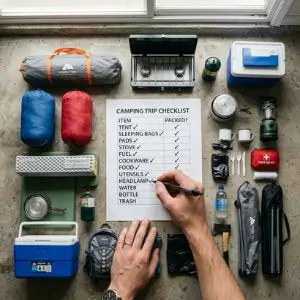
Before you leave, lay everything out on the floor and ask:
- Do you have two ways to make light (headlamp + lantern/flashlight)?
- Do you have two ways to make fire (lighter + matches/fire starter)?
- Do you have a dry system (trash bags or dry sacks)?
Source suggestions: REI camping checklist guidance; Leave No Trace prep guidance.
3) Practice Tent Setup at Home (Yes, Seriously)
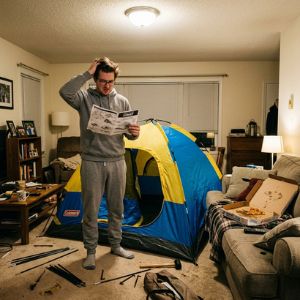
Nothing tests your patience like learning your tent for the first time at dusk while the wind picks up. A quick practice run is one of the most valuable beginner camping tips you’ll ever follow.
Your 15-minute tent rehearsal
- Set it up once in your yard or living room
- Pack it back up
- Set it up again (the second time is the real test)
Don’t skip the boring parts
- Stake it out even if it’s calm. Wind can show up later.
- Use the rainfly correctly; vents matter for condensation.
Quick fixes you’ll be glad you packed
- Duct tape (small roll)
- A few extra stakes
- Paracord (guy lines, repairs, hanging a light)
Source suggestions: Manufacturer setup guides (Coleman/MSR/Big Agnes); general tent condensation guidance.
4) Food and Water: Keep It Simple, Safe, and Not a Mess
Your first trip is not the time for a gourmet camp kitchen. You want easy meals that don’t require five utensils and a full cleanup routine.
Beginner-friendly meal ideas
- Breakfast: instant oatmeal + dried fruit
- Lunch: tortillas + peanut butter + banana
- Dinner: instant rice + pouch tuna/chicken + seasoning
- Snacks: trail mix, jerky, granola bars
Water basics (don’t gamble with this)
Bring more than you think you’ll drink. A common baseline is 2–3 liters per person per day, plus extra for cooking and hot drinks. If you’re filtering from streams or lakes, use a proven method.
Safe options (CDC guidance):
- Boiling
- Filtration
- Chemical treatment (tablets/drops)
Food storage (even if you don’t see bears)
Raccoons, mice, and ants are just as motivated.
- Keep food sealed
- Don’t store snacks in your tent
- Use campground bear lockers if provided
- Follow local rules for bear canisters or hangs
Source suggestions: CDC water treatment guidance; USDA food safety outdoors; local park wildlife rules.
5) Weather Wisdom: Dress for the Forecast You Get, Not the One You Want
Weather shifts fast, especially at night. Many first-timers pack for daytime temps and then shiver at 2 a.m.
Use the layering system
- Base layer: manages sweat
- Mid layer: warmth (fleece or light puffy)
- Shell: wind/rain protection
Know your sleeping bag rating
If the low is 45°F, a 50°F bag can still feel chilly for a beginner sleeper—especially without a sleeping pad. Your pad provides insulation from the ground, which steals heat.
Weather planning table
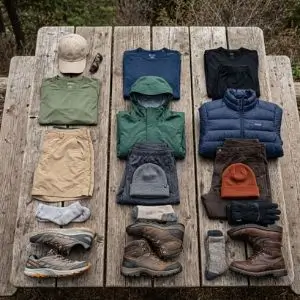
| Weather scenario | What you pack | What you wear | Your quick check |
| Warm & dry | Light sleeping bag, extra water, sunscreen | Sun shirt + hat | Shade + hydration plan |
| Cool & rainy | Rain jacket, dry bags, extra socks | Base layer + shell | Keep one outfit fully dry |
| Cold nights | Warmer bag, insulated pad, gloves/hat | Base + mid + shell | Hot drink + early bedtime |
Source suggestions: National Weather Service forecasts/climate normals; REI layering guidance.
6) Campfire and Safety: Keep It Legal, Small, and Under Control
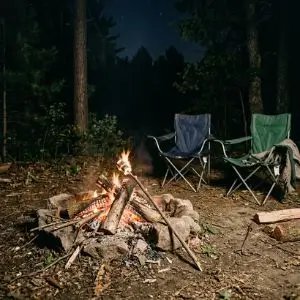
A good first campfire is small, steady, and fully extinguished—no drama.
Before you light anything
- Check local fire restrictions (U.S. Forest Service/state park alerts)
- Use established fire rings when available
- Keep water nearby
A simple fire setup that works
- Start with dry tinder (fire starter or dry bark)
- Add kindling (pencil-thin to finger-thick)
- Feed the fire gradually—don’t smother it with big logs early
Extinguish it the right way
Drown, stir, and feel for heat. If it’s not cool to the touch, it’s not out.
Source suggestions: U.S. Forest Service fire safety materials; campground regulations.
7) Navigation and Connectivity: Assume Your Phone Won’t Save You
Even in popular campgrounds, service can be spotty. This is one of those beginner camping tips that feels unnecessary—until you need it.
Your minimum navigation setup
- Download offline maps before you leave
- Bring a paper map if you’re going beyond a campground loop
- Tell someone where you’ll be and when you’ll be back
If you’re hiking from camp
- Turn around earlier than you think you should
- Don’t chase sunsets; hike back with daylight to spare
Source suggestions: Park safety pages; outdoor navigation basics from reputable retailers/organizations.
8) Wildlife and Etiquette: Be a Good Neighbor (Human and Animal)
Camping is shared space. The easiest way to have a bad trip is to attract animals or frustrate nearby campers.
Wildlife basics you can follow anywhere
- Keep food and scented items contained (yes, even toothpaste)
- Cook and eat away from your sleeping area if required
- Never feed animals—ever
Campsite etiquette that makes you welcome
- Respect quiet hours
- Don’t cut through other campsites
- Keep your site tidy (a messy site becomes a windy trash problem)
Source suggestions: State wildlife agency pages; campground rules; Leave No Trace guidance.
9) Leave No Trace: The 7 Principles in Plain English
Following Leave No Trace isn’t about being perfect. It’s about not turning your “weekend getaway” into someone else’s cleanup job.
The quick LNT checklist
- Plan ahead and prepare
- Travel and camp on durable surfaces
- Dispose of waste properly
- Leave what you find
- Minimize campfire impacts
- Respect wildlife
- Be considerate of other visitors
Bathroom planning (don’t wing this)
- Use campground toilets when available
- If you’re dispersed camping, learn local rules for catholes and packing out waste
Source suggestions: Leave No Trace official principles and guidelines.
10) Post-Trip Debrief: How You Get Good Fast
Your first trip is basically a test run—and that’s a good thing.
Do a 5-minute “trip scorecard” at home
Write down:
- What kept you comfortable
- What you didn’t use
- What you wished you had at 9 p.m.
That list becomes your custom camping checklist—better than any generic one online.
Conclusion: Your First Trip Doesn’t Need to Be Perfect—Just Prepared
The best beginner camping tips are the ones that prevent the classic mistakes: choosing smart ground, practicing your tent, packing layers, managing water, and following local rules. Do those things and you’ll feel steady, capable, and free to enjoy the actual point of camping—being outside without rushing.
FAQ: Beginner Camping Tips for First-Timers
1) What are the top beginner camping tips for your first overnight trip?
Start with a simple campground, practice tent setup at home, pack layers, bring a sleeping pad, and keep food stored properly. Those five moves prevent most first-night problems.
2) Which beginner camping tips help you stay warm at night?
Use an insulated sleeping pad, choose a bag rated for the expected low (and then some), wear dry base layers, and keep a hat/socks reserved for sleeping.
3) How much water should you bring on a weekend camping trip?
A common baseline is 2–3 liters per person per day, plus extra for cooking. If you’re treating water, follow CDC guidance for boiling, filtering, or chemical treatment.
4) Do you need a tarp or footprint under your tent?
It’s not mandatory, but it helps protect the tent floor and can extend the tent’s life. Make sure the footprint doesn’t stick out beyond the tent edges (or it can collect rainwater).
5) What if it rains on your first camping trip?
Arrive early, set up your tent before it gets dark, keep clothing in dry bags, and reserve one outfit for sleeping that stays dry no matter what.
6) Can you camp if you’re nervous about wildlife?
Yes—most issues come from food smells and messy sites. Store food correctly, keep a clean camp, and follow local guidance. That alone lowers the chances of unwanted animal visits.