Camping Safety Checklist: Your Wilderness Safety Guide for Confident, Stress-Free Trips
You head into the woods for quiet—the kind that makes you breathe deeper and sleep harder. But the wilderness doesn’t care if you’re experienced or brand-new. Weather shifts, trails fade, and “small” mistakes (like damp clothes or untreated water) can turn a great trip into a rough one fast.
That’s why a camping safety checklist matters. Not because you’re paranoid—because you’re prepared. When you plan well and pack smart, you protect the people you’re with, the time you took off, and the simple joy of sitting by camp without that low-grade worry in the back of your mind.
Below is a practical, wilderness-focused checklist you can actually use—built around common backcountry risks, official guidance (think NPS, NOAA, CDC, USFS, NIFC), and the habits that keep trips fun instead of frantic.
Table of Contents
Why a Camping Safety Checklist Is Non-Negotiable in the Wilderness
In town, inconveniences stay inconvenient. In the backcountry, they escalate:
- A wrong turn becomes an unplanned overnight.
- A soaked layer becomes a hypothermia risk.
- A “quick sip” from a stream becomes days of stomach trouble.
- A forgotten headlamp becomes a real safety issue after sunset.
A camping safety checklist helps you avoid the most common trip-enders: poor planning, weak navigation, inadequate clothing, and underestimating weather. It also reduces decision fatigue—because your brain gets tired faster than you think when you’re cold, hungry, or stressed.
Where to get reliable safety info before you go
- NOAA for weather (including wind and storms)
- NPS / USFS / BLM pages for closures, permits, rules, bear requirements
- NIFC for wildfire status and restrictions
- CDC for water treatment and insect-borne illness guidance
Pre-Trip Planning Checklist (Do This Before You Pack)
Research your route, rules, and reality
Before you even pull gear out of storage, confirm:
- Permit requirements and quotas (some areas cap backcountry use)
- Campfire rules and seasonal bans
- Whether bear canisters are required (some parks mandate them)
- Water availability (late summer can dry up “reliable” sources)
- Recent trail reports: blowdowns, washed bridges, snowfields
Tip: Screenshot key info and maps. In the wilderness, “I’ll look it up later” often turns into “no signal.”
Check weather and fire conditions—then check again
Look beyond the high/low temperature:
- Hourly precipitation probability
- Wind speed and gusts (wind can flatten cheap tents)
- Overnight temps (valleys get colder than you expect)
- Thunderstorm windows (common in mountains)
Also check:
- Fire danger level
- Current restrictions (stoves sometimes banned too)
- Nearby active fires and smoke forecasts
Share a trip plan (your simplest safety net)
Give one person a written plan that includes:
- Trailhead location and route
- Planned camps (or likely zones)
- Start time, turn-around time, and return deadline
- Vehicle description and plate (if applicable)
- Who to contact if you miss the deadline
You’re not being dramatic—you’re making sure a late return doesn’t become a delayed search.
Be honest about skill level
Match the trip to the least-experienced person (or to your least-fit day, if you’re solo). Factor in:
- Elevation gain, not just mileage
- Weather exposure (ridgelines and open desert punish mistakes)
- Off-trail travel (navigation demands jump fast)
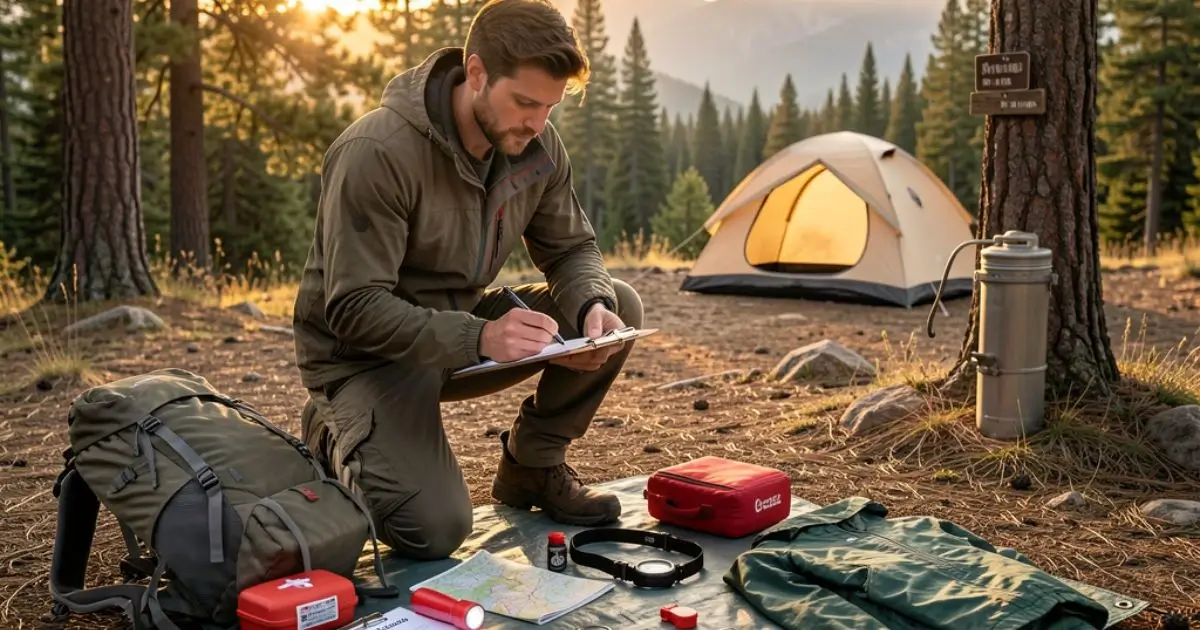
Essential Gear for Your Camping Safety Checklist (The “Don’t Leave Home Without It” Core)
A good checklist isn’t a shopping spree—it’s a system. The NPS “Ten Essentials” is still the backbone, and for good reason.
Navigation
Bring both:
- Offline maps on your phone (downloaded ahead of time)
- A paper map and compass (and the ability to use them)
Phones die. Screens crack. Paper doesn’t care.
Light
- Headlamp (not just a phone flashlight)
- Spare batteries or a backup light
Sun protection
- Sunglasses, sunscreen, brimmed hat
- SPF lip balm (windburn is real)
First aid
A basic kit is fine—until it isn’t. Pack for the trip you’re actually taking:
- Blister care (moleskin, tape, blister pads)
- Gauze, bandages, antiseptic wipes
- Pain relief and antihistamine
- Personal meds in original containers
Fire (as allowed)
- Lighter + backup ignition (matches in waterproof case)
- Fire starter (cotton + petroleum jelly, commercial tabs, etc.)
- Know restrictions first—fire safety beats tradition
Repair tools
- Small knife or multitool
- Duct tape or gear tape
- Needle/thread or patch kit for pad/tent
- A few meters of cord
Shelter + extra warmth
Even if you “don’t plan” to be out late:
- Reliable tent/tarp
- Emergency bivy or space blanket for day hikes
- Insulating layer + rain layer
Extra food and water capacity
- More calories than you think you’ll want
- Extra day of snacks (especially remote trips)
- Water containers sized for dry stretches
Add-on gear that improves safety fast
Depending on where you’re going, consider:
- Satellite messenger or PLB (huge for no-service zones)
- Bear spray (where recommended) and proper food storage
- Trekking poles for balance and knee protection
Campsite Selection and Setup Safety Checklist
Pick your campsite like you’re choosing a shelter in a storm
Before you unpack, scan for hazards:
- Avoid dead trees and hanging limbs (“widowmakers”)
- Don’t camp in dry riverbeds, gullies, or low channels (flash floods happen)
- Skip exposed ridges in thunderstorm season
- Look for drainage: slight elevation beats a puddle at 2 a.m.
Set up to reduce accidents
Simple setup habits prevent common injuries:
- Stake and guy out your shelter properly (wind is relentless)
- Make guylines visible (bright cord or a small strip of tape prevents trips)
- Put a headlamp where you can reach it from your sleeping position
Keep cooking and sleeping separate (especially in bear country)
If you’re in areas with bears or persistent critters:
- Cook away from your sleeping area
- Store all scented items properly (food, trash, toothpaste, sunscreen)
- Keep a “clean camp” routine—don’t let scraps linger
Food and Water Safety in the Backcountry
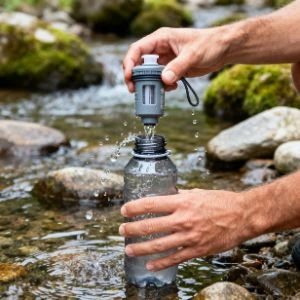
Treat water every time (yes, every time)
Even clear streams can carry pathogens. Follow CDC-style guidance: treat water by one of these methods:
- Filter: fast and convenient
- Chemical treatment: lightweight backup (follow contact time)
- Boiling: dependable when you have fuel and time (follow altitude guidance)
Common mistake: touching “clean” bottle threads with dirty hands or a dirty filter output—cross-contamination ruins the whole effort.
Store food so wildlife doesn’t learn bad habits
Wildlife that gets your food becomes a problem for everyone after you.
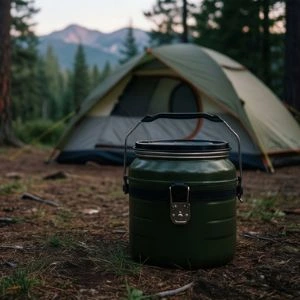
Use the method required in your area:
- Bear canister (often required in national parks)
- Proper bear hang (where acceptable and practical)
- Bear box (common in established campgrounds)
- Vehicle storage rules (varies—some places still require canisters)
Wildlife Safety Checklist (Bears, Ticks, Snakes, and the Small Stuff)
Bear and large wildlife safety
You don’t need to be fearless—you need to be consistent:
- Keep your distance; never approach for photos
- Make noise on brushy trails
- Know what to do in a bluff charge vs. an actual attack (guidance varies by species and region)
- Carry bear spray where recommended and practice accessing it quickly
Source ideas to reference: NPS and state wildlife agencies publish region-specific bear safety guidance.
Tick and mosquito protection
Ticks are tiny, and the consequences can be big. Use:
- Long sleeves/pants when conditions call for it
- Permethrin-treated clothing (follow label directions)
- DEET or picaridin on exposed skin
- A daily tick check (make it part of your evening routine)
Source: CDC tick and mosquito prevention resources.
Snake and rodent awareness
- Watch where you place hands and feet near rocks and logs
- Don’t leave packs open on the ground
- Store food securely to avoid rodents chewing gear and spreading illness
Fire Safety and Stove Use (Prevent the Emergency You Can Control)
Campfire safety (only if allowed)
If fires are legal and appropriate:
- Use established rings
- Keep water nearby
- Never leave a fire unattended—not “for a minute”
- Put it out dead-cold: drown, stir, feel, repeat
For restrictions and current danger, use USFS notices and NIFC updates.
Stove safety
Backpacking stoves cause more accidents than many people realize:
- Cook on a stable surface
- Keep fuel away from flames
- Check seals and connections before lighting
- Let the stove cool before packing
Carbon monoxide: the quiet danger
Never run a stove or heater inside a tent, vestibule, or enclosed space. Ventilation isn’t “nice to have”—it’s life safety.
Navigation and Communication Checklist (Stay Found, Stay Reachable)
Build redundancy into navigation
Carry:
- Offline maps + spare battery/charger if appropriate
- Paper map + compass
- Key waypoints saved (trailhead, water sources, bailout routes)
Make a communication plan
Before you lose service:
- Decide your check-in schedule
- Decide what “late” means (2 hours? 12 hours?)
- Tell your contact when to escalate to rangers/SAR
If you get lost: use STOP
A simple framework many SAR teams teach:
- Stop
- Think
- Observe
- Plan
Rushing while lost usually digs the hole deeper.
First Aid and Medical Preparedness Checklist
Pack for the problems that actually happen
Most backcountry first aid is about common issues:
- Blisters and hot spots
- Sprains and strains
- Minor cuts that need cleaning
- Headaches, nausea, dehydration
Consider adding:
- Elastic wrap for ankles/knees
- Electrolyte packets
- A small irrigation syringe for cleaning gritty wounds
Source: Wilderness Medical Society field guidance is a solid reference for what matters in remote settings.
Weather and Environmental Hazard Checklist
Cold + wet + wind = hypothermia risk
Even mild temps can become dangerous when you’re wet and exposed. Your checklist should include:
- Rain shell and insulating layer
- Dry sleep clothes stored in a waterproof bag
- A plan for keeping your sleeping bag dry
Heat and sun: pace is a safety tool
In hot environments:
- Start early
- Rest in shade at peak heat
- Drink consistently and replace electrolytes
- Don’t “push through” dizziness or confusion
Lightning safety
If storms build:
- Get off ridges and open high points
- Avoid lone tall trees
- Spread your group out (not shoulder-to-shoulder)
Source: NOAA lightning safety guidance.
Quick-Reference Camping Safety Checklist (Table)
Use this table as your fast scan before you leave and again at camp.
| Category | Before You Leave | On Trail / At Camp | Non-Negotiables |
| Trip planning | Permits, rules, closures, route | Reassess plan if conditions change | Shared trip plan |
| Weather & fire | NOAA forecast; fire restrictions (NIFC/USFS) | Watch wind, clouds, smoke | Rain + insulation layers |
| Navigation | Offline maps; map/compass packed | Confirm location at key junctions | Paper map + compass |
| Water safety | Filter/tabs; plan sources | Treat every source | Don’t drink untreated water |
| Wildlife safety | Storage method + spray if needed | Clean camp; store scented items | No food in tent |
| First aid | Customize kit + meds | Treat hot spots early | Blister care + meds |
| Communication | Check-in plan; charged devices | Conserve battery | Satellite device if remote |
| Shelter & warmth | Tent/tarp checked; dry bags | Keep sleep system dry | Emergency warmth option |
FAQ: Camping Safety Checklist Questions
What’s the most important item on a camping safety checklist?
If you’re prioritizing, put these at the top: navigation, water treatment, and weather protection (rain + warmth). In remote terrain, those three reduce the biggest risks fastest.
How do you tailor a camping safety checklist for backcountry vs. car camping?
For backcountry trips, you need more redundancy: map/compass, extra insulation, repair tools, and often satellite communication. For car camping, you can bring more comfort items—but you still need first aid, fire safety, and wildlife-safe food storage.
What should a camping safety checklist include for bear country?
Include a bear-approved storage method (often a canister), a clean-camp routine, and bear spray where recommended. Also store all scented items—not just food.
How often should you check the weather during a camping trip?
Check before you leave, then at least morning and evening if you can. If clouds build, wind shifts, or temps drop, reassess immediately—don’t wait for the forecast to “confirm” what your body is already noticing.
What’s the best way to share your trip plan?
Write it down. Include route, camps, return deadline, and a clear instruction: “If I’m not back by X time, call Y.” A simple plan beats a vague text every time.
Conclusion: Your Checklist Is What Protects the Good Parts
A camping safety checklist doesn’t take away the freedom of wilderness camping—it gives it back to you. When you’ve handled the basics (weather, water, navigation, wildlife, first aid), you can actually relax into the trip you came for.
Call to action
Copy the checklist table into your notes app or print it and keep it with your gear. Then customize it for your next destination (desert, mountains, bear country, winter). If you want, tell me:
- where you’re camping,
- the season,
- and whether it’s car camping or backcountry,
and I’ll help you tailor a tighter, location-specific camping safety checklist you can use right away.