
Budget Camping Checklist: Essential Cheap Camping Gear for Real-World Trips
You don’t need a designer tent or a truckload of gadgets to wake up to birdsong and coffee in the cool morning air. What you really need is a clear budget camping checklist, a few pieces of essential cheap camping gear, and a realistic plan.
Maybe you’ve looked at camping blogs and felt like everything costs a fortune. High-end sleeping bags, titanium stoves, ultralight tents—it adds up fast. The good news is: you can sleep comfortably, stay safe, and actually enjoy your time outside without spending like you’re outfitting an expedition.
This guide walks you through exactly what to bring, how to keep costs down, and where it’s worth spending a bit extra so your trip doesn’t turn into a cold, wet regret.
Table of Contents
Why a Budget Camping Checklist Matters
A written budget camping checklist does more than stop you from forgetting your toothbrush.
It helps you:
- Avoid impulse-buying gear you don’t need.
- Prioritize safety and comfort over shiny extras.
- See what you already own and what you can borrow.
- Keep your total spending under control before you ever hit “checkout.”
Without a checklist, it’s easy to show up with three lanterns, no lighter, a big cooler—and no real plan for staying dry or warm. A simple list keeps you focused on the gear that actually matters.
Plan Your Cheap Camping Trip Before You Buy Gear
Before you start filling your cart, answer a few key questions. The answers shape which cheap camping gear you really need.
Set a Simple Budget
Decide on a number first, not after.
- Total you’re willing to spend for your starter kit (for example: $150–$250).
- How much you can borrow or get used (tents, bags, pads).
- How many trips you realistically see yourself taking this year.
Knowing your ceiling forces you to make smart trade-offs instead of collecting random gear.
Choose Affordable Campsites
Your campsite choice can save or drain money.
- Cheaper options: national/state forests, basic campgrounds, walk-in or first-come sites.
- More expensive: private campgrounds with pools, playgrounds, hookups, and resort-style amenities.
Look for:
- Free or low-cost public land (where legal).
- Weeknight stays instead of busy weekends.
- Shoulder seasons (spring/fall) instead of peak summer holidays.
Decide Your Comfort Level
Be honest with yourself:
- Do you sleep cold?
- Are you okay with a thin pad, or do you need more cushioning?
- How much rain and wind are likely on this trip?
Your answers decide where you can go ultra-budget and where you should not cut corners.
Budget Camping Checklist: Essential Cheap Camping Gear
Here’s the heart of your budget camping checklist: the items that make the difference between a trip that feels like a little adventure and one that feels like survival training.
Shelter Essentials on a Budget
Your shelter keeps you dry, blocks wind, and protects you from bugs. It doesn’t need to be fancy, but it must be functional.
Look for in a budget tent:
- Waterproof rating around 1,500–2,000 mm.
- Taped or sealed seams.
- A rainfly that covers the tent well.
- Decent ventilation so you don’t wake up dripping with condensation.
You can add a cheap tarp over the tent for extra weather insurance, or use one as your main shelter if you’re confident with knots and expect mild weather.
Shelter checklist:
- 2–4 person budget tent (cheaper per person than tiny ultralight tents).
- Tarp (for extra coverage or as a minimalist shelter).
- Stakes/pegs and guy lines or cord.
- Groundsheet or footprint (a cheap tarp or thick plastic works).
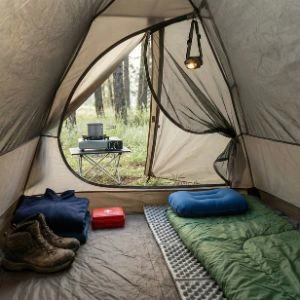
Sleep System: Stay Warm Without Overspending
You can put up with a slightly awkward tent door, but a bad night’s sleep will ruin the whole trip.
Focus on three things: warmth, insulation, and basic comfort.
- Sleeping bag:
- Choose synthetic insulation; it’s cheaper and handles moisture better.
- Aim for a bag rated about 10°F / 5–10°C below the coldest temperature you expect.
- Sleeping pad:
- Closed-cell foam pads are very cheap, light, and tough.
- Inflatable pads are more comfortable but can cost more; grab one on sale if possible.
- Pillow:
- Use a stuff sack filled with clothes, or bring a small pillow from home.
Sleep system checklist:
- Synthetic 3-season sleeping bag.
- Foam sleeping pad (or budget inflatable pad).
- Pillow or DIY pillow using clothes.
Cheap Cooking Gear and Simple Camp Kitchen
You don’t need a full camp kitchen set. A simple, sturdy setup is enough.
- Stove:
- A basic single-burner butane or propane stove is inexpensive and easy to use.
- Fire-only cooking is risky due to fire bans and weather, so treat a stove as essential.
- Cookware:
- One medium pot with a lid works for pasta, rice, soups, and boiling water.
- A small frying pan is nice but optional.
- Utensils:
- Bring forks, spoons, and a knife from your home kitchen.
- A cheap cutting board or even a sturdy plate can double as a prep surface.
Cooking checklist:
- Single-burner stove + compatible fuel.
- Medium pot with lid (and optional small pan).
- Eating utensils (forks, spoons, knife).
- Lightweight cutting board or plate.
- Lighter + backup matches in a dry bag.
- Cooler (if car camping and bringing fresh food).
- Reusable containers or zip bags for food storage.
For food, keep it simple: oats, pasta, rice, canned beans, tortillas, instant noodles, and a few snacks go a long way.
Clothing Layers for Budget Camping
You don’t need technical fabrics for every layer. You do need smart layering.
Think in three layers:
- Base layer: wicks sweat (thrifted athletic shirts, long underwear).
- Mid layer: keeps you warm (fleece or sweater).
- Outer layer: blocks wind and rain (cheap rain jacket or poncho).
Avoid heavy cotton if you expect cold or wet weather—it stays damp and makes you colder.
Clothing checklist:
- Moisture-wicking T-shirt or long-sleeve top.
- Fleece or warm sweater.
- Quick-dry pants or shorts (skip heavy jeans if possible).
- Light rain jacket or poncho.
- Extra socks and underwear.
- Beanie and light gloves for cooler nights.
Lighting, Navigation & Safety Basics
When the sun goes down, you’ll be grateful for simple, reliable lighting and basic safety items.
Lighting & safety checklist:
- Headlamp or small flashlight (plus spare batteries or power bank).
- Small lantern or second light for the picnic table (optional but nice).
- Basic first-aid kit (bandages, pain relievers, any personal meds).
- Simple knife or multi-tool.
- Duct tape (wrapped around a water bottle or lighter).
- Whistle and/or small signal mirror.
- Offline map on your phone or a printed map.
These don’t have to be expensive. Just avoid ultra-cheap lights with terrible reviews—reliability matters in the dark.
Hygiene & Health
You can keep it very simple and still stay reasonably clean and comfortable.
Hygiene checklist:
- Toothbrush and small toothpaste.
- Biodegradable soap and a small cloth or camp towel.
- Hand sanitizer.
- Toilet paper and a small trowel if you’ll be away from facilities.
- Sunscreen.
- Insect repellent.
- Any daily medications.
Follow local rules for waste disposal and washing; keep soap and waste at least 60–70 meters away from streams and lakes.
Low-Cost Comfort Extras
These items aren’t essential, but they can turn a “just okay” trip into a genuinely fun one for very little extra money.
- Folding camp chair.
- Extra tarp for shade.
- Small broom and dustpan for the tent.
- Cards or a simple game.
- Insulated mug for hot drinks.
Quick-Glance Budget Camping Gear Table
Budget Camping Checklist & Example Price Ranges
Use this table to ballpark what your essential cheap camping gear might cost if you’re buying most items new. Prices will vary by region and store.
| Category | Budget Camping Checklist Item | Example Price Range* | Money-Saving Tip |
| Shelter | 2–4 person tent | $50–$120 | Watch for end-of-season sales and clearances. |
| Shelter | Tarp + cord + stakes | $15–$40 | Hardware stores often beat outdoor brands. |
| Sleep | Synthetic 3-season sleeping bag | $40–$100 | Buy on sale; used bags can be great value. |
| Sleep | Foam sleeping pad | $15–$40 | Cheap, tough, and usually worth buying new. |
| Sleep | Pillow (or DIY) | $0–$20 | Use a stuff sack and clothes to save money. |
| Cooking | Single-burner stove + fuel | $20–$50 | Stick with known brands for safety. |
| Cooking | Pot/pan + utensils | $0–$30 | Repurpose from your kitchen. |
| Food Storage | Cooler (for car camping) | $25–$60 | Used coolers are often very affordable. |
| Lighting | Headlamp / flashlight | $10–$30 | Read reviews; reliability matters at night. |
| Safety & Tools | Basic first-aid kit | $10–$25 | Build one from supplies you already own. |
| Safety & Tools | Knife / multi-tool | $10–$40 | Hardware stores often have solid budget options. |
| Clothing | Layers (base, fleece, rainwear) | $0–$80 | Thrift stores are ideal for fleece & synthetics. |
| Hygiene | Toiletries + sun/bug protection | $10–$30 | Store brands are usually fine. |
*Adjust currency and ranges to match your local prices.
You likely own some of this already, and you can borrow or buy used to shrink the total even further.
How to Find Cheap Camping Gear That Still Works
Not all cheap camping gear is equal. Some bargains are perfect; others fall apart on the first windy night. A little strategy goes a long way.
Where to Shop on a Budget
Good places to look:
- Thrift stores and charity shops (fleece, jackets, pots, mugs).
- Online marketplaces (used tents, bags, pads, coolers).
- Big-box stores’ outdoor sections (entry-level tents and stoves).
- Outdoor co-ops or specialty shops’ clearance and used gear sections.
- Local gear libraries or rental programs (often run by universities or clubs).
Renting a tent or sleeping bag for your first trip is a smart move if you’re unsure how much you’ll camp.
What to Buy Used vs. New
Generally safer to buy used:
- Tents (check for mold, broken zippers, big holes).
- Sleeping bags and pads.
- Clothing and fleece.
- Coolers and cookware.
Generally better to buy new:
- Stoves and fuel canisters.
- Water filters and critical safety equipment.
- Headlamps or flashlights (so you know their history and reliability).
Whatever you buy, set it up and test it at home first.
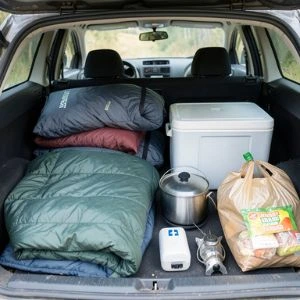
Sample Budget Camping Packing List (Weekend Car Trip)
Here’s how your budget camping checklist might look for a simple two-night car camping trip.
Weekend Budget Camping Checklist (Solo or Couple)
Shelter & sleep
- 1 budget 2–4 person tent
- 1 tarp + cord + stakes
- 1 sleeping bag per person
- 1 sleeping pad per person
- 1 pillow or DIY pillow per person
Cooking & food
- Single-burner stove + fuel
- 1 medium pot with lid
- 2 plates or bowls + 2 sets of utensils
- 1 mug per person
- Simple meals for 2 breakfasts, 2 dinners, 2 lunches, snacks
- Water bottles and/or jug
- Small cooler (optional)
Clothing
- 1–2 shirts, 1 pair of pants/shorts, 1 warm layer
- Sleepwear
- Extra socks and underwear
- Lightweight rain layer
- Hat and possibly gloves
Lighting & safety
- 1 headlamp or flashlight per person
- Basic first-aid kit
- Knife or multi-tool
- Lighter + matches
- Phone with offline map
Hygiene
- Toothbrush, toothpaste, soap
- Toilet paper
- Sunscreen and bug repellent
For a family, you’d mainly scale up sleeping bags, pads, and dishes, not every single piece of gear. One tent, one stove, and one cooler can usually serve everyone.
Common Budget Camping Mistakes to Avoid
Skimping on Weather Protection
A tent that leaks or a sleeping bag that’s too light can turn a fun weekend into a miserable one. If you’re going to spend a bit more anywhere, spend it on staying dry and warm.
Overpacking “Just in Case”
Bringing your whole house “just in case” leads to chaos and stress. Use your budget camping checklist and stick to it. You can always take notes after the trip about what you wished you’d had.
Forgetting Small but Critical Items
People often forget lighters, extra batteries, or basic first-aid supplies. Keep a small “never unpack” bag with these items that always lives with your camping gear.
Conclusion: Enjoy the Outdoors Without Going Broke
You don’t need a perfect kit to start camping. You need a realistic plan, a budget camping checklist, and a handful of essential cheap camping gear items chosen with intention.
Start simple:
- Write down what you already own.
- Borrow or buy used for the big pieces you’re missing.
- Fill in the last gaps with affordable, reliable gear.
- Book a nearby campsite for one or two nights and treat it as a test run.
The sooner you get out there, the faster you’ll learn what really matters for you—and what you can happily live without.
Call to action:
Take 10 minutes right now to sketch your own budget camping checklist based on this guide. Then pick a weekend, invite a friend or your family, and put that list to work. The best gear you can have is experience, and you only get that by going.
FAQ: Budget Camping Checklist & Essential Cheap Camping Gear
What should be on a basic budget camping checklist?
A basic budget camping checklist should cover seven areas: shelter (tent/tarp), sleep (bag and pad), cooking gear, clothing layers, lighting, safety (first aid, knife, fire starter), and simple hygiene items. If you cover those categories, you’ll have what you need for a safe, comfortable beginner trip.
How much will my essential cheap camping gear cost?
If you’re starting from scratch and buying mostly budget gear, you might spend around $150–$300 for the essentials, depending on sales and what you can find used. Borrowing a tent and sleeping bag, or buying second-hand, can cut that cost dramatically.
Is it safe to use cheap camping gear from big-box stores?
Yes—within reason. Many big-box tents, sleeping bags, and pads work fine for fair-weather car camping. Read reviews, check the waterproof rating, and test everything at home before your trip. Don’t push budget gear into extreme cold or storms it wasn’t designed for.
Can I camp with a tarp instead of a tent to stay on budget?
You can, especially in mild weather and low-bug conditions. A tarp is lighter and cheaper, but it offers less protection and requires more skill to pitch well. If you go this route, practice different tarp setups in your yard and always check the forecast before your trip.
What’s the cheapest way to build a family budget camping checklist?
Share as much gear as possible: one larger tent, one stove, one cooler, and one basic kitchen setup for everyone. Focus spending on warm sleeping bags and pads so no one is cold. Build your kit over time—start with essentials, then add comfort items as your budget allows.