Camping Fire Safety and Tent Safety: How to Keep Your Camp Cozy Without Turning It Risky
There’s a moment most campers know by heart: you zip the tent, the night quiets down, and the last bits of warmth from the fire feel like a reward. It’s the kind of calm you can’t fake in everyday life. But that calm is also fragile. A single gust can push embers farther than you expect. A stove set “just for a minute” too close to nylon can leave a melted scar—or worse.
If you want more peaceful mornings and fewer close calls, this guide to camping fire safety and tent safety will walk you through the habits that actually prevent accidents. Nothing extreme. Just the practical stuff that experienced campers do without thinking.
Table of Contents
Why Camping Fire Safety and Tent Safety Matter (What You’re Protecting)
When fire goes wrong outdoors, it usually isn’t dramatic at first. It’s a slow-build problem:
- A campfire that’s larger than it needs to be
- A wind shift that carries embers into dry grass
- A lantern hung too close to tent fabric
- A stove flare-up in a tight space
- A heater used where it was never meant to run
And here’s the part many people miss: tents are designed for weather, not heat. Even “flame-resistant” materials can still melt, burn, or drip when exposed to high heat.
Good camping fire safety and tent safety protects:
- Your family and friends (burns happen fast)
- Your gear (tents and sleeping bags don’t forgive sparks)
- The land (wildfire risk is real, and restrictions exist for a reason)
For official guidance, it’s worth checking resources from the National Park Service (NPS), U.S. Forest Service (USFS), Leave No Trace, and your local fire authority before every trip.
Pre-Trip Planning: Set Yourself Up for Safe Fires
Check fire restrictions, burn bans, and weather
Before you pack the marshmallows, check:
- Campground rules (many only allow fires in established rings)
- County/state fire restrictions
- Weather (especially wind and low humidity)
What should make you pause:
- Strong wind forecasts
- “Red Flag Warning” conditions
- Extended drought
A fire you can manage on a calm evening can become a problem when gusts start throwing sparks.
Pack a small fire safety kit (you’ll actually use)
You don’t need a truckload of gear. You do need the basics close by.
Bring:
- A dedicated water container (bucket/collapsible bag)
- A small shovel or trowel (where allowed)
- Heat-resistant gloves
- Headlamp (so you’re not fumbling with your phone at night)
- A compact fire extinguisher (especially if you’re car camping)
- A basic first-aid kit with burn care supplies
Campfire Safety Basics: Build It, Control It, End It
Choose the right location (don’t “improvise”)
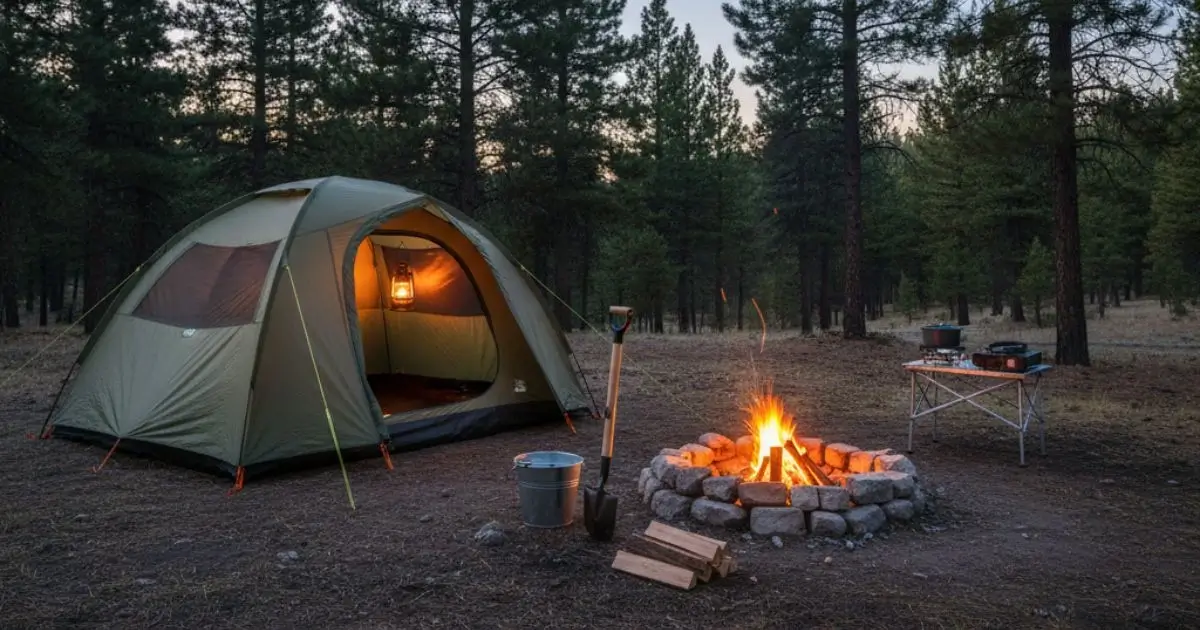
If there’s an established fire ring, use it. If fires are allowed but no ring exists, follow local guidance—some places prohibit building new rings altogether.
A safer fire spot is:
- Clear of overhanging branches
- Away from roots, dry grass, and leaf litter
- Not tucked against a log or rock that can hide embers
- Positioned with wind in mind (wind changes during the evening)
Keep the fire smaller than your ego
Bigger isn’t better. A compact fire:
- Produces fewer flying embers
- Is easier to control
- Uses less wood
- Still cooks food and warms hands
Fuel rules that matter:
- Use local firewood when required (invasive pests spread through transported wood)
- Never burn trash, plastic, foil-lined packaging, or leftover food wrappers
Leave No Trace is clear about this: minimize impact, and don’t treat the fire ring like a garbage can.
Don’t leave flames unattended—ever
Even for a quick bathroom run. If nobody is watching the fire, it’s not managed.
A simple habit that works: when the fire is lit, you assign a “fire watch.” If you’re camping with a group, rotate the role.
Put it out the “cold-out” way (not “looks-out”)
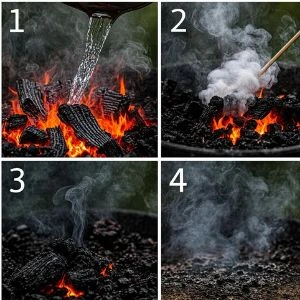
The safest standard you’ll see repeated by agencies like the USFS is essentially: it’s out when it’s cold.
Do this:
- Let wood burn down as much as possible.
- Drown the fire with water.
- Stir the ashes and coals thoroughly.
- Drown again.
- Check for heat carefully (near the ash, not directly grabbing it).
- Repeat until it’s cold to the touch.
Dirt alone can insulate coals and keep them hot for hours. Water does the real work.
Tent Safety Essentials: Materials, Placement, and Setup That Prevent Problems
Tent placement for fire safety
Your tent location is part of camping fire safety and tent safety, not just comfort.
Aim for:
- Tents set well away from flames and cooking areas
- A clear path between tent, fire ring, and water source (no tripping into a fire)
- Minimal exposure to wind-blown embers
Rule of thumb: many campers use at least 15 feet (about 5 meters) between tents and a campfire—more if it’s windy or your site is tight. Always follow campground rules if they specify a distance.
“Flame-resistant” doesn’t mean “fireproof”
Some tents use flame-retardant treatments that help slow ignition. That’s useful, but it’s not a permission slip to bring heat sources close to fabric. Nylon and polyester can melt quickly, and melted material can cause serious burns.
Treat your tent like what it is: shelter from rain and wind—not a safe zone for open flames.
Ventilation matters more than you think
If you’re tempted to run anything that produces combustion gases (stove, heater, fuel lantern) in or near your tent, stop and read that again.
Health agencies like the CDC warn about carbon monoxide risk with combustion in enclosed or poorly ventilated spaces. A tent is not a controlled indoor environment, and ventilation changes constantly with wind, rain flaps, and how you’ve pitched it.
Quick Reference Table: Camping Fire Safety and Tent Safety “Golden Rules”
| Scenario | Biggest Risk | Safer Practice | What to Avoid |
| Campfire near tents | Embers melt/ignite fabric | Place tents well away; watch wind | Oversized fires; fires during gusts |
| Cooking with a camp stove | Flare-ups; tipping | Cook on level ground away from fabric | Cooking inside the tent |
| Lantern use | Heat buildup; falling lantern | Use stable surfaces/hangers away from fabric | Hanging too close to tent ceiling |
| Heaters | Fire + carbon monoxide | Use only as manufacturer allows; prioritize ventilation | Combustion heaters inside tents |
| Power banks/charging | Overheating | Use certified chargers on a hard surface | Charging under bedding or on soft gear |
Best sources to reference when you write your own checklist: NPS/USFS fire guidance, CDC carbon monoxide safety info, and the manufacturer manuals for your stove/heater/lantern.
Camp Stove and Cooking Safety: Where Most “Small” Accidents Start
Cook outside, on stable ground
If you take only one rule from this section, make it this: cook outside.
Better setup:
- A flat rock or stable camp table (if allowed and not flammable)
- Stove placed where nobody can trip over it
- Pot handles turned inward
- Fuel canisters kept away from direct heat and direct sun
Prevent flare-ups and fuel mishaps
Before you light:
- Check seals, connectors, and hoses for wear
- Make sure the stove is fully stable
- Keep water nearby (and a pot lid to smother small flare-ups)
After you cook:
- Turn fuel off first, then let the stove cool
- Pack fuel separately, away from your fire ring
About cooking in a vestibule
People do it when it rains. It’s still risky because of:
- Fabric proximity
- Poor airflow
- Higher chance of tipping
If you’re caught in bad weather, the least risky option is usually cooking under a tarp or open shelter with strong ventilation—not inside your sleeping tent—and only if it complies with local rules and your stove’s manual.
Heating, Candles, and “Cozy” Tent Habits That Cause Fires
Open flames in tents are a hard no
Candles and small flames seem harmless—until they tip. Inside a tent, everything is close: fabric, sleeping bags, pads, clothing. That’s how small mistakes escalate.
Skip:
- Candles
- “Tea lights for warmth”
- DIY alcohol burners in enclosed spaces
Safer ways to stay warm at night
You can be comfortable without adding fire risk.
Use:
- A sleeping bag rated for your night temps
- An insulated sleeping pad (cold ground steals heat)
- Dry base layers reserved for sleep
- A hot water bottle (tight-sealing bottle, wrapped in a sock)
- Hand warmers used as directed (avoid direct skin contact)
Campsite Layout: Use Simple “Zones” So Fire Stays Where It Belongs
A smart campsite feels organized, not crowded.
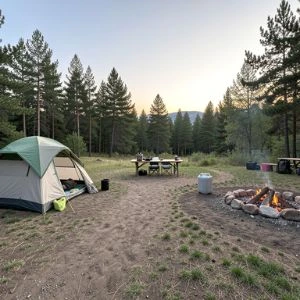
Create four zones
- Sleep zone: tents only (no cooking, no flames)
- Cook zone: stove, food prep, wash station
- Fire zone: fire ring, chairs, water bucket nearby
- Gear zone: fuel stored safely away from heat
Nighttime trip hazards become fire hazards
At night, most injuries happen because someone can’t see.
Quick fixes:
- Put reflective tape on guy lines
- Keep headlamps accessible (not buried in a backpack)
- Keep the route to water clear
What to Do in an Emergency (Simple Steps You’ll Remember)
If your tent catches fire or starts melting
- Get everyone out immediately.
- Move upwind and away from smoke.
- If the fire is small and you can act safely, douse it with water or use an extinguisher.
- Treat burns with cool running water and clean coverings.
- Get medical help when needed.
For first aid basics, the Red Cross has clear guidance on burn care.
If a wildfire approaches
Don’t negotiate with a fast-moving fire. Leave early.
- Follow official instructions (camp host, rangers, emergency alerts)
- Keep your keys and shoes easy to grab at night
- If you’re car camping, park so you can leave without complicated maneuvering
For preparedness info, Ready.gov’s wildfire resources are a solid starting point.
Camping with Kids and Pets: Extra Rules That Actually Work
Kids and fire: set boundaries you can enforce
Use a physical rule that’s easy to see and repeat:
- A 3-foot “no-go circle” around the fire and stove
- One adult responsible for supervision whenever flames are active
Teach:
- No running near the fire
- Stop, drop, and roll basics
- What “hot” means (stoves and rocks can stay hot long after cooking)
Pets need structure, too
- Leash near the fire ring (pets bolt unpredictably)
- Watch paws around hot ash
- Store food securely to prevent nighttime chaos around your fire area
FAQ: Camping Fire Safety and Tent Safety
What’s the safest distance between a campfire and a tent for camping fire safety and tent safety?
Use campground rules first. If there’s no posted guidance, a common rule of thumb is 15 feet (5 meters) or more, and you should increase that distance when wind is gusty or the site is dry.
Can you use a propane heater inside your tent for camping fire safety and tent safety?
In most cases, you should not use a combustion heater inside a tent due to fire and carbon monoxide risk. Follow the heater manufacturer’s instructions and prioritize ventilation. When in doubt, don’t run it in your sleeping space.
Is it safe to cook in a tent vestibule for camping fire safety and tent safety?
It’s risky because fabric is close, airflow is limited, and tipping is more likely. Cook outside whenever possible, and never cook where a flare-up could trap you.
Are flame-retardant tents “fireproof” for camping fire safety and tent safety?
No. Flame-retardant materials may slow ignition, but they can still melt or burn. Distance and smart habits matter more than fabric labels.
What’s the best way to make sure your campfire is fully out?
Use the drown, stir, drown again method until the ashes are cold to the touch. If it’s warm, it’s not out.
Conclusion: Keep the Warmth, Lose the Risk
You don’t have to camp nervously to camp safely. When you treat fire like a tool—not a centerpiece you “set and forget”—you protect your tent, your trip, and everyone sharing the site with you. Keep your fire small, keep it watched, keep it far from fabric, and put it out cold. That’s the core of camping fire safety and tent safety