Bear Safety Tips for Camping: How to Avoid Encounters (and Still Love Every Minute Outside)
You head into the woods for the quiet—the kind where your shoulders finally drop and your phone stops buzzing. Then you spot it: a torn wrapper near the fire ring, fresh tracks in the mud, or a cooler sitting out like an invitation. Suddenly, the “relaxing weekend” feeling shifts into something tighter.
If you’ve ever camped in bear country (or you’re about to), you don’t need scary stories—you need clear, practical bear safety tips for camping that fit real life. The good news: most bear problems are preventable. When you manage food, smells, and surprises, you dramatically lower your odds of an encounter—and you help keep bears wild.
Table of Contents
Why Bear Safety Matters (For You and the Bears)
Most bear incidents around campsites aren’t about aggression—they’re about easy calories. A bear that learns campsites equal food can become bold fast. And when that happens, wildlife agencies often have limited options.
These bear safety tips for camping protect:
- You and your group from a close-range situation
- Your gear (bears can destroy tents, cars, and coolers quickly)
- The bear from becoming food-conditioned
For region-specific guidance, reliable sources include the National Park Service (NPS), U.S. Forest Service (USFS), your local wildlife agency, and education programs like BearWise.
Know Your Bears: Black Bears vs. Grizzlies (It Changes Your Plan)
You don’t need to be a wildlife biologist—but you do want to know what species lives where you’re camping, because response guidance can differ.
Quick comparison table
| Feature/Behavior | Black Bear | Grizzly (Brown Bear) | Why it matters for you |
| Shoulder hump | Usually absent | Often obvious | Helps quick ID at a glance |
| Face profile | Straighter | More “dished” | Another fast field clue |
| Typical reaction to people | Often retreats | Can be more defensive | Defensive encounters require extra space |
| Range (North America) | Widespread | More limited pockets | You can research before you go |
Where bears tend to show up
You’re more likely to run into a bear near:
- Water sources and riparian areas
- Berry patches and meadows
- Fishing areas (in some regions)
- Busy campgrounds where people are sloppy with food
Before You Go: Bear Safety Tips for Camping That Start at Home
A safer trip starts before your tires hit the gravel road.
Research local rules (don’t skip this)
Different parks and forests have different requirements. Before you pack, check:
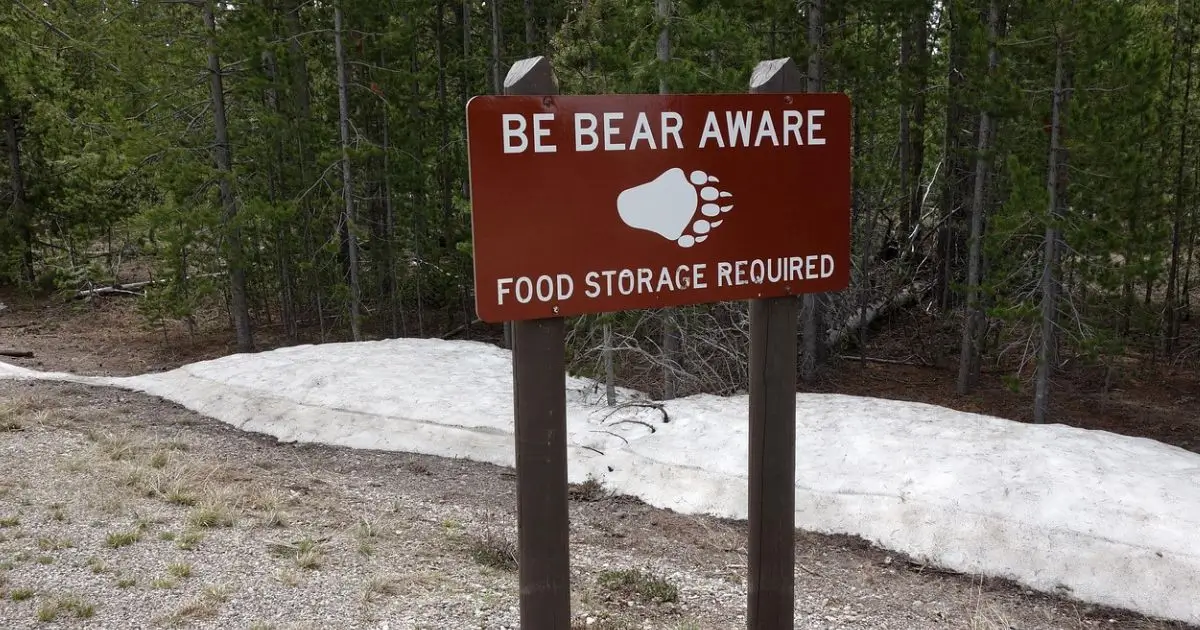
- Are bear canisters mandatory?
- Are bear hangs allowed, or discouraged?
- Are there food storage orders or recent bear activity alerts?
Your best sources are the official park/forest page, recent notices, and a quick call to a ranger station.
Pack gear that matches the risk
At minimum, consider:
- Bear-resistant container (canister) or access to bear lockers
- Odor-resistant bags (helpful, not magic)
- Bear spray (where legal and recommended locally)
- Headlamp (you don’t want surprise nighttime encounters)
- Extra cord/line if legal food hangs are part of your plan
Bear spray basics (simple habits that matter)
- Check the expiration date
- Carry it on your body, not buried in your pack
- Practice removing the safety clip (many brands sell inert trainers)
Setting Up Camp Safely: Location, Layout, and Habits
Where and how you camp often matters more than what you brought.
Choose a “bear-smart” campsite
If you can pick your spot, avoid:
- Animal trails and narrow corridors through brush
- Heavy berry growth right next to camp
- Places with poor visibility (you can’t see what’s coming)
If you notice a strong dead-animal smell, lots of scavenger birds, or fresh torn-up ground, move on.
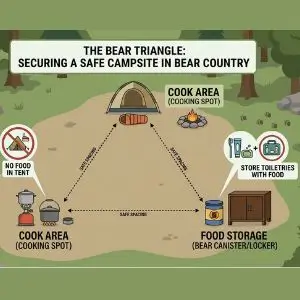
Use the “Bear Triangle”
This concept is simple: separate your sleeping, cooking, and food storage areas. Even in a small site, aim for distance and downwind separation when possible.
- Sleep area: tent and sleeping gear only
- Cook area: stove, prep, dishwashing
- Storage area: canister/locker/hung food + trash + toiletries
Clean-camp rules you’ll be glad you followed
- No snacks in your tent (not even “just a bar”)
- Don’t sleep in the clothes you cooked in if they smell like food
- Pick up micro-trash (corner-cut wrappers, bottle seals, tea bag strings)
Food Storage: The #1 Way to Avoid Bear Encounters While Camping
If you do one thing right, do this.
What counts as an “attractant” (more than you think)
Bears investigate smells, not labels. Store all of this like food:
- Meals, snacks, drinks, cooking oil, spices
- Trash and recyclables
- Toiletries (toothpaste, sunscreen, deodorant, lip balm)
- Pet food and bowls
- Fishing bait and fish waste
Choose the right storage method (based on local regulations)
Your options depend on where you are:
- Bear lockers (best when available)
- Bear canisters (often required; very reliable when used correctly)
- Bear-resistant coolers (only certified models, properly latched)
- Bear hang (only where allowed—and only if you can do it correctly)
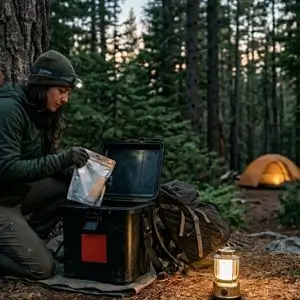
If you plan to hang food, be realistic
In some areas, agencies discourage hangs because they fail so often. If hangs are allowed, follow local guidance on height and distance. If you can’t meet it, don’t improvise—use a canister or move to a site with lockers.
Tip: If you’re shopping for containers/coolers, look for products tested by groups such as the Interagency Grizzly Bear Committee (IGBC).
On the Trail: How to Avoid Surprise Encounters
Most tense moments happen because you and a bear accidentally meet at close range.
Make yourself known (especially in “loud” terrain)
If you’re hiking from camp:
- Talk with your group in normal voices
- Call out on blind corners
- Be extra alert near rushing water (your footsteps get masked)
Manage snacks and breaks
- Don’t leave your pack unattended on the trail
- Snack in open areas where you can see around you
- Keep food sealed until you’re ready to eat
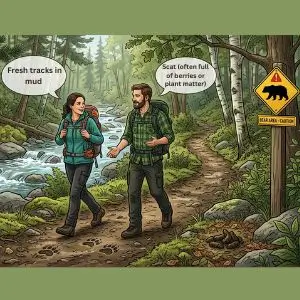
Learn basic bear sign
You don’t need to track wildlife like a pro. Just watch for:
- Fresh tracks in mud or sand
- Scat (often full of berries or plant matter)
- Claw marks or rubbed trees
- Torn-up logs and diggings
If sign looks fresh and you’re in tight brush, change course or turn back.
If You See a Bear Near Camp: What to Do (Step-by-Step)
Seeing a bear doesn’t automatically mean danger. What matters is distance, behavior, and whether the bear has access to your food.
Your calm checklist
- Stop and stay steady—don’t run
- Group up (keep kids close; don’t let anyone wander)
- Speak calmly so the bear recognizes you as human
- Back away slowly, giving the bear a clear escape route
- Ready your bear spray if it approaches
If the bear is lingering, circling, or repeatedly returning, treat that as a serious warning sign. Secure attractants immediately (from a safe distance) and contact rangers if you’re in a managed area.
If a Bear Approaches or Attacks (General Guidance + Local Rules First)
This is the part everyone searches for, and it’s also the part where local advice matters most. Always follow your park or wildlife agency recommendations for the species and region you’re in.
If a bear is approaching you
- Stand your ground if safe to do so
- Use a firm, confident voice
- Avoid screaming
- Don’t run (it can trigger chase behavior)
- If the bear keeps closing distance, be prepared to deploy bear spray per the label directions
If an attack happens
General guidance often taught in North America:
- Black bear attack: often advised to fight back aggressively
- Grizzly/brown bear defensive attack: often advised to play dead (if it’s clearly defensive)
- If an attack is prolonged or appears predatory, many agencies advise fighting back
Because “what to do” depends on context, species, and behavior, use official sources like NPS and your state/provincial wildlife agency for the final word.
Cooking, Dishes, and Trash: The Unsexy Stuff That Prevents Trouble
A clean camp is a quiet camp.
Cook with fewer odors when you can
You don’t need bland meals—just avoid turning camp into a bacon-scented beacon every morning. In high-use areas, lower-odor meals can reduce curiosity visits.
Dishwashing without advertising dinner
- Strain food bits (pack them out)
- Wash away from your sleeping area
- Dispose of gray water according to local rules (often scattered, not dumped in one spot)
Trash is food to a bear
If there’s no bear-proof bin, store trash exactly like food: in a locker/canister or approved method.
Camping With Dogs in Bear Country
Dogs can complicate things because they may chase a bear and then sprint straight back to you with the bear following.
Safer habits when you bring your dog
- Keep your dog leashed
- Store pet food with your food
- Don’t leave bowls out
- Clean up waste promptly (yes, it’s an attractant)
Common Mistakes That Lead to Bear Encounters (And Easy Fixes)
You don’t have to be perfect—you just have to be consistent.
Mistakes that cause the most trouble
- “Just this once” food in your tent
- Coolers left out while you sleep or hike
- Cooking right next to your tent
- Tossing trash in an open bag
- Assuming rules are the same everywhere
Quick “before bed” checklist
- Food + trash + toiletries secured
- Cooler locked away (or stored per local rules)
- Cooking area cleaned
- No snacks in pockets or packs left outside
- Bear spray accessible (if you carry it)
FAQ: Bear Safety Tips for Camping
What are the most important bear safety tips for camping if you’re a beginner?
Focus on the big three: secure all attractants, keep a clean camp, and avoid surprising bears by making noise in low-visibility areas.
Do you need a bear canister for bear safety tips for camping to actually work?
In many places, yes—either because it’s required or because it’s the most reliable option. If canisters are recommended or mandated where you’re going, treat that as non-negotiable.
Should you keep bear spray inside your tent at night?
Keep it immediately accessible (many people place it near their head), but handle it safely and follow local guidance. Don’t bury it in a pack where you can’t reach it fast.
What should you do if you see a bear in your campsite at night?
Stay calm, group up, speak firmly, and give the bear space to leave. Do not run. Prepare bear spray if the bear approaches. If you’re in a managed campground, report the incident to staff.
How far should you store food from your tent?
Use the “bear triangle” idea: keep sleeping, cooking, and storage separated as terrain and regulations allow. In developed sites, follow posted rules and use provided lockers.
Conclusion: Camp Smarter, Protect Wildlife, Sleep Better
Camping in bear country doesn’t have to feel tense. When you follow practical bear safety tips for camping—smart food storage, a clean camp layout, and calm trail habits—you’re doing the two things that matter most: lowering your risk and keeping bears from learning bad patterns.