
What to Do If You See a Bear: Step-by-Step Guide (Stay Calm, Stay Safe)
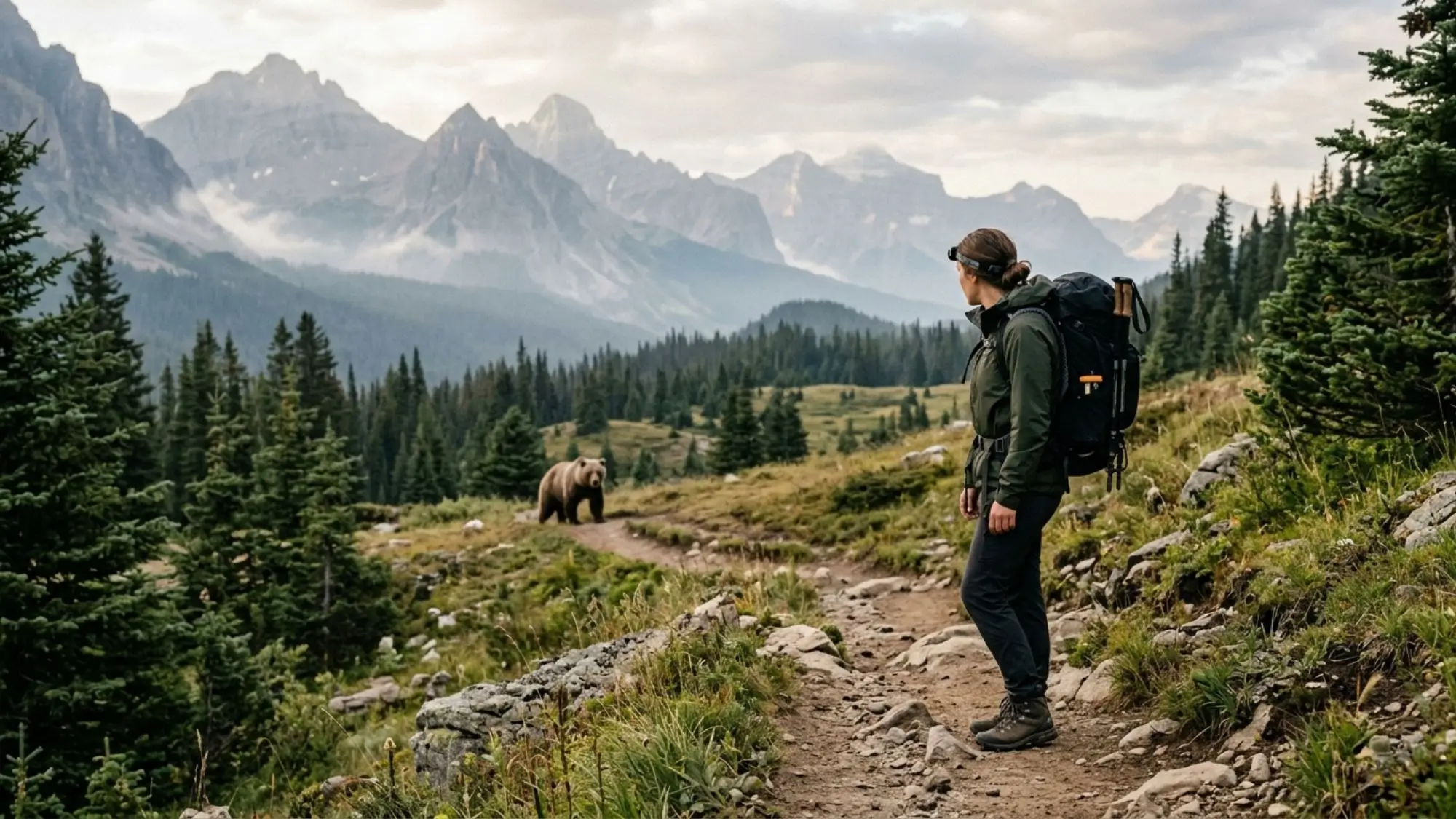
You’re out there for something simple: quiet, fresh air, a little freedom from screens and noise. Then the woods shift—too still, too watchful—and you realize the dark shape ahead isn’t a stump. It’s a bear.
In that moment, your body wants to make a fast decision before your brain catches up. Your heart speeds up. Your legs tense. And a dozen questions hit at once: Do you run? Do you yell? What if it comes closer?
This guide walks you through what to do if you see a bear in clear steps—so you can stay safe without turning a tense moment into a dangerous one.
Safety note: Bear behavior and official advice can vary by region and species. When you’re in a national park or bear country, always follow local wildlife agency or ranger guidance.
Table of Contents
Quick Answer: What to Do If You See a Bear (60-Second Checklist)
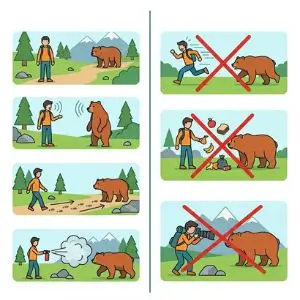
If you remember nothing else, remember this: stay calm, create space, and leave slowly.
- Stop. Don’t rush forward or make sudden moves.
- Stay calm and assess distance. Is the bear far away or close? Is it aware of you?
- Do not run. Running can trigger chasing behavior.
- Speak in a firm, calm voice. Let the bear identify you as human.
- Back away slowly while facing the bear.
- Give the bear an escape route. Don’t trap it on the trail.
- Get bear spray ready (if you carry it), but don’t use it unless the bear is close and approaching.
Many agencies, including the National Park Service (NPS) and state wildlife departments, emphasize these basics because they work in the widest range of real-life encounters.
Identify the Situation Before You Move
Are you just seeing a bear—or having an encounter?
A “bear sighting” at a distance is very different from a bear that’s focused on you.
- Low-risk sighting: The bear is far away, minding its business, moving away, or feeding.
- Higher-risk encounter: The bear is close, notices you, changes direction toward you, or seems agitated.
Your goal: avoid escalation. Most problems start when a bear feels surprised, threatened, cornered, or rewarded with food.
Signs a bear is stressed or defensive
A bear doesn’t need to roar to tell you it’s uncomfortable. Watch for:
- Huffing, snorting, or “woofing”
- Jaw popping or teeth clacking
- Swatting the ground
- Ears pinned back, head low
- A stiff posture or a short “rush” forward (sometimes a bluff charge)
A bear standing on hind legs is often trying to smell or see better, not preparing to attack.
Step-by-Step: What to Do If You See a Bear While Hiking
Step 1: Stop and steady yourself
The first move is often the most important one: don’t rush. A sudden sprint, a scream, or a frantic scramble can flip a calm situation into a chase.
- Plant your feet.
- Take one slow breath in and out.
- Keep your eyes on the bear without “staring it down.”
Step 2: Let the bear know you’re human
You want the bear to understand you’re not prey and not a surprise.
- Talk in a calm, firm voice: “Hey bear… I’m leaving.”
- If you’re with others, group up so you look larger.
- Pull children close and keep them behind you.
Step 3: Back away slowly (and give it room)
This is the heart of what to do if you see a bear on the trail.
- Move slowly and diagonally backward if you can.
- Don’t turn your back and don’t run.
- Look for open space and a clear path out.
- Avoid stepping between a bear and:
- cubs
- a food source (berries, carcass)
- water access
- the direction it’s trying to travel
Step 4: Get bear spray ready (if you have it)
Bear spray is widely recommended by parks and wildlife agencies in many bear areas because it can stop a close approach without permanent harm.
- Keep it accessible (holster or chest strap beats the bottom of a pack).
- Remove the safety clip only if the bear is approaching.
- Aim slightly downward; most sprays create a cloud.
- Use it only at close range—check your canister label (many are designed for roughly 20–30 feet).
What to Do If You See a Bear Near Your Home or Campsite
If the bear is in your yard
This is not the time to “handle it yourself.”
- Go indoors and keep a safe distance.
- Bring pets inside (dogs chasing bears is a common trigger for trouble).
- From safety, look for what attracted it:
- trash bins
- bird feeders
- pet food
- greasy grills
- compost
Many state wildlife agencies stress that removing attractants is the most reliable way to prevent repeat visits.
If the bear is in camp
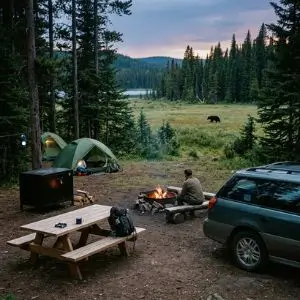
If you’re camping, your food habits matter as much as your reaction.
- Stay together; don’t scatter.
- Speak firmly; avoid high-pitched yelling.
- If you can do it safely, secure food in a bear locker/canister or vehicle.
- If the bear won’t leave or acts bold, retreat to a hard-sided vehicle or building and notify rangers/camp staff.
When to call for help
Call local authorities/rangers if:
- the bear won’t leave the area
- it’s trying to enter tents, cabins, or vehicles
- it’s acting aggressive or unusually fearless
- someone is injured (call emergency services)
Black Bear vs. Grizzly/Brown Bear: What Changes?
Species ID can be tricky, and behavior varies by individual. Still, many regional guidelines separate advice by black bears versus grizzly/brown bears, especially when it comes to rare attack situations.
Table: What to Do If You See a Bear (Black Bear vs. Grizzly)
| Situation | Black Bear (Common Guidance) | Grizzly/Brown Bear (Common Guidance) |
| You spot the bear at a distance | Give space, back away, leave the area | Same: give space, avoid closing distance |
| The bear notices you | Calm voice, make yourself look bigger, back away slowly | Calm voice, back away slowly; avoid crowding it |
| The bear approaches | Stand your ground; prepare bear spray | Stand your ground; prepare bear spray |
| If an attack happens (rare) | Often advised to fight back if it’s predatory | In some defensive cases, agencies advise playing dead (region-dependent) |
Important: Follow local guidance where you are. For example, the NPS and state agencies sometimes phrase attack advice differently based on regional bear behavior and incident history.
What NOT to Do If You See a Bear (Mistakes That Backfire)
These are the actions that commonly make things worse:
- Don’t run. You can’t outrun a bear, and running can trigger pursuit.
- Don’t climb a tree. Black bears climb well, and grizzlies can climb some trees too.
- Don’t crouch or curl up early unless you’re in a verified defensive-attack situation.
- Don’t approach for photos. Distance collapses fast on a trail.
- Don’t feed the bear—ever. It trains bears to seek people, which often ends badly for both.
- Don’t corner it. A trapped bear is a dangerous bear.
If a Bear Charges or Attacks: What to Do
Bluff charge vs. real charge
Some bears rush forward and stop short. It’s terrifying, but it can be a warning rather than an attempt to make contact.
If a bear charges:
- Hold your ground. Running is the worst move here.
- Speak firmly: “Stop!”
- Use bear spray when the bear is close and continuing in (follow your label distance).
If contact happens (last-resort guidance)
If it’s a defensive grizzly/brown bear encounter
Defensive encounters can happen when a bear is surprised at close range or protecting cubs/food.
Some agencies advise:
- Play dead: lie flat on your stomach, legs spread (harder to flip you), hands over the back of your neck.
- Stay still until you’re sure the bear has left.
If it’s a black bear attack or a predatory situation
Predatory attacks are uncommon, but if a bear is stalking, following, or making repeated contact attempts, many agencies advise:
- Fight back aggressively.
- Aim for the face and muzzle.
- Use whatever you have: rocks, trekking poles, a pack, your fists.
Bear Spray, Noise, and Smart Habits (How to Prevent a Bad Encounter)
Bear spray basics
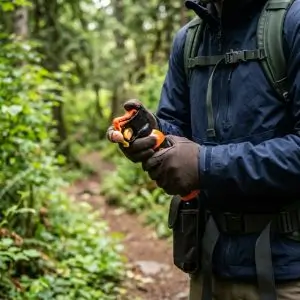
Bear spray works best when you can reach it fast.
- Carry it where your hand naturally goes (belt/chest holster).
- Practice drawing it (without spraying) so you don’t fumble under stress.
- Check expiration dates and storage guidance (heat in a car can be an issue).
Reduce your chances of surprising a bear
You don’t need to shout nonstop, but you do want to avoid sneaking up on wildlife.
- Hike in groups when possible.
- Talk naturally in thick brush or near loud creeks.
- Slow down at blind corners.
- Keep dogs leashed.
- Store food properly (bear canister, bear locker, or approved hang method depending on area).
Special Scenarios (Fast Guidance)
What to do if you see a bear with cubs
This is a high-alert situation because mom may defend aggressively.
- Don’t move toward the cubs, even by accident.
- Back away immediately and calmly.
- Give the family a wide path to leave.
What to do if you see a bear while driving
- Stay in your vehicle.
- Don’t create a roadside bear-jam; keep traffic moving.
- Never feed from the car.
What to do if you see a bear while running or biking
Fast movement can complicate encounters.
- Stop as soon as you safely can.
- Speak calmly and back away.
- If you ride in bear country often, plan how you’ll access bear spray quickly.
FAQ: What to Do If You See a Bear
What should you do if you see a bear on the trail?
If you’re wondering what to do if you see a bear on the trail, keep it simple: stop, stay calm, talk in a firm voice, and back away slowly while giving the bear space to leave.
What to do if you see a bear and it stands up?
Standing usually helps the bear smell and see better. Don’t panic. Keep talking calmly and continue backing away.
What to do if you see a bear and it charges?
Don’t run. Stand your ground, get bear spray ready, and deploy it if the bear closes in within your canister’s recommended range.
What to do if you see a bear at your campsite at night?
Group up, use a firm voice, secure food if you can do it safely, and move to a vehicle or hard-sided structure. If it’s bold or persistent, notify rangers/camp staff.
What to do if you see a bear without bear spray?
You can still do a lot: stay calm, speak firmly, make yourself appear larger, back away slowly, and put distance and obstacles between you and the bear (trees, terrain, a vehicle).
Conclusion: You Don’t Need to Be Fearless—You Need a Plan
Knowing what to do if you see a bear isn’t about bravado. It’s about keeping your mind clear enough to do the basics well: stay calm, don’t run, create space, and leave slowly. Most bears want to avoid you just as much as you want to avoid them—if you give them the chance.
If you hike, camp, run, or live in bear country, save or share this guide with someone you go outdoors with—and check your local park or state wildlife site for region-specific rules.